
Last updated November 15, 2026
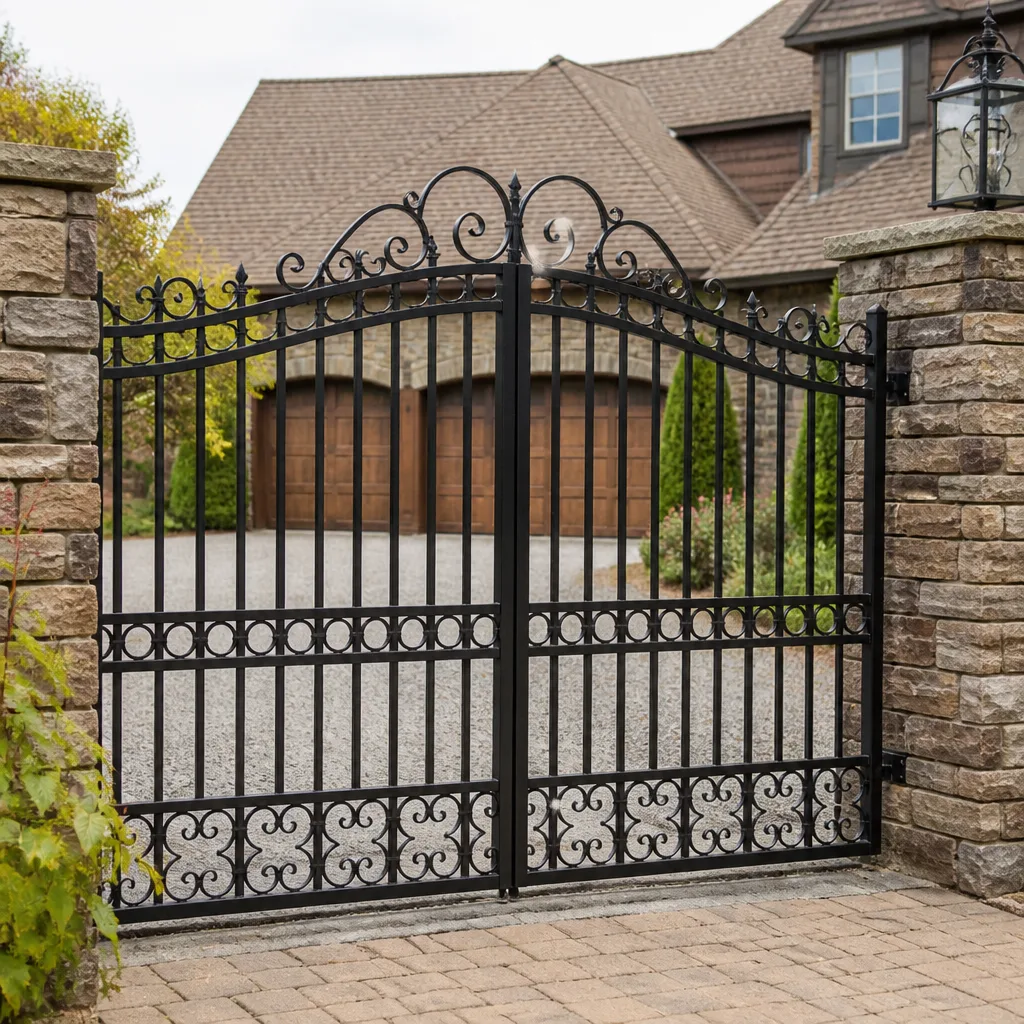 Wrought iron
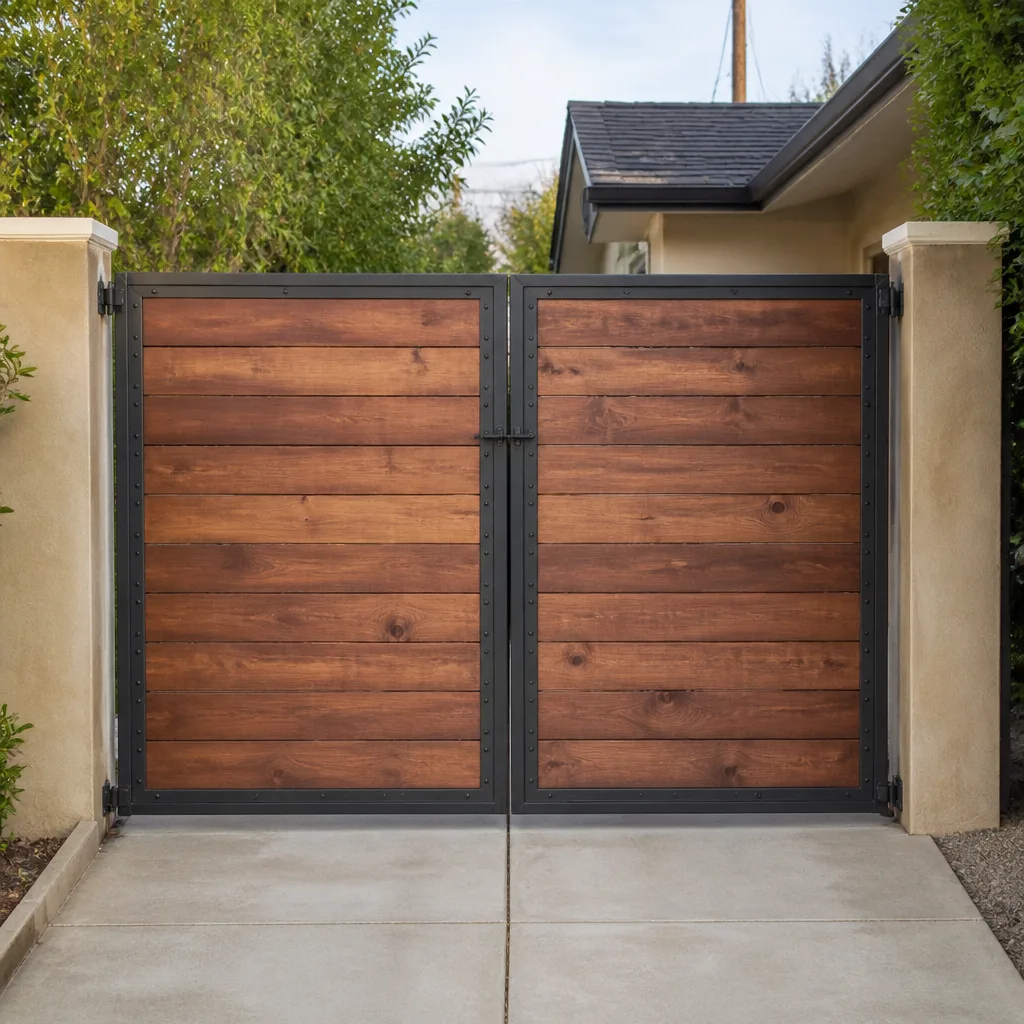 Wood & steel frame
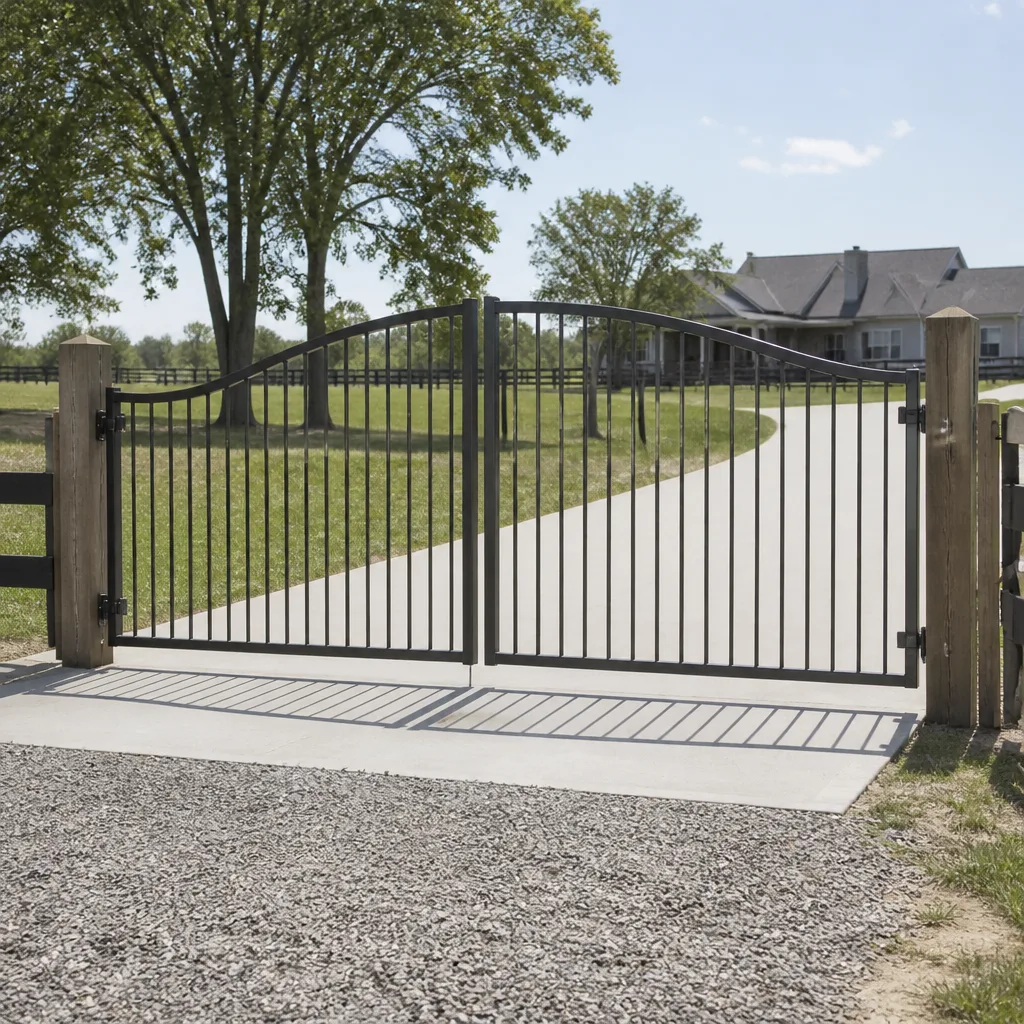 Farm & ranch
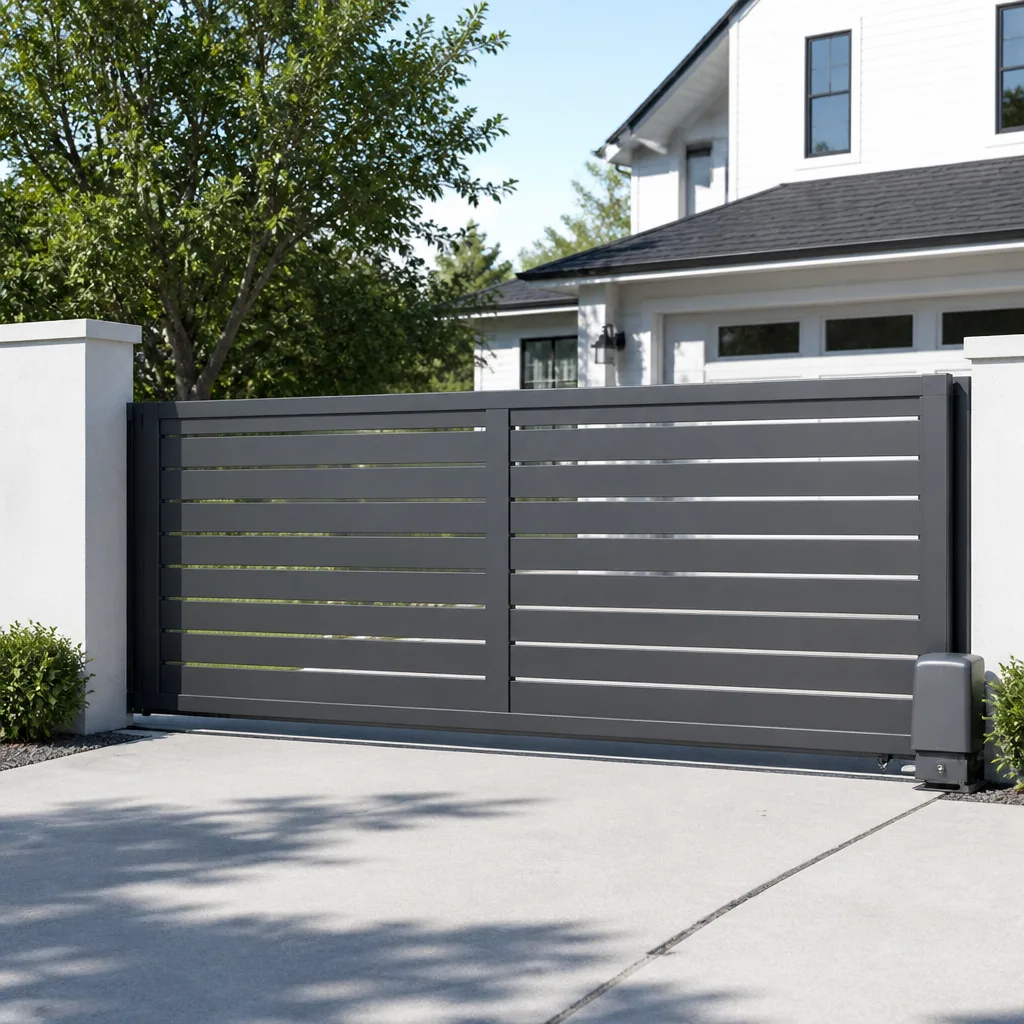 Sliding driveway gates
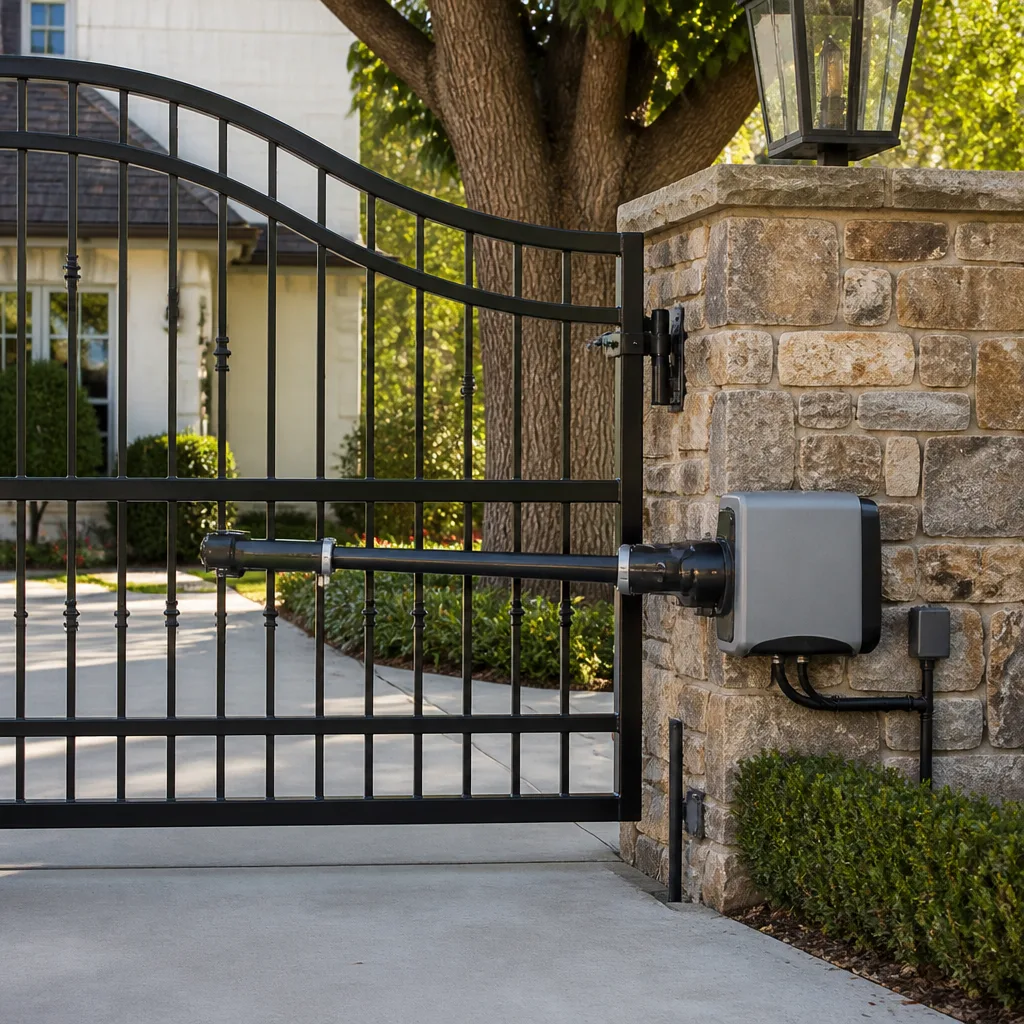 LiftMaster operators
Free on-site gate assessment - hinges, posts, and your LiftMaster or Nice gate operator checked before anything is quoted
The assessment is free and the quote is the invoice.
Get your free estimateGate Repair Permits, Codes & Inspections in Peoria, AZ: What You Need to Know
Most homeowners in Peoria assume gate repair is permit-free because it feels like maintenance. That assumption holds right up until the work crosses a line: a welded post gets replaced, a new operator goes in, or an access system gets upgraded. At that point, City of Peoria code requirements and Maricopa County electrical standards apply, and an unpermitted job becomes a liability that follows the property, not the contractor. Here’s the part nobody warns you about: a same-brand operator swap can legally require an electrical permit if the existing wiring doesn’t meet current code. This guide draws the exact line between what needs a permit and what doesn’t.
Quick Answer
In Peoria, AZ, routine gate repair (hinges, latches, rollers, minor hardware) generally does not require a permit. Structural alterations, new gate installations, and operator replacements that involve new or modified electrical work usually do require a permit, and the electrical portion falls under NEC standards enforced through Maricopa County. HOA covenants add a separate approval layer on top of city permits, and UL 325 compliance affects both liability and insurance after an incident.
Styles & brands we work with
- Wrought iron
- Wood & steel frame
- Farm & ranch
- Sliding driveway gates
- LiftMaster operators
Table of Contents
- What Triggers a Permit for Gate Work in Peoria?
- When Does Structural Repair Become an “Alteration”?
- NEC and Low-Voltage Gate Operator Wiring
- The HOA Compliance Layer: Which Approval Comes First?
- What UL 325 Compliance Means for You
- Pulling the Permit Yourself vs. Using a Licensed Contractor
- What Happens During a Gate Inspection in Peoria
- Common Mistakes to Avoid
What Triggers a Permit for Gate Work in Peoria?
A permit is typically triggered when the work changes the structure, the electrical system, or the footprint of the gate. Routine repair and like-for-like hardware swaps usually fall outside that threshold. The confusion comes because “repair” means different things to different people. To a homeowner, replacing a sagging post feels like repair. To a building inspector, it’s an alteration.
Here’s how we break it down for customers across Peoria:
- No permit usually required: Hinge replacement, latch adjustment, roller swap, minor weld touch-ups on existing hardware, re-hanging a gate on existing posts, and motor/control board replacement that uses existing wiring and doesn’t change the electrical circuit.
- Permit usually required: New gate installation, post replacement or relocation, widening or narrowing the opening, adding a new electrical circuit for an operator, installing a new operator where none existed, structural welding that changes the gate’s load path, and any work that changes the gate’s height or swing arc.
- Permit and inspection almost always required: Commercial or HOA-shared access systems with new electrical runs, safety sensor installation tied into a new circuit, and any gate work on a property line that affects setback or easement.
Peoria’s building department makes the final call, so the safest move before any structural or electrical gate work is a quick call to the city to confirm. What counts as an alteration in one inspector’s review may not in another, and the cost of asking is zero. The cost of doing unpermitted structural work is a stop-work order and a retrofit.
When Does Structural Repair Become an “Alteration”?
An alteration is any change that affects the gate’s structural integrity, dimensions, or load-bearing capacity. Replacing a bent hinge isn’t an alteration. Cutting out a rusted post and welding in a new one is. That’s the line most homeowners miss.
Think of it this way: if the work touches the frame, posts, footings, or the way the gate carries its own weight, it’s an alteration. If it touches only moving parts bolted onto an intact structure, it’s repair. In Peoria’s desert climate, the sun and heat take a toll on gate hardware and finish over time, and gates that have seen years of sun exposure often develop issues that start as hardware problems but turn out to be structural. That’s the moment where a “repair” becomes an alteration without anyone meaning for it to.
Common structural changes that require a permit:
- Post replacement. Even a like-for-like post swap changes the footing, and footing work requires a permit and often an inspection.
- Gate widening or narrowing. Any change to the opening affects structural load and property line considerations.
- Height changes. Adding height changes wind load calculations and may affect HOA and city sight-line rules.
- Frame repair that involves welding a new member into the gate body. If the gate’s load path changes, the inspector wants to see it.
- Relocating the gate. Movement of any kind requires a permit, and possibly a survey.
For a repair that stays fully within the existing structure, permit-free work is normal and common. For anything that changes how the gate is built, the permit is part of doing the job right. If you’re not sure which side of the line your repair sits on, a professional assessment will tell you quickly. Our gate repair work is scoped specifically to keep routine fixes permit-free and structural work fully compliant.
NEC and Low-Voltage Gate Operator Wiring
Low-voltage gate operator wiring still falls under the National Electrical Code, and this is the part most homeowners never hear about. The NEC governs conductor sizing, grounding, bonding, conduit protection, and disconnect requirements for any electrical circuit, including the low-voltage control circuits that run gate operators, safety loops, and intercoms. That means if an existing installation doesn’t meet current NEC standards, a same-brand operator swap can legally trigger an electrical permit.
Why does this matter in Peoria specifically? Because older installations across the city often predate current NEC revisions. A gate operator installed in an earlier code cycle might work fine, but a new operator connected to non-compliant wiring creates a code violation. The permit isn’t just about the new equipment; it’s about the entire circuit.
Here’s what the NEC compliance check typically covers:
- Grounding and bonding of the operator enclosure and any metallic gate components
- Conductor sizing for the run from the power source to the operator
- Conduit protection for any above-grade or exposed wiring
- Disconnect accessibility at the operator location
- GFCI protection where required by the circuit type and location
This is exactly the kind of thing where a general handyman falls short. Diagnosing an electric gate repair is one thing; knowing whether the existing circuit meets current code before you connect a new operator is a separate skill. When we open up an existing installation – whether a Linear, Viking, Ghost Controls, or DoorKing system – we check the circuit, not just the equipment. That’s how an operator swap stays compliant instead of becoming a liability. Electrical work at this level should always be handled by a trained professional; we recommend a licensed electrician for any work inside the panel or on the service side of the circuit.
The HOA Compliance Layer: Which Approval Comes First?
HOA approval comes before the city permit in almost every case. The rule is straightforward: get HOA sign-off on the scope of work, then pull the city permit. Doing it in the other order wastes permit money if the HOA requires design changes.
Peoria has a significant number of gated communities and HOA-governed neighborhoods. In those areas, the HOA covenant is a separate approval layer that sits on top of city code. Both apply. Neither replaces the other. An HOA approval doesn’t exempt you from city permits, and a city permit doesn’t exempt you from HOA rules.
Here’s the sequence that works:
- Read your CC&Rs. Most HOA covenants address gate materials, height, color, operator type, and access system specifications. Some require matching the community’s existing gate design.
- Submit an architectural request to the HOA. Include drawings, equipment specifications, and a description of work. Access control upgrades often need approval of the system type, not just the gate itself.
- Wait for written HOA approval. Verbal approval doesn’t count and won’t protect you if the HOA later issues a violation.
- Pull the city permit. Only after HOA approval is in hand.
- Keep both approvals on file. Inspectors and future buyers will want to see them.
In our experience, most HOA delays on gate work come from incomplete submission packages, not from the HOA rejecting the work. Getting the equipment specs right the first time shortens the whole process.
What UL 325 Compliance Means for You
UL 325 is the safety standard for gate operators, and every operator installed today should meet it. It governs entrapment protection: the sensors and detection systems that stop a moving gate before it hits a person, vehicle, or object. It matters because a non-compliant gate creates real injury risk and, if something happens, a homeowner insurance claim is likely to be denied.
UL 325 requires two independent means of entrapment protection on most operators. That usually means a primary means built into the operator itself plus a secondary external device, such as a photoelectric sensor or a safety edge. Older operators often have only one, or none at all outside the operator’s internal mechanism. Newer operators rarely meet current requirements without external sensors added.
What this means for Peoria homeowners and HOA boards:
- A gate operator that doesn’t meet current UL 325 requirements should be brought up to compliance, whether that means adding sensors, replacing the operator, or both.
- After any incident involving a gate striking a person or vehicle, the first question from an insurer is whether the operator met UL 325 at the time of the incident.
- Entrapment protection devices need to be kept in working order. Sensors that are disconnected, misaligned, or bypassed defeat the standard entirely.
- Any operator replacement is an opportunity to bring the whole system into compliance, and it’s less expensive to do it in one visit than to schedule twice.
Whether your system is a Linear, a Viking, a Ghost Controls, or a commercial DoorKing setup, the UL 325 requirement is the same. Non-compliance is a liability question, not a maintenance preference. Our technicians have up to 11 years of experience with these systems and can tell you whether yours meets the standard.
Pulling the Permit Yourself vs. Using a Licensed Contractor
Homeowners can pull permits for work on their own primary residence in many cases, but the scope is narrower than most expect. A licensed contractor typically needs to pull the permit for structural, electrical, or new-installation work. Getting this wrong exposes you to unpermitted work and, in some cases, problems when you sell the home.
Here’s where the line usually sits in Peoria:
- Homeowner pull is generally acceptable for: Cosmetic or non-structural work, some minor repairs, and certain homeowner-performed installations on a primary residence.
- Licensed contractor pulls should handle: Electrical work on the operator circuit, structural alterations, new gate installations, and anything touching footings or property-line setback.
- HOAs often require a licensed contractor regardless: Many covenants specifically prohibit homeowner work on shared or visible gate systems, which overrides the city’s homeowner-permit allowance.
If you’re not sure which applies, ask the city’s permit office directly and confirm in writing. The other decision point is who you hire: a general handyman can’t pull an electrical permit, and a fencing company that does gates on the side doesn’t have the electrical depth either. A gate specialist can scope, permit, and complete the work without handing you off to a second contractor. That’s why we specialize exclusively in gates – it’s all we do.
What Happens During a Gate Inspection in Peoria
An inspection confirms that the work matches the permit and meets code. Most gate inspections are short, but they fail for predictable reasons. Knowing those ahead of time saves a re-inspection fee and usually a week of schedule.
- Rough-in inspection. If footings are involved, the inspector checks footing depth and placement before concrete is poured. If electrical is involved, they check the wiring run before the operator is closed up.
- Final inspection. The inspector verifies the completed work against the permit, checks the operator installation, confirms UL 325 entrapment protection is in place and functioning, and reviews safety signage.
- Signage check. Warning signs must be posted on each side of a moving gate. Missing or worn signs are a common failure point.
- Sensor function check. Photoelectric sensors and safety edges are tested to confirm they stop the gate. Disconnected or misaligned sensors fail.
The reasons inspections fail fall into a short list: missing signage, sensors that stop the gate but not fast enough, wiring that doesn’t match the permitted work, and operators installed without the correct entrapment protection. In Peoria, the heat and sun can damage signage and fade sensor housings faster than in cooler climates. Inspectors notice. So do we, which is why we check signage and sensor function as part of any inspection prep.
Common Mistakes to Avoid
- Assuming all gate repair is permit-free. Minor hardware repair usually is, but post replacement, electrical work, and operator swaps often aren’t. Check before you start.
- Getting the city permit before HOA approval. It happens often in Peoria HOA communities. The order matters: HOA first, then permit.
- Skipping UL 325 compliance on a like-for-like swap. A newer operator connected to old wiring and no external sensors may not meet the standard, and insurance won’t look past that after an incident.
- Letting a handyman touch the electrical circuit. Low-voltage still means NEC, and the circuit needs to be compliant before new equipment goes on it.
- Bypassing or disabling safety sensors to stop nuisance trips. That defeats the entrapment protection, creates a UL 325 violation, and can fail an inspection.
- Not keeping records of permits and approvals. Permit records and HOA approvals become part of the property’s history and come up at sale.
- Pulling a homeowner permit for work an HOA requires to be done by a licensed contractor. The city permit doesn’t override the covenant.
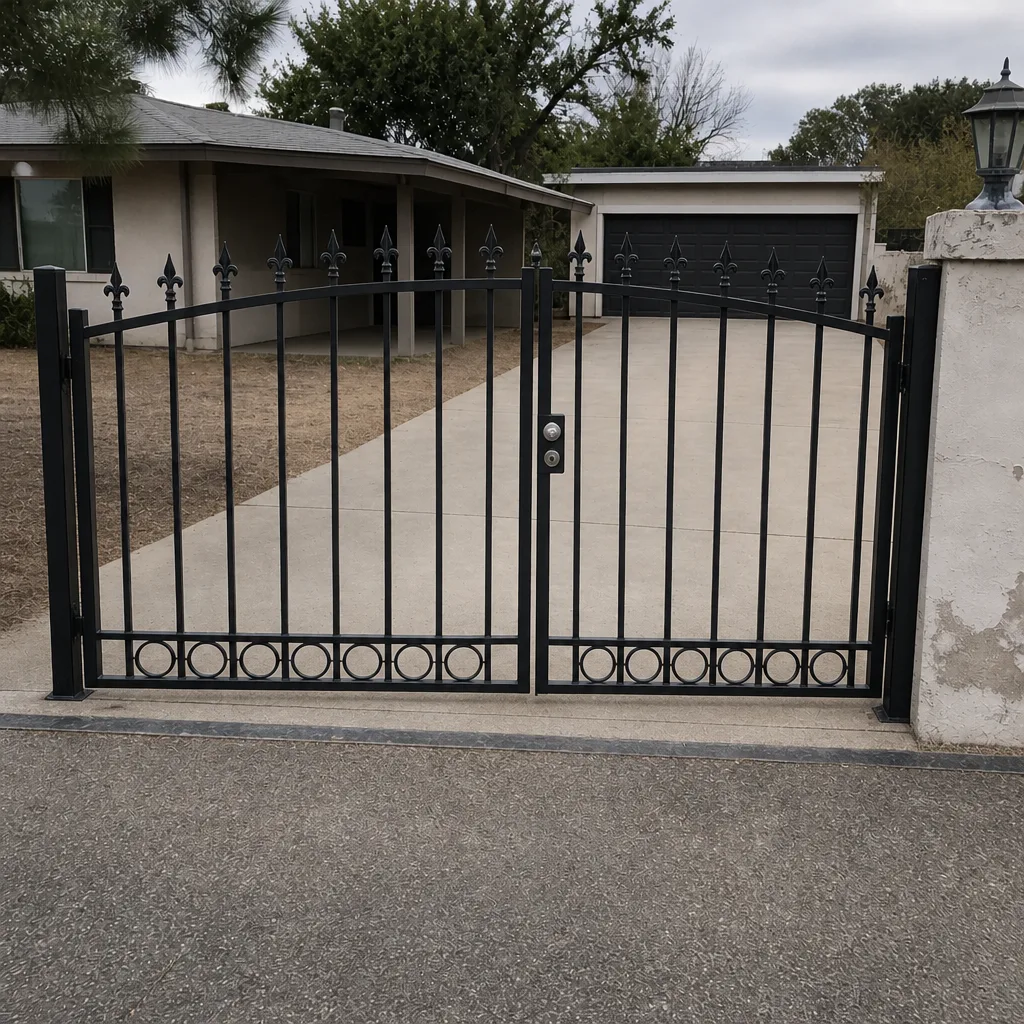
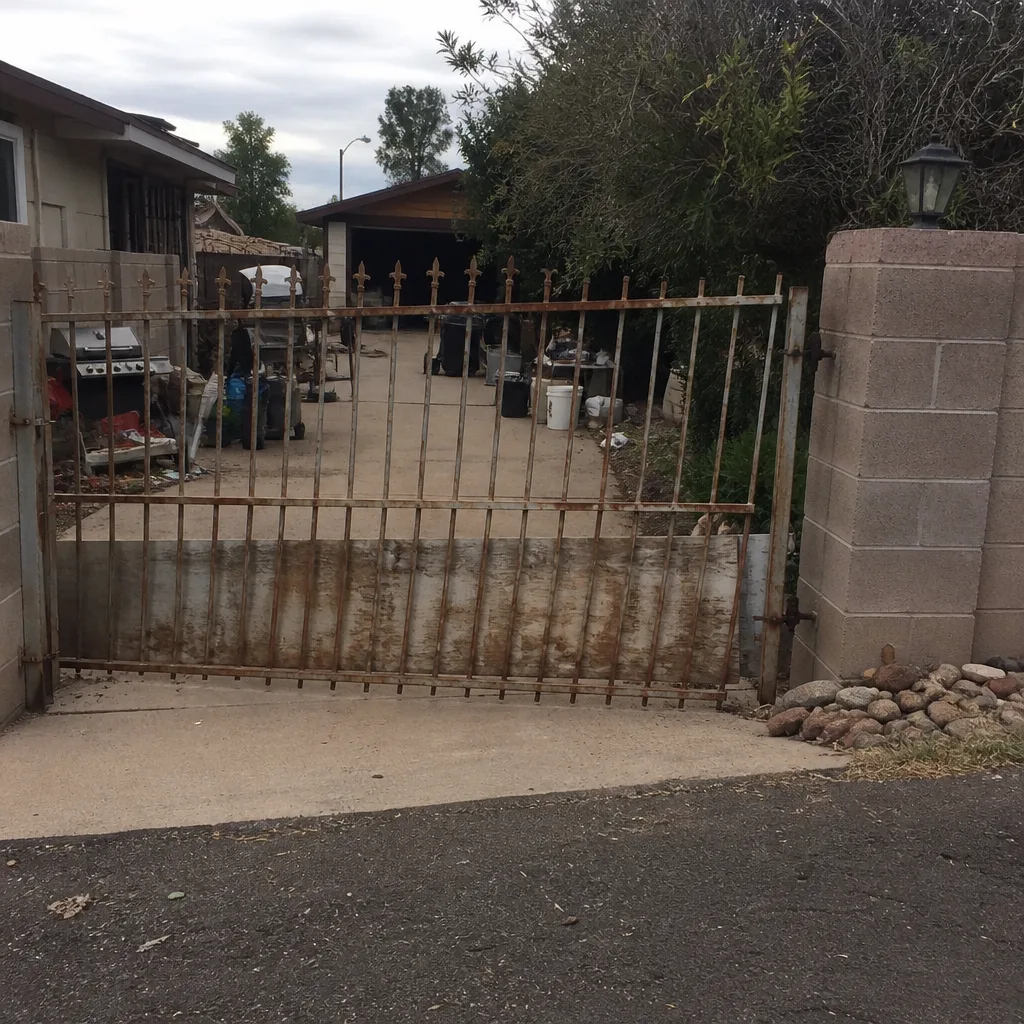
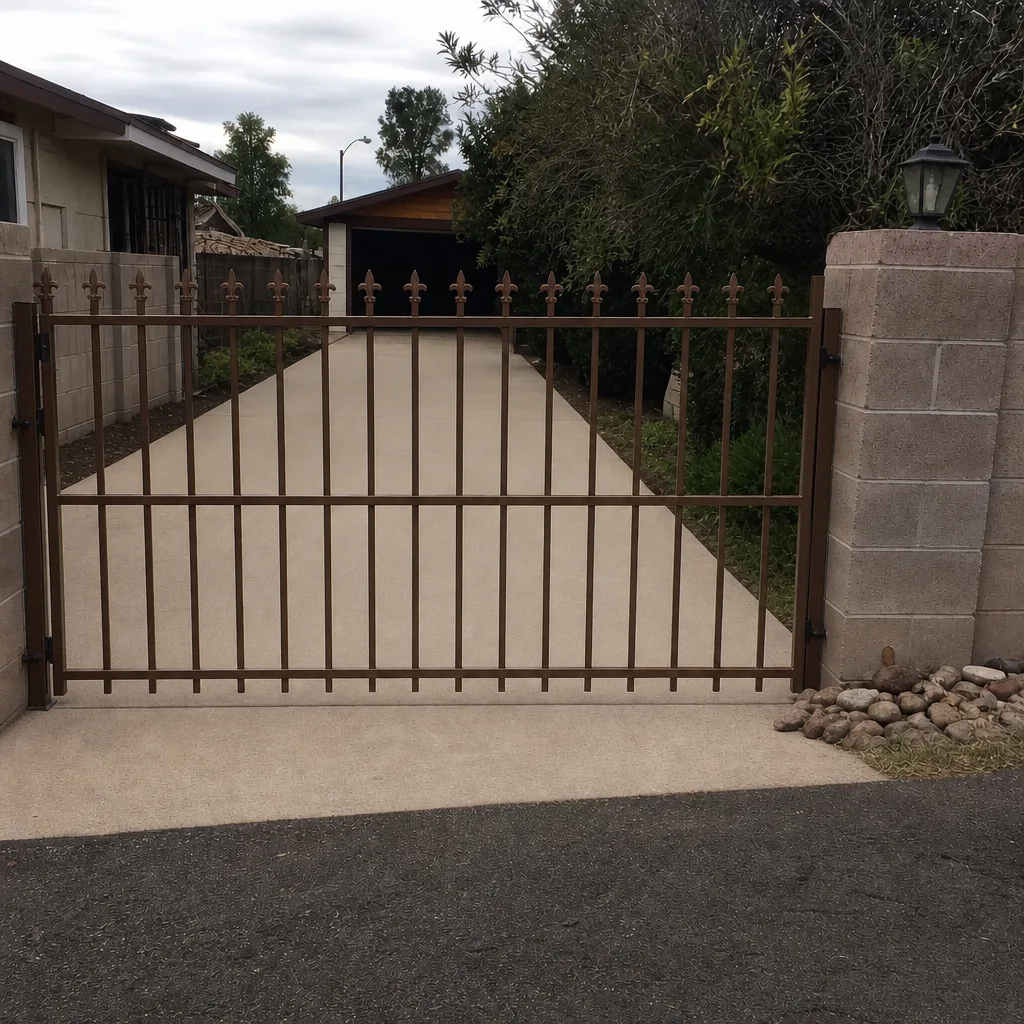
See the difference
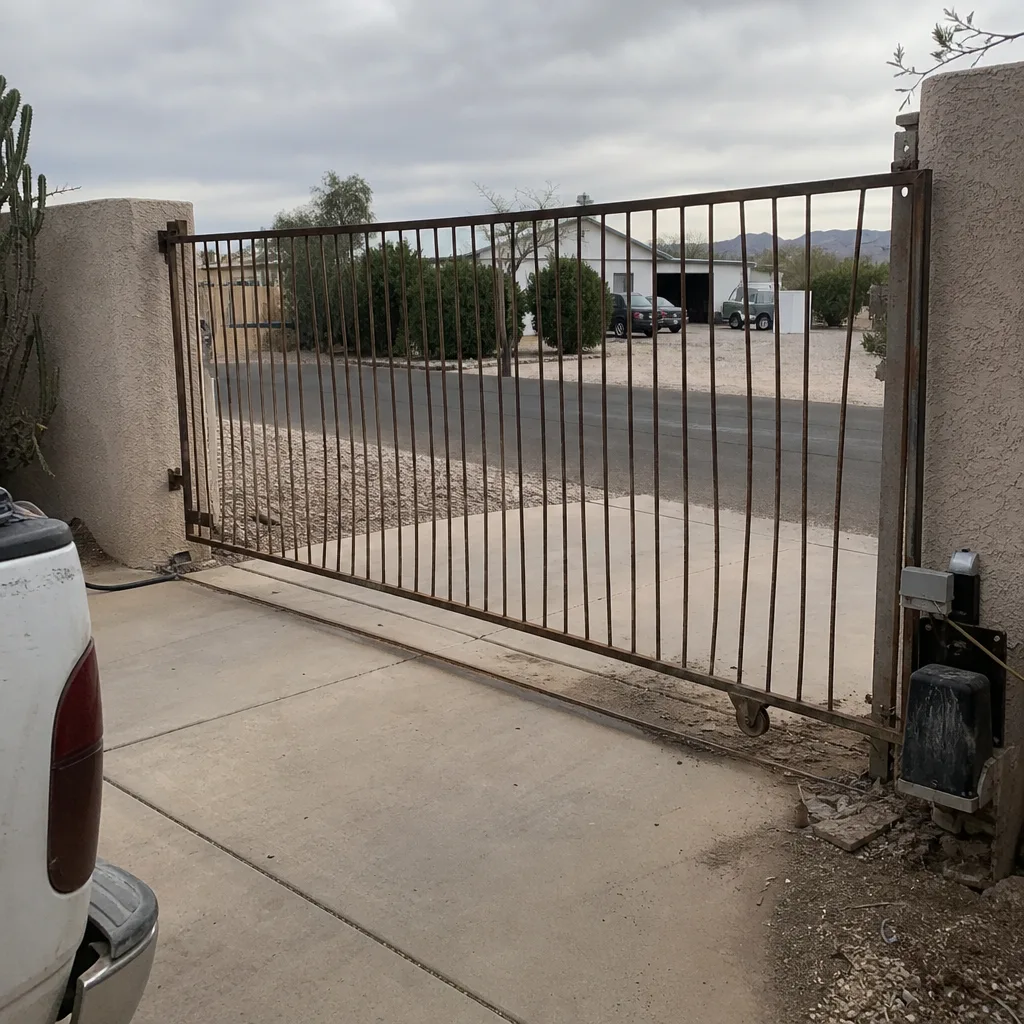 Before
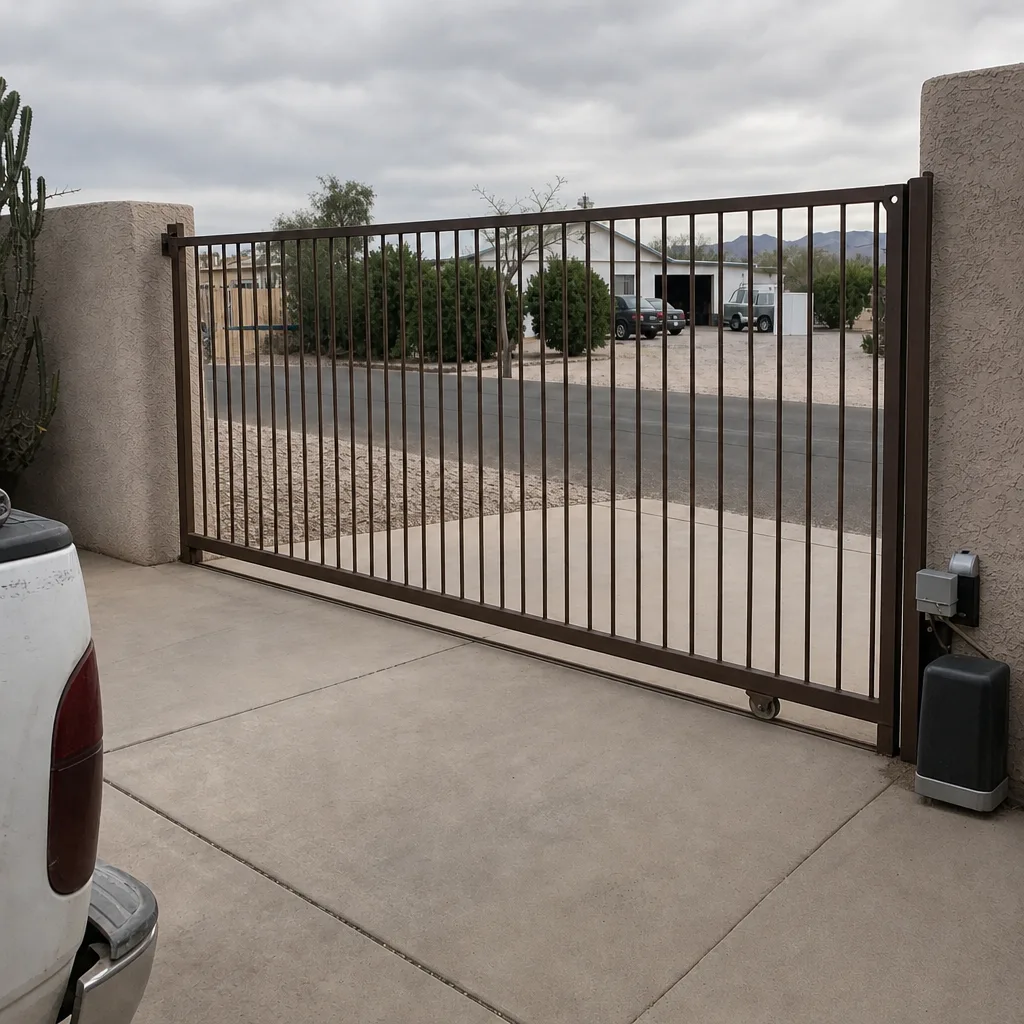 After
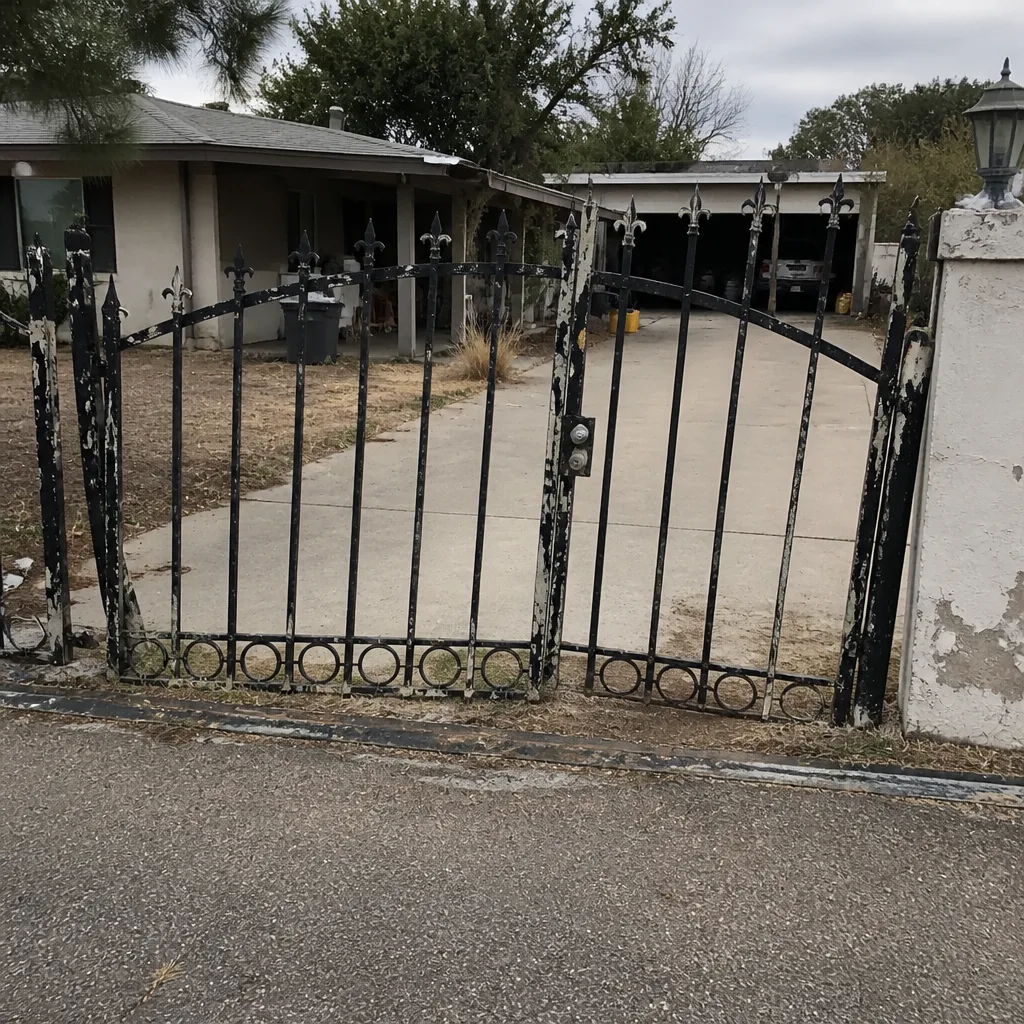 Before
 After
 Before
 After
When to Call a Professional
Call a gate professional when the repair touches the structure, the electrical circuit, or the safety system. Post replacement, operator swaps, sensor installation, welding, anything inside the panel, and any access-control upgrade all qualify. Same goes for a gate that’s failed an inspection or an operator that’s behaving inconsistently – symptoms like intermittent stopping, dead remote range, and false safety trips often point to circuit-level problems that a generalist can’t diagnose reliably. If your gate is sagging, dragging, or moving unevenly, have it looked at before the problem grows into structural work.
Gate Repair Peoria offers free estimates in Peoria – call (855) 574-0402. We answer 24/7. Fast dispatch from 7am to 7pm, Sunday through Friday. Prices are quoted and agreed before any work starts, and the written estimate sets the final price.
Frequently Asked Questions
It depends on scope. Routine hardware repair usually doesn’t require a permit, but structural alterations, new installations, and electrical work on an operator circuit generally do. Confirm with the City of Peoria building department before you start. For an exact scope and a free estimate, call (855) 574-0402.
Often yes, especially if the existing wiring doesn’t meet current NEC standards. A same-brand replacement can still trigger an electrical permit if the circuit itself isn’t compliant. Our electric gate repair visits include a circuit check so you know before work starts. Call (855) 574-0402 for an exact quote – estimates are free.
HOA approval comes first. Get written sign-off from your HOA architectural committee, then pull the city permit. Doing it in the reverse order means paying for a permit that may need to be re-issued if the HOA requires design changes.
UL 325 is the safety standard for gate operators that governs entrapment protection. Any operator installed today should meet it, and any operator that doesn’t should be brought up to compliance. Non-compliance creates liability risk and can affect insurance coverage after an incident. Call (855) 574-0402 to have your operator checked.
In some cases, yes, for work on your primary residence involving limited scope. But structural, electrical, and new-installation work usually requires a licensed contractor to pull the permit, and many HOA covenants require licensed contractor work regardless. Check with the city and read your CC&Rs before deciding.
An inspection confirms the work matches the permit and meets code. It covers footings (if applicable), electrical rough-in, operator installation, UL 325 entrapment protection, and required warning signage on both sides of the gate. Missing signage and misaligned sensors are the most common failure points.
The Bottom Line
The rule of thumb for gate work in Peoria: routine repair usually doesn’t need a permit, but structural changes, operator replacements, and new installations often do. HOA approval comes before the city permit, UL 325 compliance affects liability and insurance, and the NEC governs the electrical circuit whether it’s low-voltage or not. Get the scope right before the work starts, keep records of every approval, and don’t let a generalist handle electrical or structural gate work. If you’re unsure which category your repair falls into, a professional assessment settles it in one visit.
Call (855) 574-0402 for a free estimate on gate repair, electric gate repair, or new gate installation in Peoria. We work with nine major gate and access-control brands, so whether your opener is a LiftMaster, FAAC, BFT, Linear, Viking, Ghost Controls, DoorKing, Elite, or Mighty Mule, we know it. One call covers repair, installation, and everything in between. Need to get started? Visit Gate Repair Peoria or call today. We answer 24/7. Fast dispatch from 7am to 7pm, Sunday through Friday.
Written by the team at Gate Repair Peoria.