
Last updated November 15, 2026
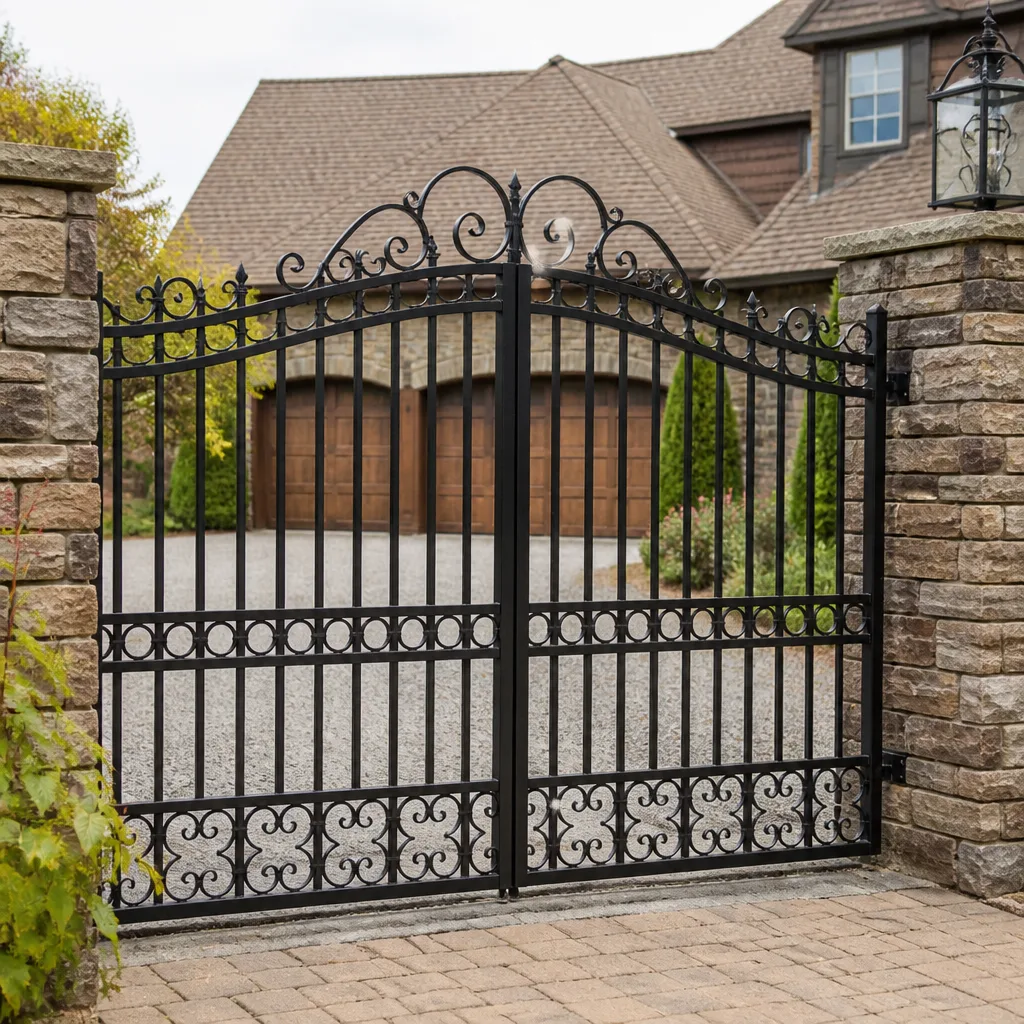 Wrought iron
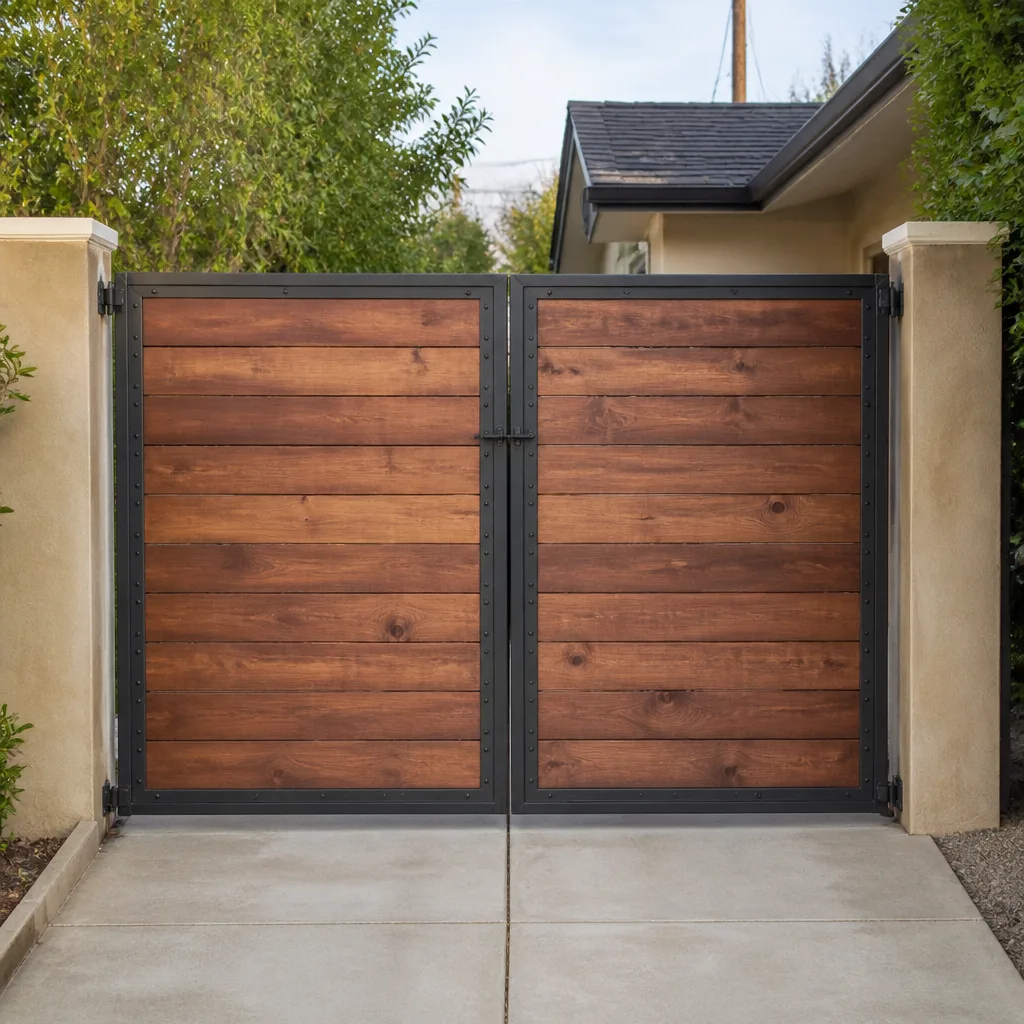 Wood & steel frame
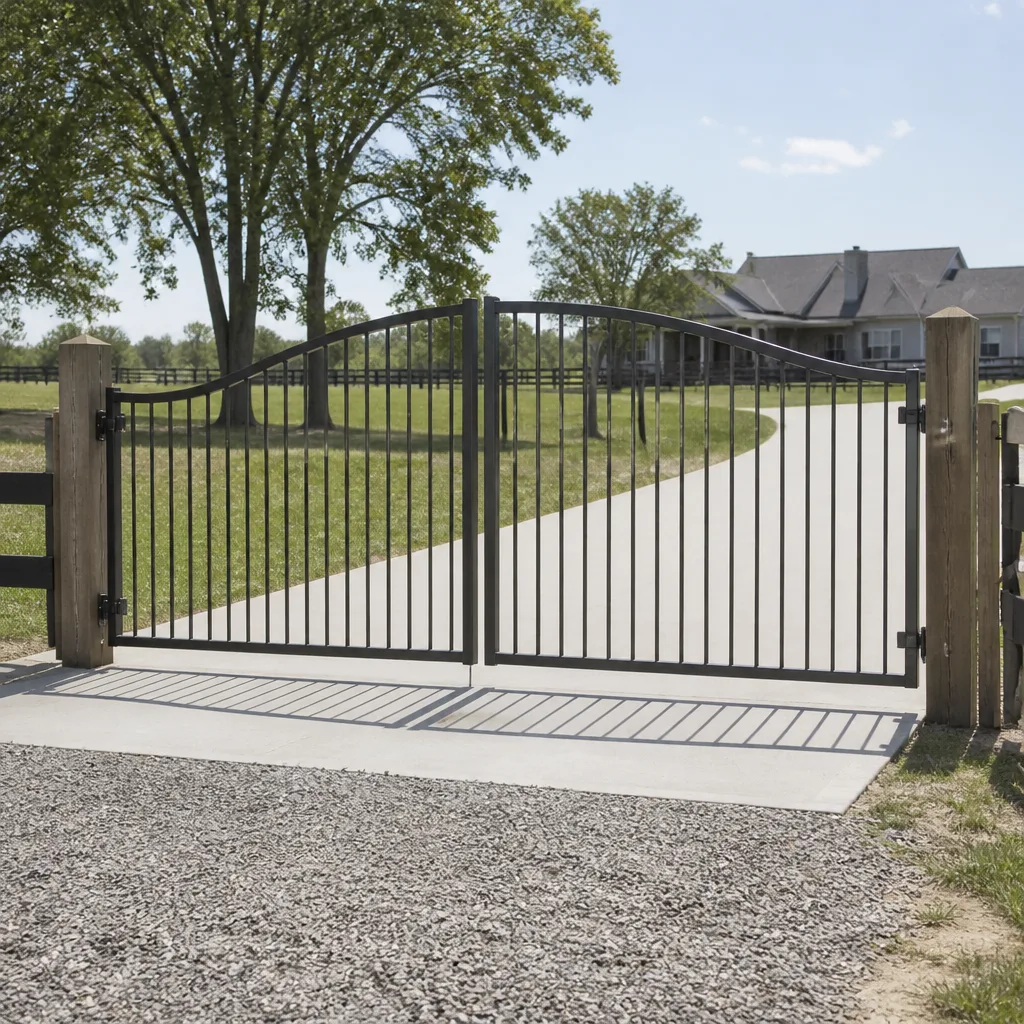 Farm & ranch
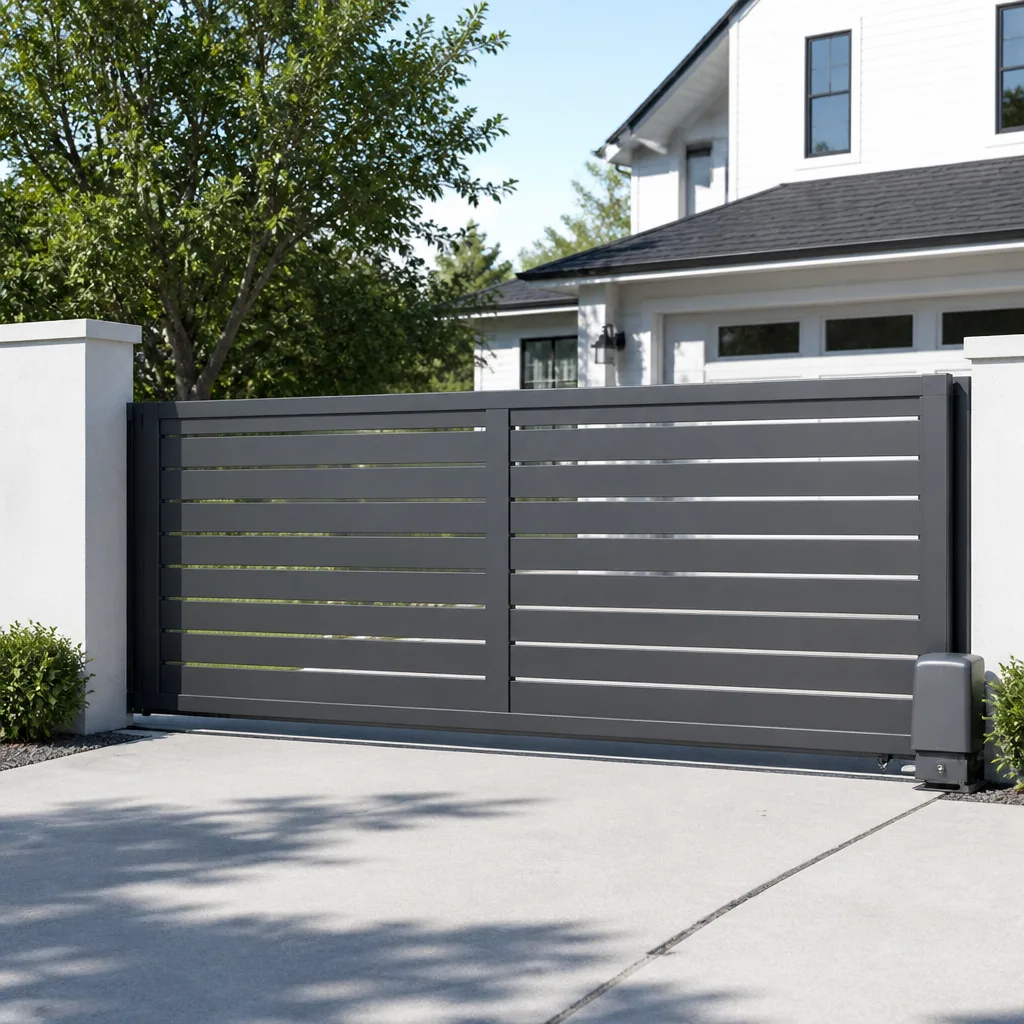 Sliding driveway gates
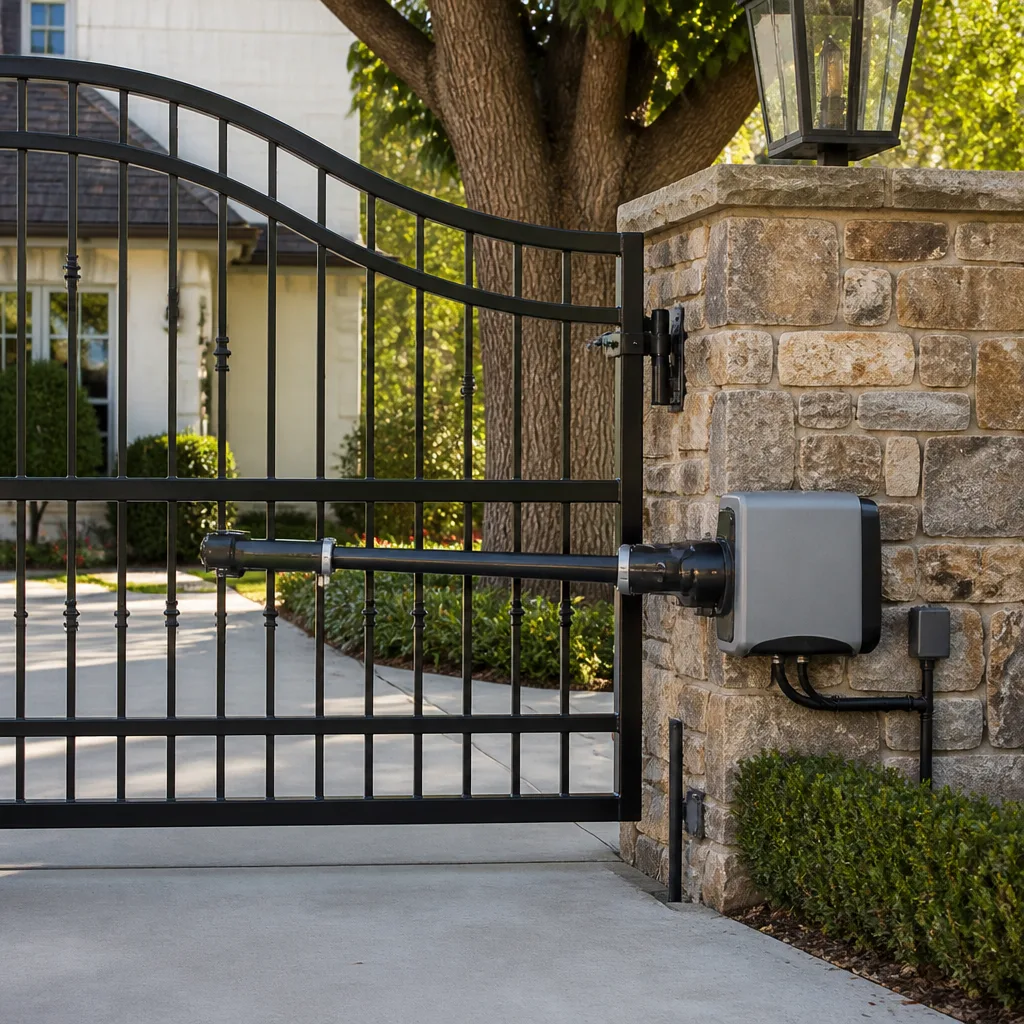 LiftMaster operators
Free on-site gate assessment - hinges, posts, and your LiftMaster or Nice gate operator checked before anything is quoted
The assessment is free and the quote is the invoice.
Get your free estimateThe Complete Guide to Gate Repair in Peoria
Most gate repairs in the Phoenix metro fail again within a year or two, and the reason usually isn’t cheap parts. It’s a diagnosis that stopped at the symptom. A dragging gate gets a new roller; the real problem was a post footing lifting out of expansive clay. A gate that won’t close gets a new control board; the truth was dust-packed limit switches. In Peoria, three forces do most of the damage: caliche and clay soil under the posts, summers that push past 115°F, and haboob dust that gets into everything. This guide maps each common failure to the force most likely behind it, so you replace what’s actually broken.
Quick Answer
Gate repair in Peoria usually means one of three things: a structural problem (post heave, hinge wear, track misalignment from our soil), a mechanical problem (the operator, motor, or gearing), or an electrical problem (control board, sensors, limit switches, or power). Diagnosing which category you’re in before anyone touches the gate is the single biggest factor in whether the repair lasts. A gate specialist who knows caliche soil, desert heat, and dust cycles will find the cause; a generalist will often just replace the part that looks bad.
Styles & brands we work with
- Wrought iron
- Wood & steel frame
- Farm & ranch
- Sliding driveway gates
- LiftMaster operators
Table of Contents
- Why Peoria’s Soil Is the Hidden Cause of Most Gate Problems
- Heat, Wiring, and Control Boards: Telling Electrical Failures Apart
- What Haboob Dust Does to Limit Switches and Sensors
- Gate Types in Peoria and Their Specific Failure Modes
- How to Tell Structural vs. Mechanical vs. Electrical
- Repair or Replace? A Practical Decision Guide
- Brand Matters Less Than the Diagnosis
- What Actually Extends a Gate’s Life Here
Why Peoria’s Soil Is the Hidden Cause of Most Gate Problems
Peoria sits on a mix of caliche – a cemented, calcium-carbonate hardpan – and expansive clay soils that swell when they take on water and shrink as they dry. That combination is rougher on gate posts than the sandier ground in some other Valley cities. Caliche is dense and slow to drain, so water pools against a footing instead of soaking away. The clay beneath it moves with the seasons. A post that was set perfectly plumb can heave, tilt, or settle just enough over a few summers to throw a whole gate out of alignment.
What does that look like? It rarely announces itself. You notice it as:
- A gate that drags on one corner or scrapes the ground at the latch side
- A swing gate that no longer meets the center stop cleanly, or drifts open on its own
- A slide gate that binds partway along the track even though the track looks straight
- Hinges that seem loose no matter how often they’re tightened
- A latch that lines up in the morning and misses by afternoon
Here’s the trap. Every one of those symptoms can also come from a worn roller, a tired hinge, or a misadjusted operator. If a technician only looks at the hinge and swaps it, the gate works for a while and then drags again, because the post is still moving. That’s the repair that comes back. In our experience across Peoria, a post footing that has shifted in expansive soil is the single most overlooked cause of a gate that “keeps breaking.”
The fix isn’t always dramatic. Sometimes resetting or re-footing one post solves everything. Sometimes the gate frame itself has racked and needs squaring. What matters is that the soil gets considered before the hardware does. If your gate is on the west or north side of a property where irrigation runoff collects, or near a slope, put soil movement near the top of the suspect list. For the full range of what we handle on manual and mechanical gates, see our gate repair page.
Heat, Wiring, and Control Boards: Telling Electrical Failures Apart
Peoria summers regularly cross 115°F, and that heat does two very different things to an electric gate. It degrades the wiring and connections, and it stresses the control board and motor. Those are separate failures with separate fixes, and mixing them up is where repair costs double. A board replaced when the real problem was a heat-cracked wire connection will fail again. A wire replaced when the board’s output stage is burned will fail again too.
Here’s how the two tend to show up differently:
- Heat-degraded wiring and connections: intermittent operation, a gate that works in the cool of the morning and quits by afternoon, flickering or weak response, corrosion or discoloration at terminal blocks, brittle or cracked insulation.
- Control board or motor failure: the operator gets power but does nothing, the gate moves in one direction only, the board shows a fault code or a burned component, the motor hums without turning, or repeated fuse blowing.
The reason this matters in Peoria specifically is that heat accelerates both at once. A twelve-year-old gate in a sunny exposure can have wiring that’s dried out and a board that’s near end of life, and the symptom – “it just stopped” – looks the same for either. A proper diagnosis means testing the supply, the low-voltage control circuit, the safety inputs, and the operator’s response separately. That’s the work of an electric gate specialist, not a general handyman. If you want to understand what a full electrical diagnosis covers, our electric gate repair page walks through it.
One more heat reality: operators mounted in full sun run hotter than ones in shade, and a control box with a failing cooling path will cook itself faster. Where a replacement operator is going in, siting it out of the worst afternoon sun is a genuine part of the job, not a detail.
What Haboob Dust Does to Limit Switches and Sensors
Monsoon-season haboobs push fine dust into every gap on a gate system, and that dust does quiet, cumulative damage that a standard maintenance schedule doesn’t account for. The usual advice – “lubricate the hinges and check the battery” – misses the parts that actually fail here. Fine dust packs into limit switches so the operator loses track of where the gate is. It coats photo-eye lenses and loop detector housings. It works into the operator housing and mixes with lubricant to form a gritty paste that accelerates wear.
Limit switch problems show up as a gate that overruns its stop, reverses for no clear reason, or refuses to close fully because the operator thinks it hasn’t reached the open limit. Sensor and photo-eye problems show up as a gate that stops mid-travel, reverses when nothing is there, or won’t close because the safety beam reads as blocked. In Peoria, both are far more common after a dusty stretch than after a rainy one.
What a dust-aware check actually involves:
- Clear and test limit switches and cams, not just the housing exterior
- Wipe photo-eye lenses and confirm alignment and beam strength
- Inspect loop detector housings and wiring for dust intrusion and moisture
- Clean the operator interior and replace contaminated lubricant
- Check gate-mounted sensors and reflectors for coating and physical knocks
If a gate is acting up right after a storm, this is where to look first. The sensors aren’t broken – they’re just dirty and misreading. That’s a cheaper fix than a new board, provided someone diagnoses it correctly.
Gate Types in Peoria and Their Specific Failure Modes
Not every gate fails the same way. The type you have determines what wears out and what to watch. Peoria properties carry a real mix – single residential swing gates, wide bi-parting driveway gates, sliding gates on tracks, and commercial access points with operators and intercoms.
- Single swing gates: hinge wear, post heave at the hinge side, sag over time, latch misalignment. The classic Peoria failure is a hinge that’s fine but a footing that isn’t.
- Bi-parting swing gates: two leaves that must meet correctly. If one post shifts, the leaves clash or the center gap opens. Operator timing and limit settings matter more here, and dust throws them off.
- Sliding gates: track and roller wear, track misalignment from ground movement, binding mid-travel, and the risk of the gate coming off its track when a roller fails or the track shifts. Track cleanliness matters through dust season.
- Commercial and access-controlled gates: loop detectors, intercom integrations, control boards, and more electrical complexity, so heat and dust hit more components.
Track and roller problems on a slide gate are worth calling out. A slide gate that comes off its track is a heavy panel that can hurt someone or damage a vehicle, so a gate that’s binding, leaning, or riding oddly should be looked at before it’s operated further. Match the diagnosis to the gate type and you avoid replacing perfectly good parts. If your gate sits at a shared or commercial entrance, the access hardware deserves the same scrutiny as the operator.
How to Tell Structural vs. Mechanical vs. Electrical
Before you call anyone, you can sort most gate problems into one of three buckets. That single step tells you what kind of specialist you need and stops you paying to replace a part that wasn’t the problem. It doesn’t mean fixing high-voltage wiring or heavy panels yourself – those stay with a trained professional – but it does mean you’ll describe the problem accurately and get the right help faster.
- Check the structure first. With the gate in neutral or manual, does it swing or roll freely? Does it drag, scrape, or bind? Are posts plumb and hinges tight? A gate that’s hard to move by hand is structural or mechanical, not electrical.
- Then check the mechanics. If the gate moves freely by hand but the operator struggles, the problem is the operator, motor, gearing, or drive mechanism.
- Then consider the electrical. If the operator has power but doesn’t respond, moves one way, faults out, or the sensors misbehave, you’re looking at the board, wiring, limits, or sensors.
Some clues point clearly. If the gate drags but the operator pushes through it, you may have both a structural and a mechanical problem – the dragging gate is overworking the motor, which is why operators fail on misaligned gates. If a gate reverses for no reason, suspect sensors and limits before the board. If it’s dead in the afternoon and fine in the morning, think heat and wiring. Learning to read these signs is the difference between a repair that sticks and one that keeps coming back. Our team at Gate Repair Peoria does exactly this kind of diagnosis.
Repair or Replace? A Practical Decision Guide
Homeowners and property managers ask this constantly, and the honest answer depends on the cause, not the gate’s age. A gate with a shifted post needs the post fixed regardless of how new the hardware is. A gate whose operator has failed from a burned board may be a board replacement or a new operator, depending on the unit.
The questions that actually decide it:
- Is the root cause structural or mechanical? If the gate frame or posts are sound, repair usually makes sense even on older gates.
- Is the operator failing from a known cause or end of life? A board or sensor fix is different from a motor that’s worn out.
- Are parts available? This is where brand coverage helps. A specialist who works across the major brands can often source the right parts rather than pushing a swap.
- Would a replacement repeat the failure? If the electrical service or sun exposure keeps cooking operators, a new one fails the same way unless the siting and wiring are addressed.
What we don’t do is push a replacement or a brand switch when a repair will hold. That’s the difference between a specialist and someone who only has one answer. Reach out and we’ll tell you what the gate needs, in plain terms.
Brand Matters Less Than the Diagnosis
A common assumption is that the brand of your operator determines whether it can be fixed. In practice, the diagnosis matters far more than the label on the box. A well-diagnosed LiftMaster or FAAC system is fixable because the technician knows how the failure works, not because of a nameplate. An Elite or Mighty Mule gate with a clear root cause gets the same treatment.
That said, brand knowledge does help. Limits, control boards, photo-eyes, and drive mechanisms differ between manufacturers and models, so a technician who’s familiar with the major gate brands finds the fault faster and sources parts more reliably. Our technicians have up to 11 years of experience working with gate systems across the range of brands you’ll find on Peoria properties.
The point is that you shouldn’t be told “we don’t work on those” or “you need to replace it with our brand.” A gate specialist should be able to repair what’s installed. If you’re not sure what you have, a description of the unit and a photo usually tells us enough to know how to approach it.
What Actually Extends a Gate’s Life Here
Prevention in Peoria looks different from prevention in a milder climate. The usual advice to lubricate and check the battery is fine as far as it goes, but it doesn’t touch soil movement or dust infiltration. A gate that gets a dust-aware inspection and a footing check will outlast one that only gets hinges greased.
What genuinely helps:
- Watch for the early signs of post movement (dragging, latch misalignment, a gate that drifts) and address them before the operator is overworked.
- Clear dust from limit switches and sensors after dusty stretches, not on a fixed calendar.
- Keep the operator and control box protected from the worst sun where possible.
- Keep slide gate tracks clean and inspect rollers so a panel doesn’t come off the track.
- Fix small electrical symptoms (intermittent operation, weak response) before they become board failures.
None of this replaces a professional inspection when something looks off, but it goes a long way toward heading off the failures that keep coming back. If you’re in Peoria and want a straight assessment of what your gate needs, that’s the work we do.
Common Mistakes to Avoid
- Replacing parts before diagnosing the cause. Swapping a roller or hinge when the post is shifting leaves the real problem in place, and the gate fails again. Find the cause first.
- Treating an electrical fault as a mechanical one, or the reverse. A dead operator that’s actually a heat-cracked wire gets a needless board. A board that’s burned because a dragging gate overworked the motor gets replaced and fails again.
- Skipping the soil check. In Peoria’s caliche and clay, a gate that “keeps breaking” is often a post issue, not a hardware issue. Have the footing looked at before replacing anything.
- Ignoring limit switches and sensors after dust season. Haboob dust causes many “broken” gates that are really dirty sensors. Clean and test them before assuming a board failure.
- Letting a slide gate ride a bad track. A heavy panel that’s binding or off-track is a safety issue, not a nuisance. Get it looked at before operating it further.
- Swapping brands to chase a fix. Replacing a working brand with a new one rarely solves a problem that lives in the soil, the wiring, or the siting. Diagnose, then decide.
- Assuming a general handyman can service an electric gate. Motors, control boards, loop detectors, and intercoms need a gate specialist. A generalist can miss what a specialist would catch quickly.
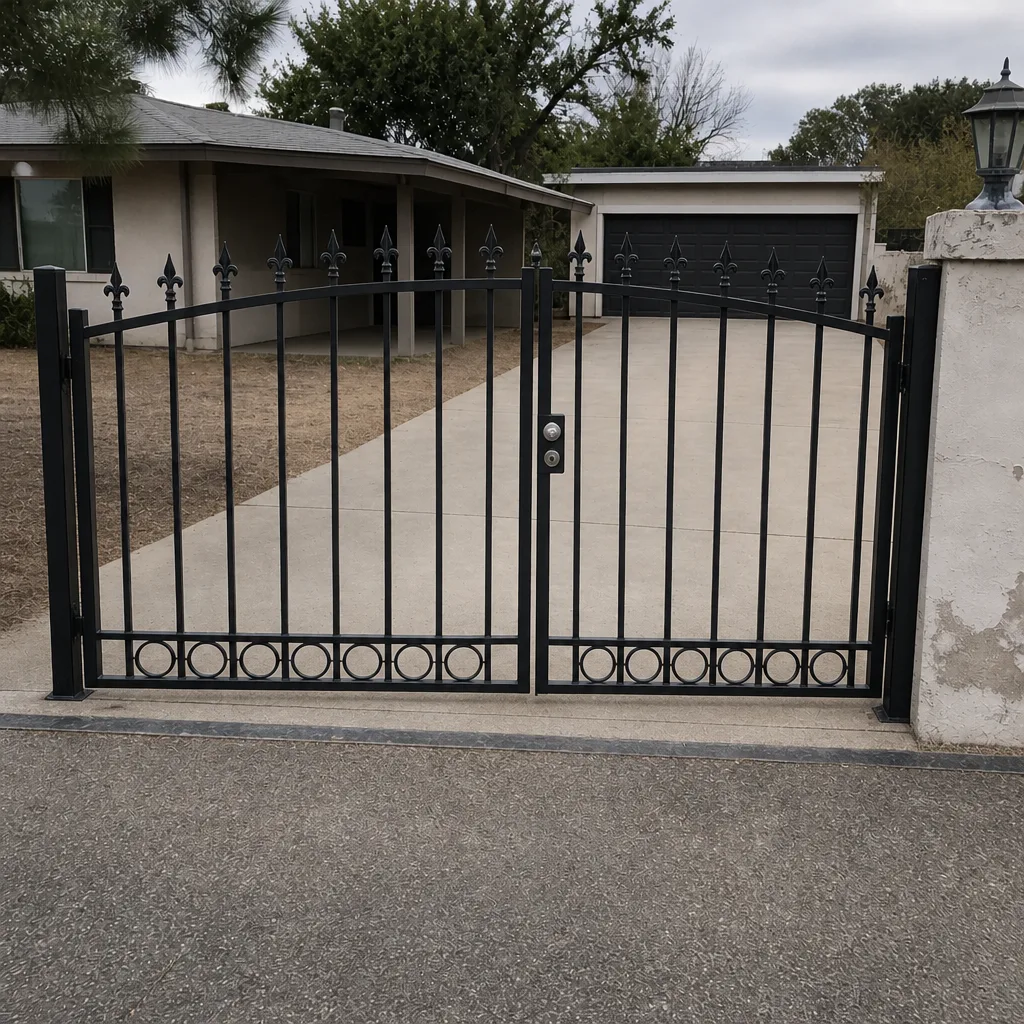
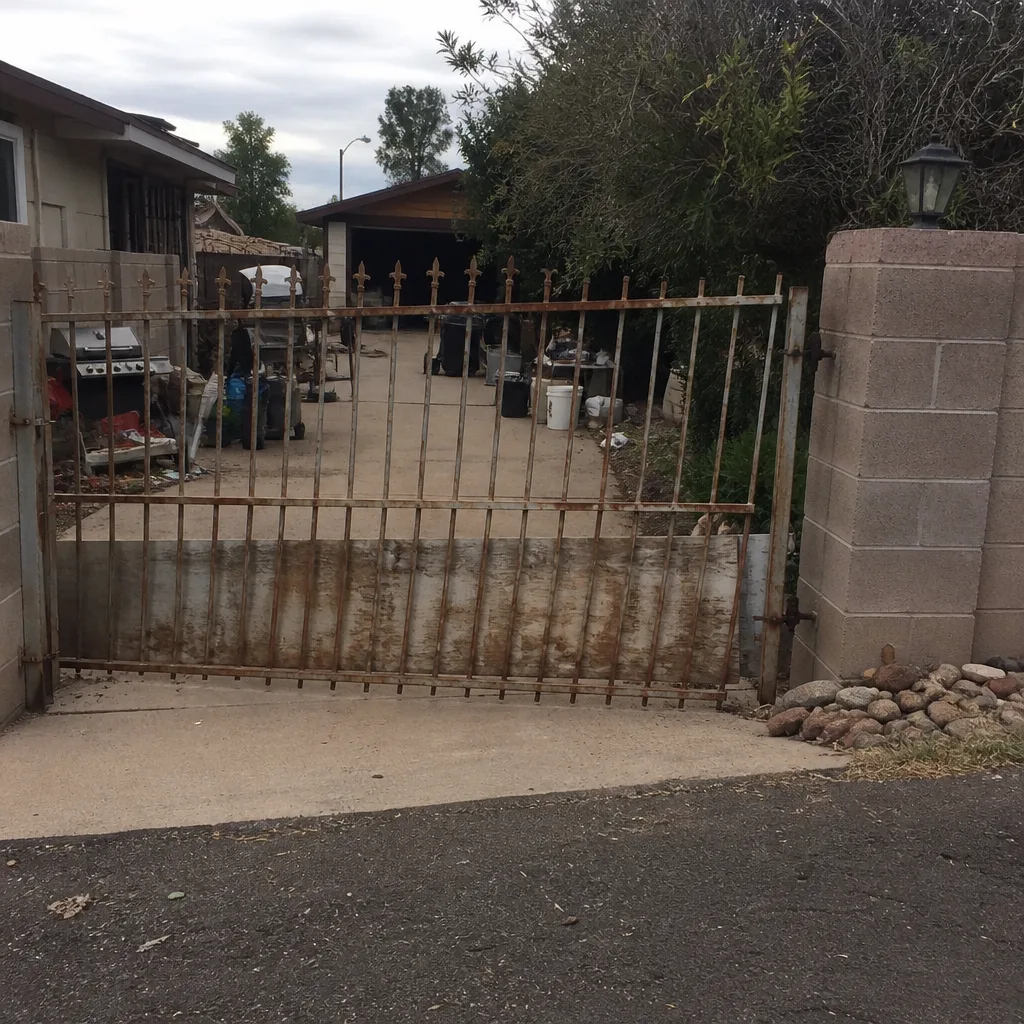
See the difference
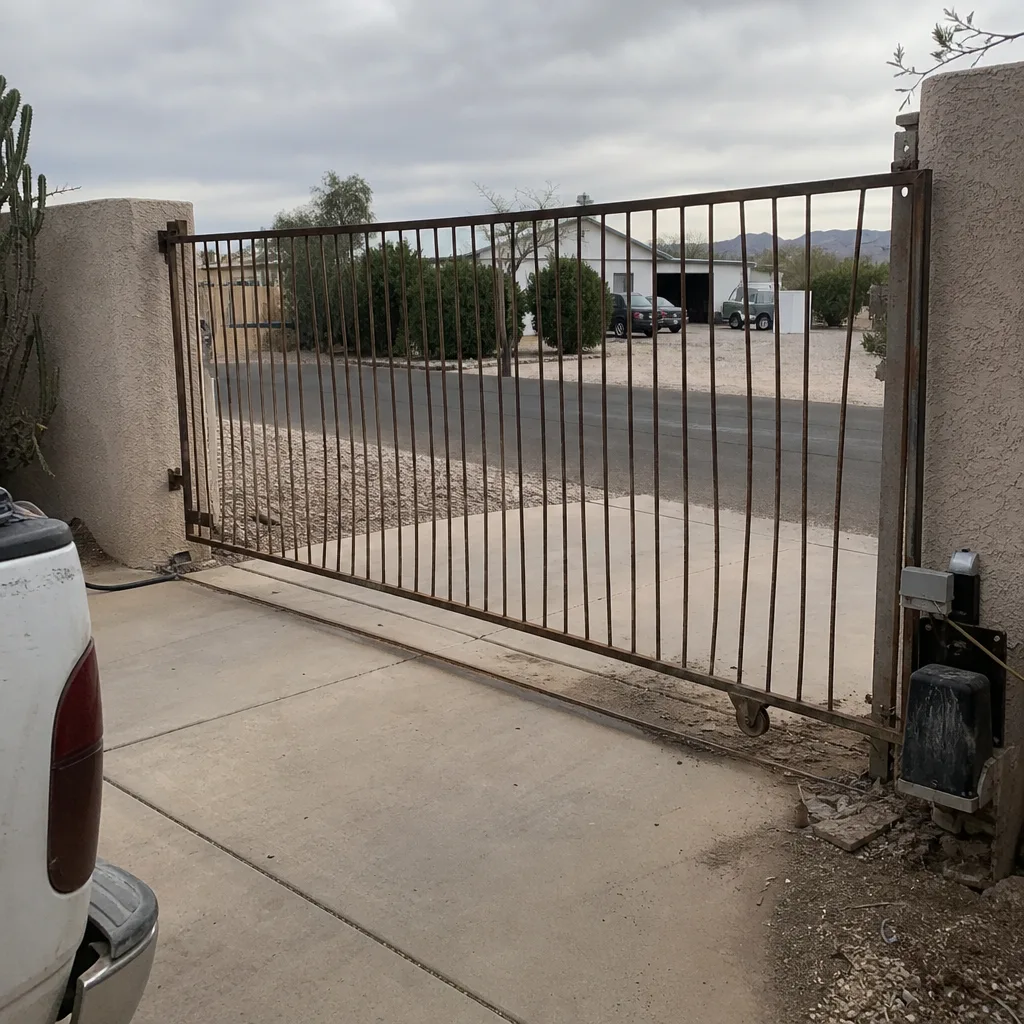 Before
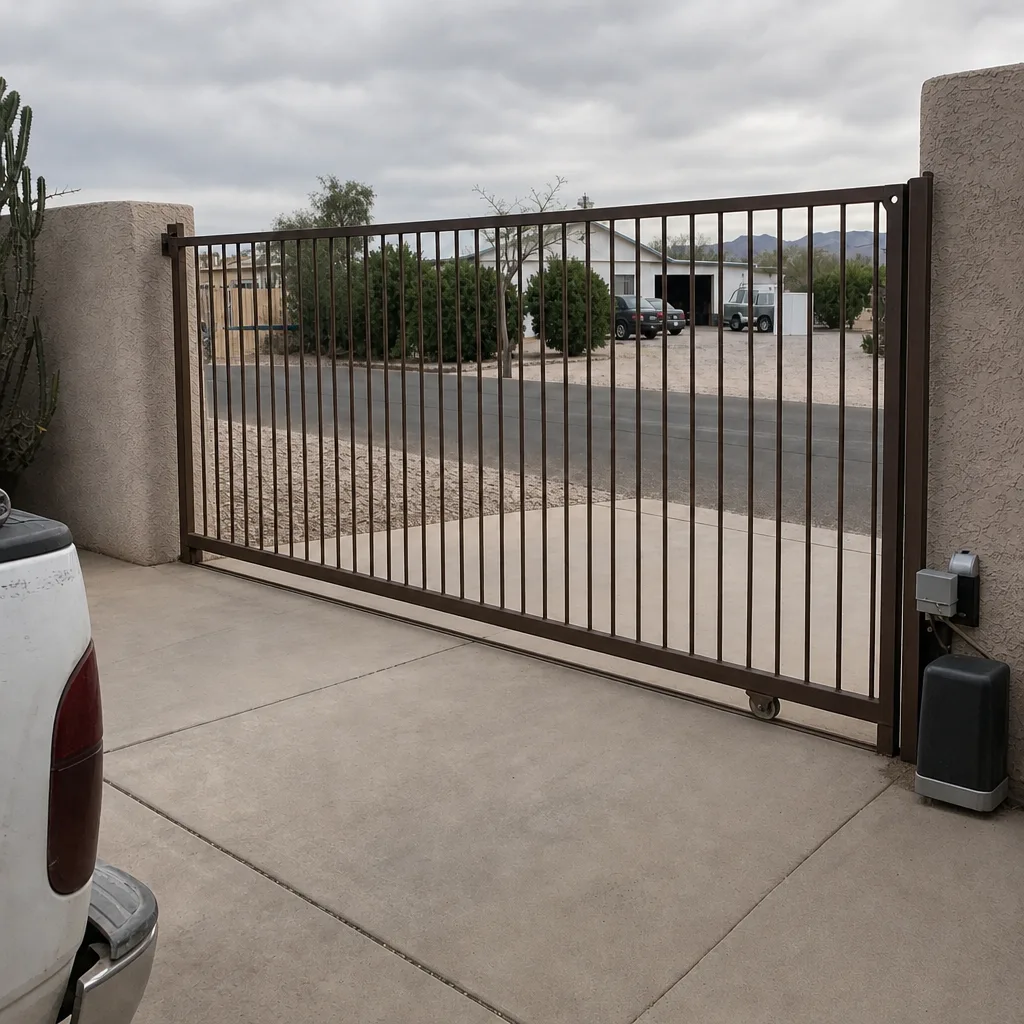 After
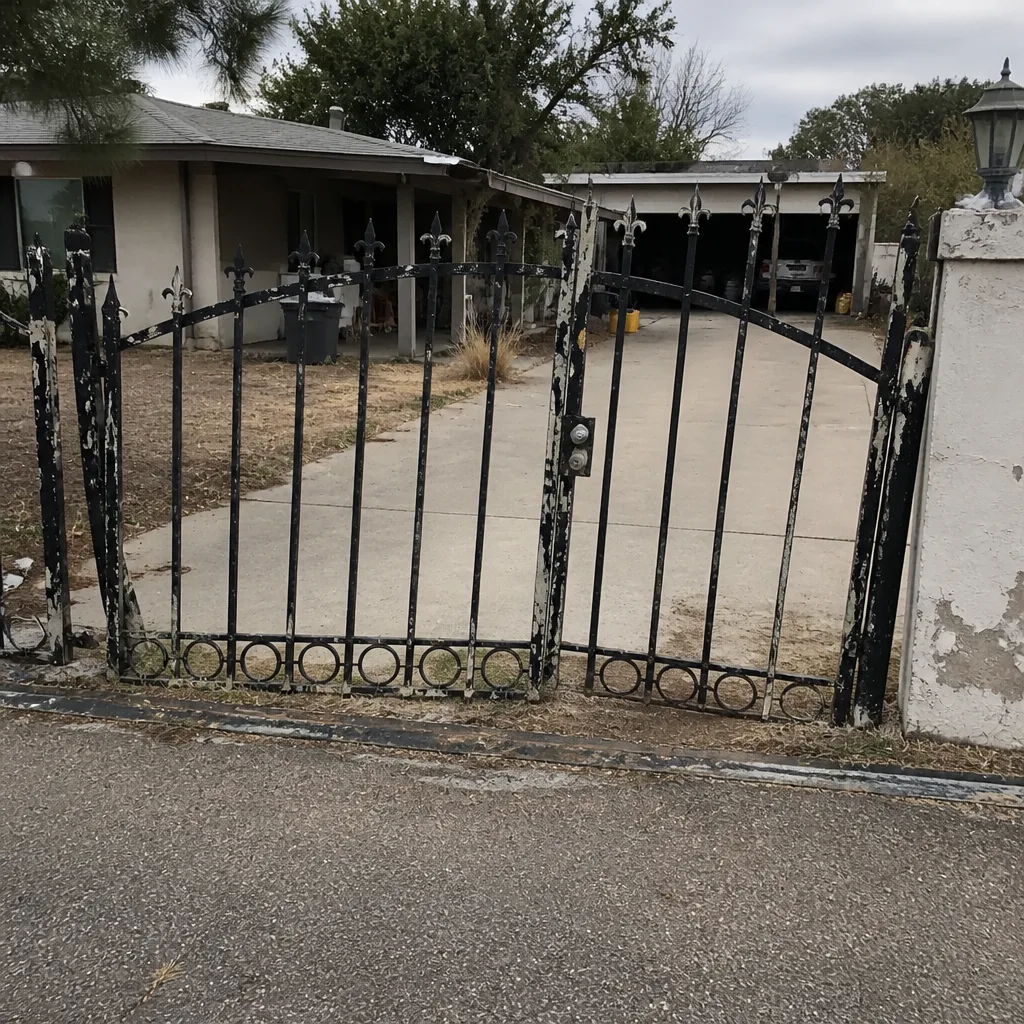 Before
 After
 Before
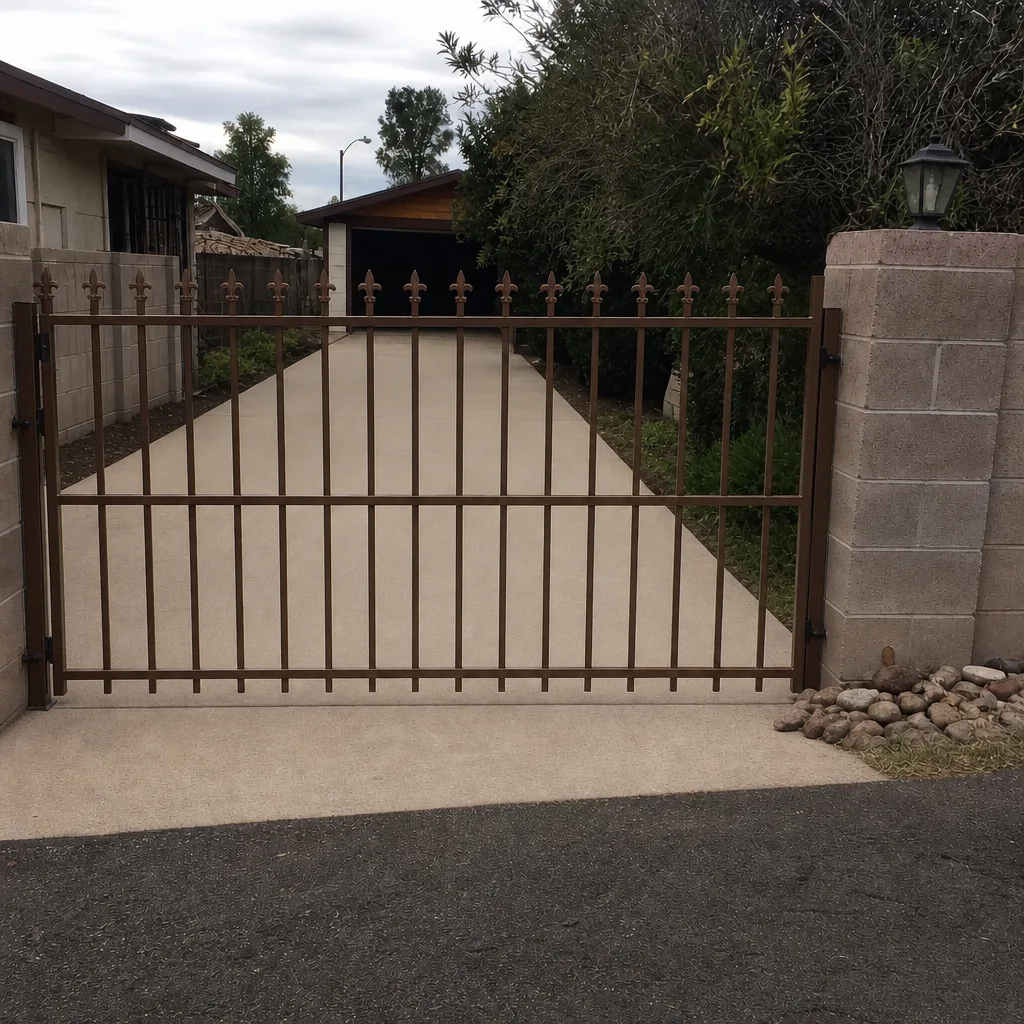 After
When to Call a Professional
Some gate problems are genuinely do-it-yourself-adjacent – a visual check, cleaning sensors, noting symptoms – but several scenarios should go straight to a trained professional. Any high-voltage wiring, a control board or operator fault, a safety sensor that won’t behave, or a heavy slide gate that’s binding or off its track is a job for someone who works on gates for a living. Post footings and heavy panels are the same: a gate that’s fallen or about to is a hazard to people and vehicles. When something moves that shouldn’t, or the electrical side is in question, don’t force it. Gate Repair Peoria offers free estimates in Peoria – call (855) 574-0402. We answer 24/7. Fast dispatch from 7am to 7pm, Sunday through Friday.
Frequently Asked Questions
Gate repair in Peoria is priced per job based on the written estimate, and the estimate is free. The final cost depends on whether the problem is structural, mechanical, or electrical, and on what parts the diagnosis calls for. You’ll know the price before any work starts. Call (855) 574-0402 for an exact quote – estimates are free.
Many gate repairs can be handled the same day, especially sensor, limit, and adjustment issues that don’t need ordered parts. Structural repairs and operator replacements may need scheduling once we know what’s involved. We answer 24/7, with fast dispatch from 7am to 7pm, Sunday through Friday. Call (855) 574-0402 to find out.
A gate that keeps breaking usually has an undiagnosed root cause, most often a shifting post footing in Peoria’s expansive clay soil or dust-packed limit switches. Repairing the symptom without the cause leaves the gate to fail again. A proper diagnosis finds the cause first. Call (855) 574-0402 and we’ll take a look.
Gate repair is about the diagnosis and the parts, not the nameplate. We work with the major gate and access-control brands you’ll find on Peoria properties, including LiftMaster, FAAC, Elite, and Mighty Mule, and we repair what’s installed rather than pushing a brand switch. Call (855) 574-0402 to describe your gate – estimates are free.
It depends on the symptom: intermittent operation that worsens with heat often points to degraded wiring, while a unit that gets power but doesn’t respond or moves one direction can point to the board or motor. Only a proper test tells them apart, and getting it right avoids doubling the repair cost. Call (855) 574-0402 for an accurate diagnosis.
Dust storms push fine dust into limit switches and photo-eye sensors, so the operator misreads the gate’s position or thinks something is in the way. Many “broken” gates after a storm just need their sensors and limits cleaned and tested. If it still won’t close afterward, call (855) 574-0402 – estimates are free.
The Bottom Line
Most gate problems in Peoria come down to three local forces: shifting soil under the posts, heat working on wiring and boards, and dust clogging switches and sensors. The repair that lasts is the one that names the right cause before touching a part. Sort the problem into structural, mechanical, or electrical, match it to your gate type, and you’ll replace what’s actually broken instead of chasing the same failure again. A specialist who knows caliche, desert heat, and haboob dust will find the cause. If you’re not sure where your gate fits, call us and we’ll help you figure it out.
Ready for a straight assessment? Gate Repair Peoria offers free estimates and works across the major gate and access-control brands. Call (855) 574-0402 for a free estimate. We answer 24/7. Fast dispatch from 7am to 7pm, Sunday through Friday.
Written by the team at Gate Repair Peoria.