
Last updated November 15, 2026
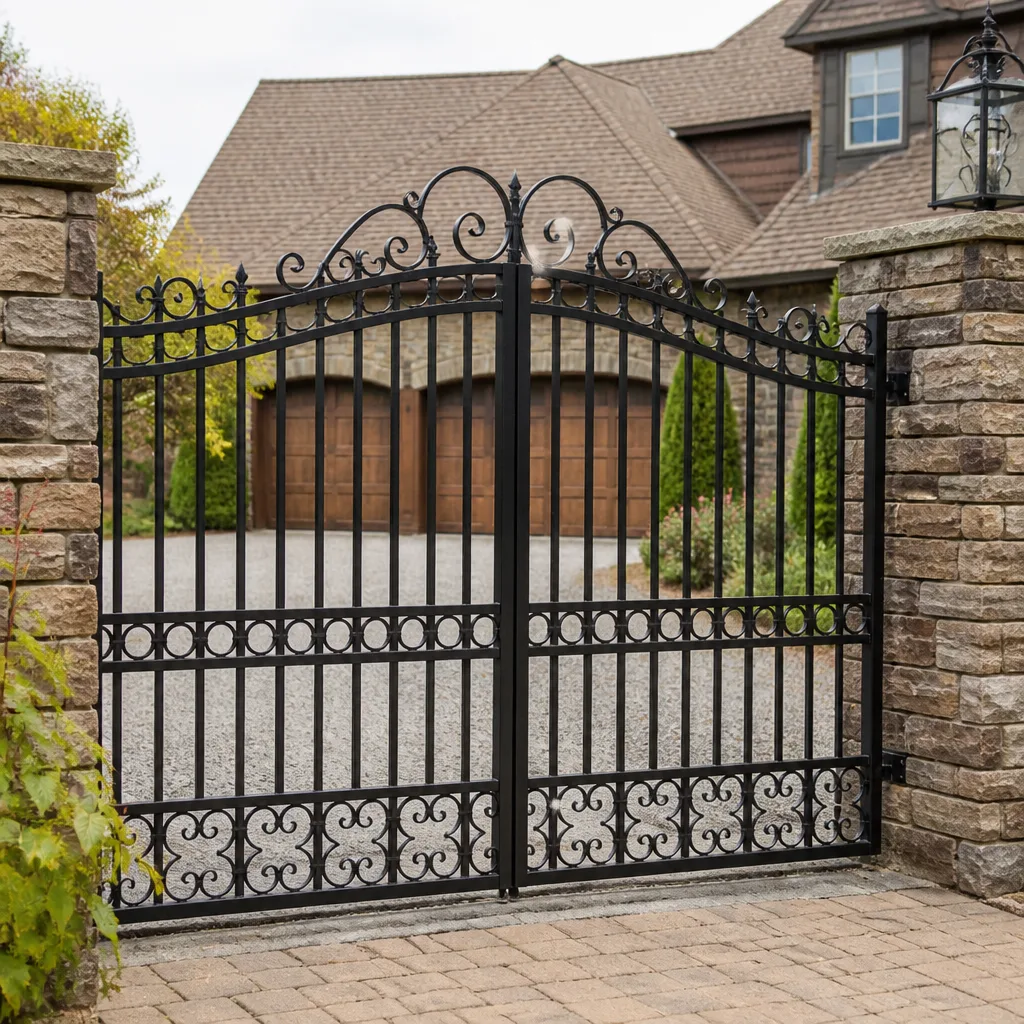 Wrought iron
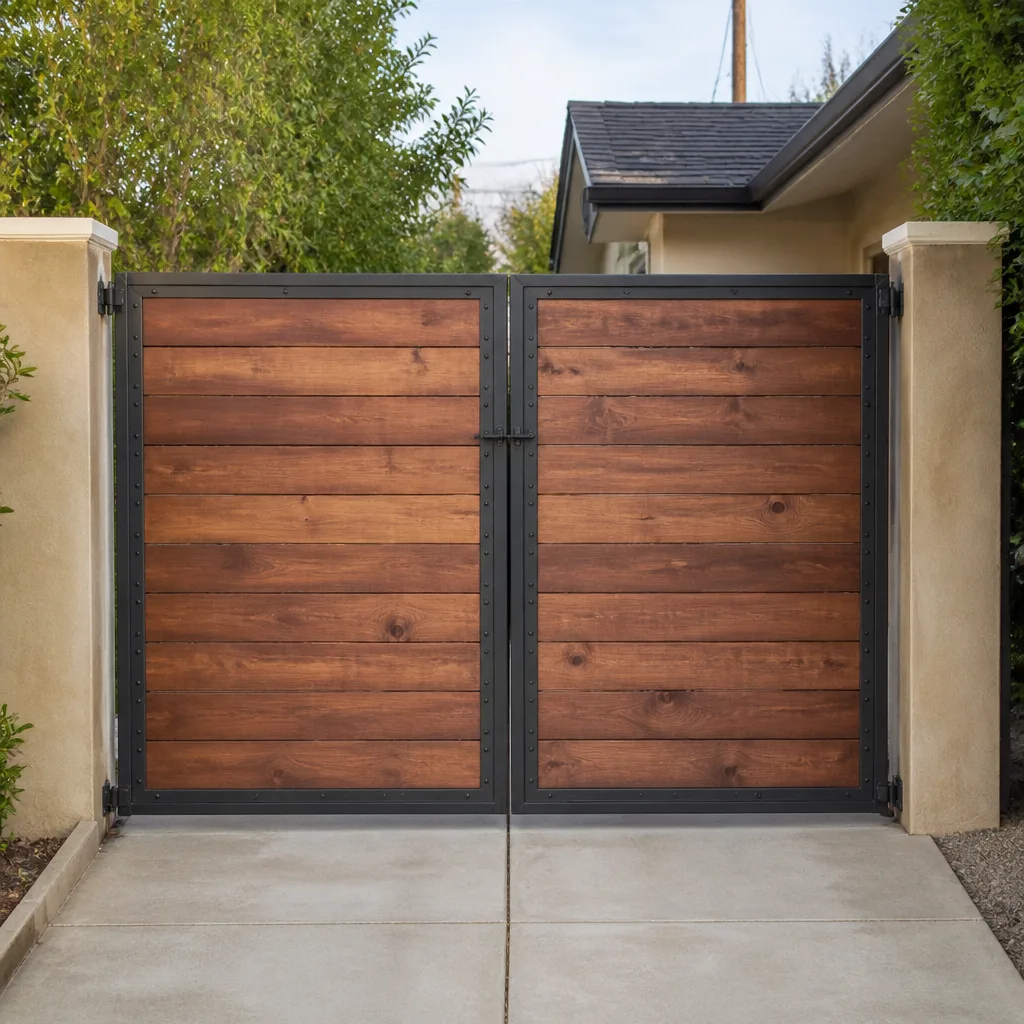 Wood & steel frame
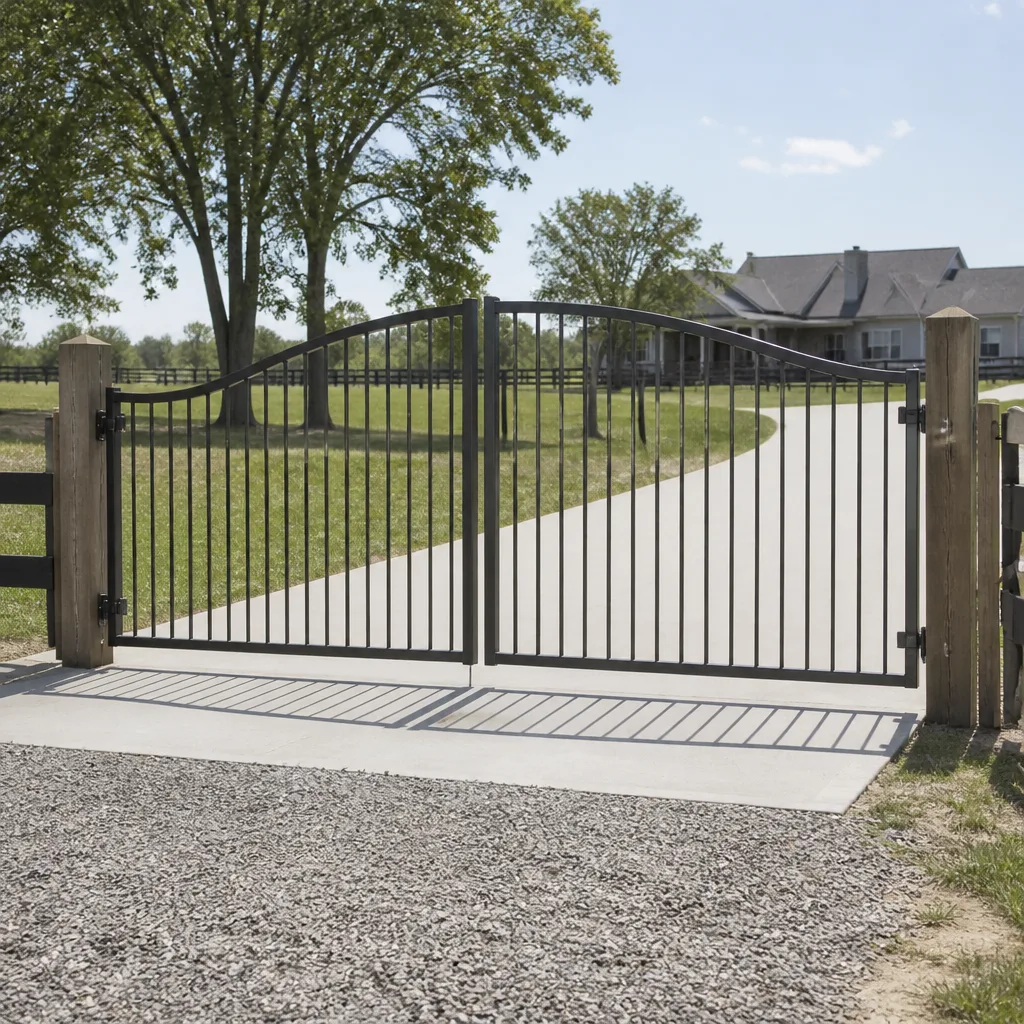 Farm & ranch
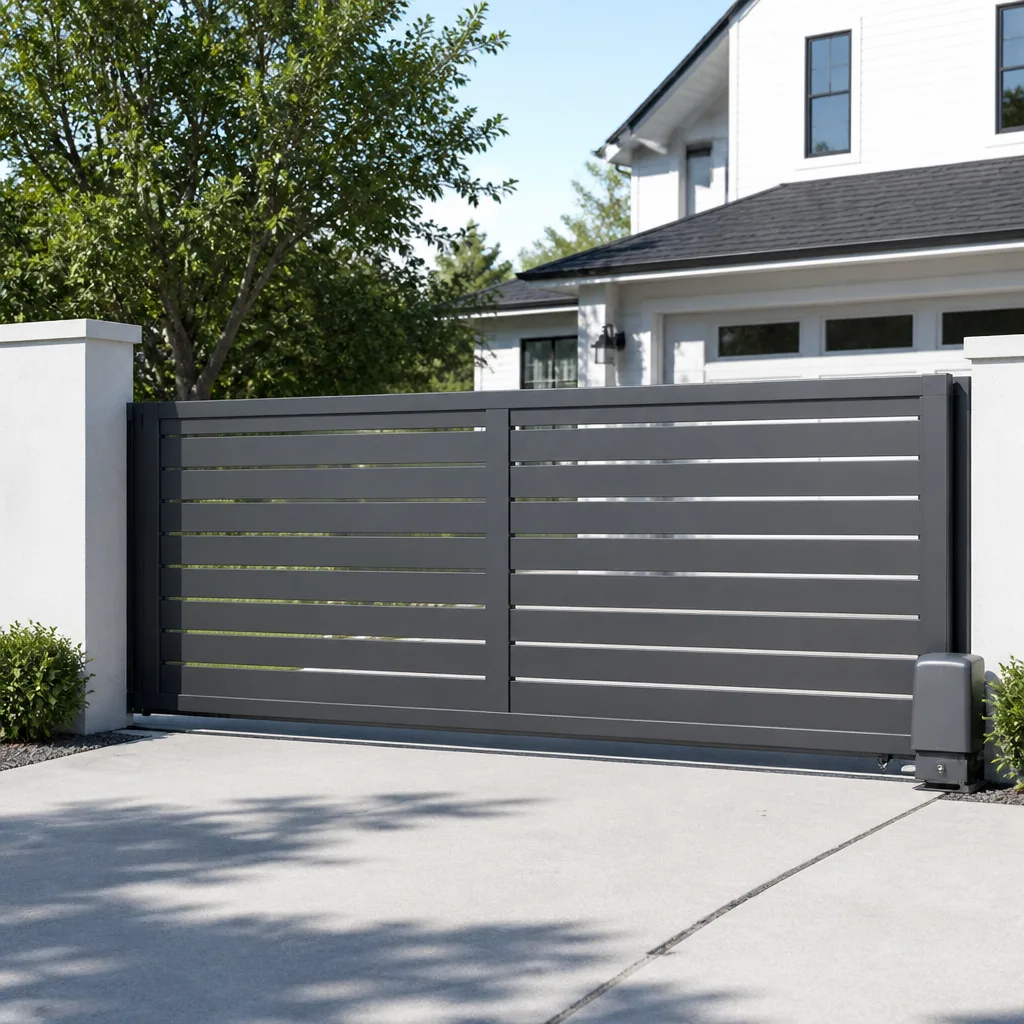 Sliding driveway gates
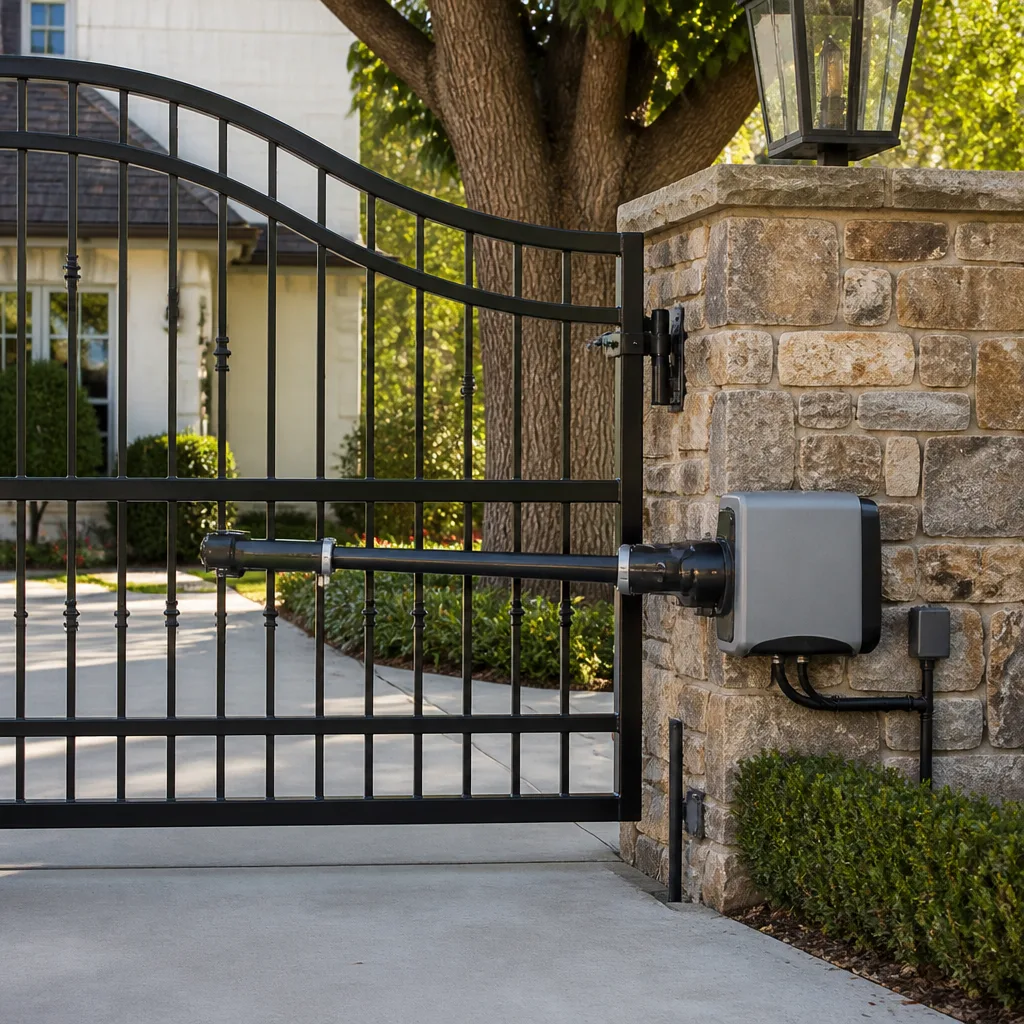 LiftMaster operators
Free on-site gate assessment - hinges, posts, and your LiftMaster or Nice gate operator checked before anything is quoted
The assessment is free and the quote is the invoice.
Get your free estimateGate Repair Warning Signs: A Peoria Homeowner’s Reference Guide
A gate that reverses for no apparent reason isn’t malfunctioning. It’s doing exactly what it was programmed to do when an obstruction sensor is dirty, misaligned, or starting to fail. That “glitch” is a countdown. The same goes for a slow opener, a grinding sound, or a gate that sticks only sometimes. Each of those behaviors is a gate system telling you which component is next to break. This guide translates the specific sounds, movements, and visual cues Peoria gate systems produce into the specific failures they’re predicting, so you can act before a car is stuck blocking the driveway.
Quick Answer
The most common gate repair warning signs in Peoria are grinding or clicking from the opener, a gate that reverses or stops at random, humming with no movement, and cracks radiating from post bases in stucco columns or concrete footings. Intermittent problems usually point to electrical or sensor faults; consistent, repeatable problems usually point to mechanical or structural wear. Catching them early keeps a small repair from turning into a gate that fails completely and blocks your entry.
Styles & brands we work with
- Wrought iron
- Wood & steel frame
- Farm & ranch
- Sliding driveway gates
- LiftMaster operators
Table of Contents
- What Your Gate’s Sounds Are Telling You
- Visual Warning Signs in Stucco Columns and Footings
- Intermittent vs. Consistent Failures: What Each Signals
- How to Read Your Gate Operator’s Fault Code
- Slide Gate vs. Swing Gate: Different Symptoms, Different Problems
- Sensor, Loop, and Safety Edge Warning Signs
- Why Peoria Heat and Dust Accelerate Gate Wear
- Catching Problems Early: What to Check and When to Stop
What Your Gate’s Sounds Are Telling You
Sound is the fastest diagnostic tool a gate gives you. Each noise type maps to a different failing component, and knowing the difference helps you describe the problem accurately when you call.
- Grinding points to track and roller contact, or to worn drive components. On a slide gate, grinding usually means the track is clogged with grit, the rollers are flat-spotted, or the gate is riding out of alignment. The component is wearing down, and the noise gets louder as the problem grows.
- Clicking is often a limit switch. The limit switch tells the operator where to stop, and when it’s failing you’ll hear a click as the gate reaches a point and then halts or reverses. Left alone, the gate loses its stopping reference entirely.
- Humming with no movement means the motor has power but the gate isn’t moving. That’s frequently a capacitor, a seized roller, or a mechanical bind. The motor will overheat and fail if it keeps trying to push against a jammed gate.
- Intermittent beeping is usually a control board reporting a fault code. The beep pattern itself can be a code, so note how many beeps and how often they repeat before you call.
In our experience, grinding and humming are the two sounds homeowners most often explain away. Both indicate active wear rather than a one-time hiccup. If you’re hearing either on a regular basis, that gate is on a timeline, not a mystery. Our Gate Repair Peoria team diagnoses these sounds from the component up, not from the outside in.
Visual Warning Signs in Stucco Columns and Footings
Structural problems announce themselves visually before the gate actually binds. The place to look first is the base of the post, where it meets concrete or where the stucco column sits on its footing.
Here’s what matters, and what doesn’t. Hairline surface crazing along a stucco column is common in Peoria’s heat and usually cosmetic. A crack that runs vertically from the footing up the column and continues to grow is different: it can indicate post movement. Also look for these signs:
- Gaps at the base where the column or post has separated from the concrete footing.
- Cracks spreading out from a corner of the footing, which can mean the footing is settling or the post is shifting under load.
- A gate that has dropped on one side, so the latch no longer lines up and the gate sags visibly when open.
- Hinges pulling away from the post, with the wood or metal around them cracking or loosening.
- Concrete spalling or crumbling around the footing, especially after heavy monsoon runoff.
Post movement is the structural warning sign homeowners miss most often because the gate still opens, just differently. By the time the gate binds and won’t close, the movement has usually been building for a while. Treat a growing vertical crack like a warning light, not a decoration.
Intermittent vs. Consistent Failures: What Each Signals
The single most useful question you can answer about a failing gate is whether it fails every time or only sometimes. That one distinction tells you which half of the system to look at.
Intermittent failures almost always point to electrical or sensor issues. A gate that reverses every few cycles, one that works in the morning and not in the afternoon, or one that opens fine and won’t close is behaving like an electrical problem. Dirty photo-eye lenses, a loose wire connection, a voltage drop, or a failing control board can all make a gate work one minute and fail the next. So can a misaligned safety edge that only triggers when the gate flexes a certain way.
Consistent failures point to mechanical or structural causes. A gate that grinds every single time, one that always stops at the same spot, or a gate where the latch never lines up is telling you about physical wear. Worn rollers, a bent track, a sagging hinge, or a shifted post don’t fix themselves and don’t work intermittently. They fail predictably, which makes them easier to diagnose but also more likely to worsen steadily.
This matters because the wrong diagnosis wastes money. Replacing a sensor on a mechanically bound gate fixes nothing, and adjusting a mechanical track won’t help a gate whose control board is faulting. When we run gate repair calls, the first thing we establish is which pattern the failure follows.
How to Read Your Gate Operator’s Fault Code
Most gate operators have a diagnostic indicator on the control board, and many homeowners don’t know it exists. Reading it takes only a minute and gives you a head start on what a technician will find.
- Find the control board. It sits inside the operator housing, usually under a removable cover. Turn off power before you open anything, and check your manual for its location.
- Look for the indicator. Many boards have a small LED that flashes in a set pattern when a fault occurs. A LiftMaster or FAAC board typically uses a specific number of flashes to correspond to a fault type.
- Count the flashes. Note how many flashes occur in a group and how long the pause is before the next group. That pattern is the code.
- Match the code to your manual. The manual’s diagnostic table lists what each flash pattern means, from power issues to sensor faults to motor faults.
- Write it down. When you call for service, tell us the flash pattern. It tells us whether the fault is in the board, a sensor, or the motor before we arrive.
The same is true of the newer app-connected operators. Mighty Mule and Elite systems often show a fault code or status in the app, and that readout is just as useful. Don’t try to repair a control board yourself; the board carries live voltage and the components are delicate. Reading the indicator is safe. Swapping parts is a job for someone trained to do it.
Slide Gate vs. Swing Gate: Different Symptoms, Different Problems
The same symptom means completely different things on a slide gate versus a swing gate. This is the most common source of confusion when a homeowner tries to diagnose their own system, because a slide gate and a swing gate that both “coast past the stop point” have nothing wrong in common.
On a slide gate, coasting past the stop means the inertia of the gate is carrying it past the limit. A slide gate is a heavy panel on rollers, and when the operator stops, the gate can keep rolling for a few inches under its own momentum. That usually points to a worn or misadjusted limit switch, a drive rack that has slipped, or an operator whose braking has degraded. Left unattended, the gate can travel past the end of the track and come off entirely, which is a genuine crushing hazard.
On a swing gate, coasting past the stop means the operator’s limit settings or the arm geometry are off. A swing gate that overshoots when it opens can slam into a column, push past a stop post, or fail to latch. It also stresses the operator arm and the hinge, and it can damage the gate leaf itself.
Other behaviors split the same way:
- Slide gate that drifts sideways as it moves points to guide rollers or a track problem.
- Swing gate that drifts sideways as it opens points to hinge sag or a post that has moved.
- Slide gate that jerks at the start often has a rack or track issue.
- Swing gate that jerks at the start often has an arm or operator alignment problem.
- Slide gate that reverses mid-travel usually hits a safety edge or loop issue.
- Swing gate that reverses mid-travel often hits an obstruction sensor or hard stop.
If your gate behaves like any of these, it’s worth having it looked at with the gate type in mind. Our electric gate repair work covers both slide and swing operators across brands, so the diagnosis starts with the right mechanical vocabulary.
Sensor, Loop, and Safety Edge Warning Signs
Safety components fail more quietly than mechanical parts because the gate often keeps working, just not correctly. A gate that reverses randomly, closes on a car, or stops when nothing is in the way is telling you a sensor problem is active.
- Photo-eye sensors: a gate that closes and then immediately reverses can have a dirty, misaligned, or sun-blinded sensor. In Peoria’s bright daylight, a sensor that’s slightly misaligned is more likely to fault in afternoon sun than at night, which makes the problem look random.
- Loop detectors: a gate that opens for nothing, or refuses to close because it thinks a car is present, often has a failing loop or an improperly tuned detector. Loops in driveways crack with ground movement and heat.
- Safety edges: the rubber edge on the gate’s closing face is a pressure sensor. When it fails, the gate can close on an obstruction without reversing, which is the most serious safety issue on any electric gate.
- Intercom and access control: a keypad that works sometimes, or an intercom that doesn’t trigger the gate, is a wiring or control board issue.
Never bypass a safety edge to “fix” a gate that keeps reversing. That bypasses the one protection that keeps a closing gate from trapping a child, a pet, or a vehicle. If the safety edge is faulting, the gate needs service before it should be put back in regular use.
Why Peoria Heat and Dust Accelerate Gate Wear
Peoria gives gate systems a harder workout than many places. Summer heat stresses motors, capacitors, and control boards; dust and grit work into tracks and rollers; and monsoon-season rain and blowing debris test hinges and sensing equipment. None of that is unique to one gate brand, but it changes how fast ordinary wear shows up.
Here’s what the local conditions do over a season:
- Heat cycles expand and contract metal tracks, operator housings, and gate frames, which loosens fasteners, adds stress to joints, and works the tracks slightly out of alignment.
- Dust and grit collect in slide-gate tracks and roller bearings, turning into a grinding paste that accelerates wear on rollers and track surfaces.
- Monsoon rain and wind push debris into gate paths, soak control boxes that aren’t well sealed, and add moisture to footing and column joints that can lead to movement.
- Intense sun degrades the plastic parts on safety edges, photo-eyes, and sensor housings, and stresses control board components in outdoor-rated enclosures.
That’s why we tell Peoria homeowners to look at the gate itself, not just the operator. A system that’s fine in a milder climate can need attention sooner here. A dust-clogged slide track or a heat-stressed capacitor shows up as the grinding and humming we described above, often within a single hot season.
Catching Problems Early: What to Check and When to Stop
Most of what you can do safely is observe. There’s real value in knowing what your gate normally sounds like, how fast it moves, and where it stops, because a change is the earliest warning sign you’ll get. Here’s a short walk-through you can do periodically without opening any electrical housing.
- Listen before you look. Run the gate and note the sound. Any new grinding, clicking, or humming is worth writing down.
- Watch the travel. Note whether the gate reaches the same stop point every time. Note whether it reverses, hesitates, or overshoots.
- Check the track and rollers. Look for debris, flattened rollers, or a track that has pulled loose. Clear loose debris by hand only, with the gate powered down.
- Look at the post bases. A growing crack or a gap at the footing is a structural warning sign, not a cosmetic one.
- Clean the photo-eyes. Wipe the sensor lenses at the top of the driveway with a soft cloth. Never realign them yourself.
- Note the fault indicator if you can see it through the housing, and write down the flash pattern.
Where to stop: at the control box, the wiring, and the operator housing. Gate operators run on line voltage, capacitors can hold a charge after power is cut, and a heavy gate leaf or a slide panel that moves unexpectedly can crush a hand or worse. Reading a fault light is fine. Replacing a board, adjusting an arm, or working on a gate that may reverse on its own is work for a trained technician. Our technicians have up to 11 years of experience, and we’d rather have you call than reach inside a live operator.
Common Mistakes to Avoid
- Ignoring an intermittent problem because it “worked today.” Intermittent failures point to electrical and sensor problems that get worse with heat and dust, and the next failure can leave a car trapped.
- Greasing a slide track to “fix” grinding. Grease traps more dust and grit, and in Peoria’s conditions it turns a track into a sticky paste that accelerates roller wear. Clean tracks work better than greased ones.
- Bypassing the safety edge or photo-eye to stop the reversing. That removes the one feature that keeps a closing gate from trapping someone. It’s a safety shortcut, not a fix.
- Assuming all reversing means “sensor” or all stopping means “motor.” Intermittent and consistent problems have different causes, and the right diagnosis saves you from paying for parts you don’t need.
- Calling a general handyman for an electric gate. Motorized openers, control boards, loops, and intercoms are specialized work. A generalist is likely to guess, and that can cost more than the original repair.
- Patching a stucco crack and ignoring the footing. Cracks that spread from the base of a column often indicate post movement, and patching the surface hides the warning without fixing it.
- Letting a heavy slide gate coast past its stop. A slide gate that overshoots the end of its track can come off the track and land on a person or vehicle. Treat that symptom as urgent.
See the difference
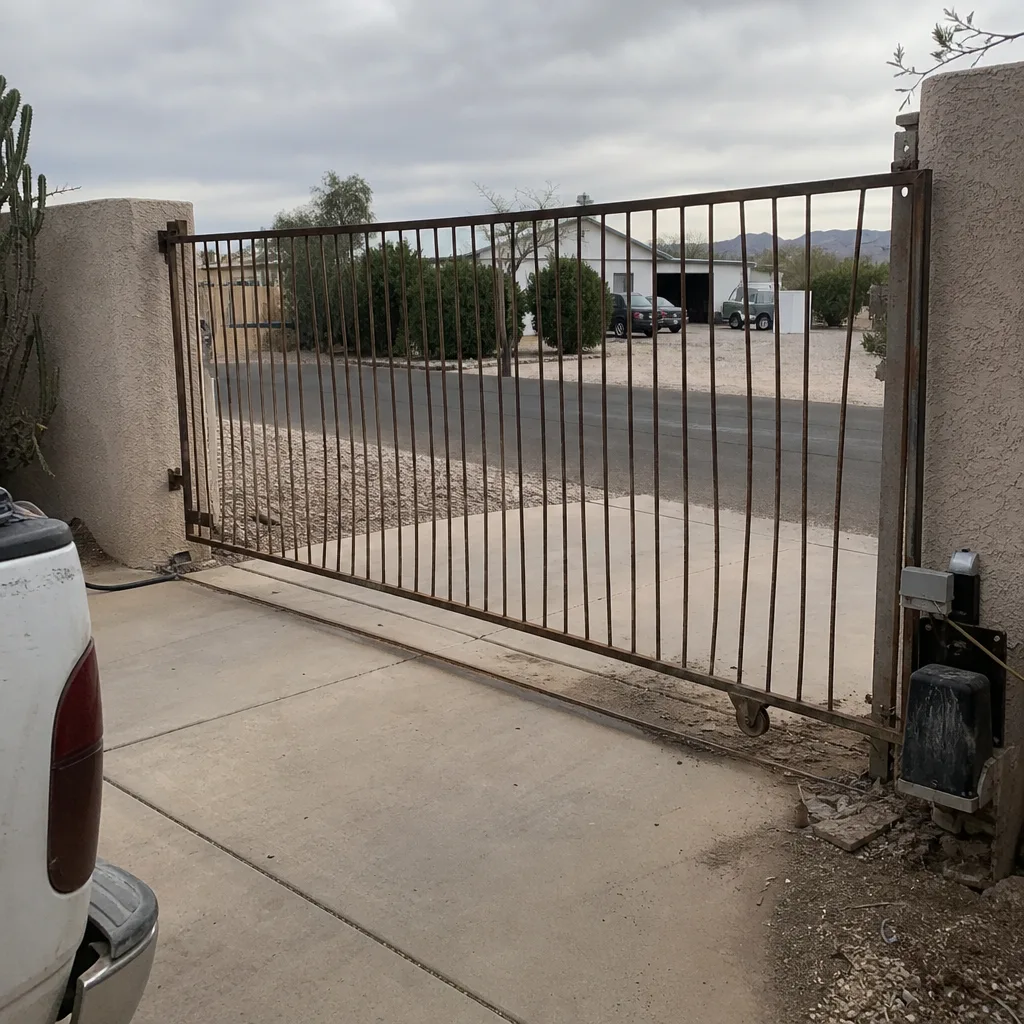 Before
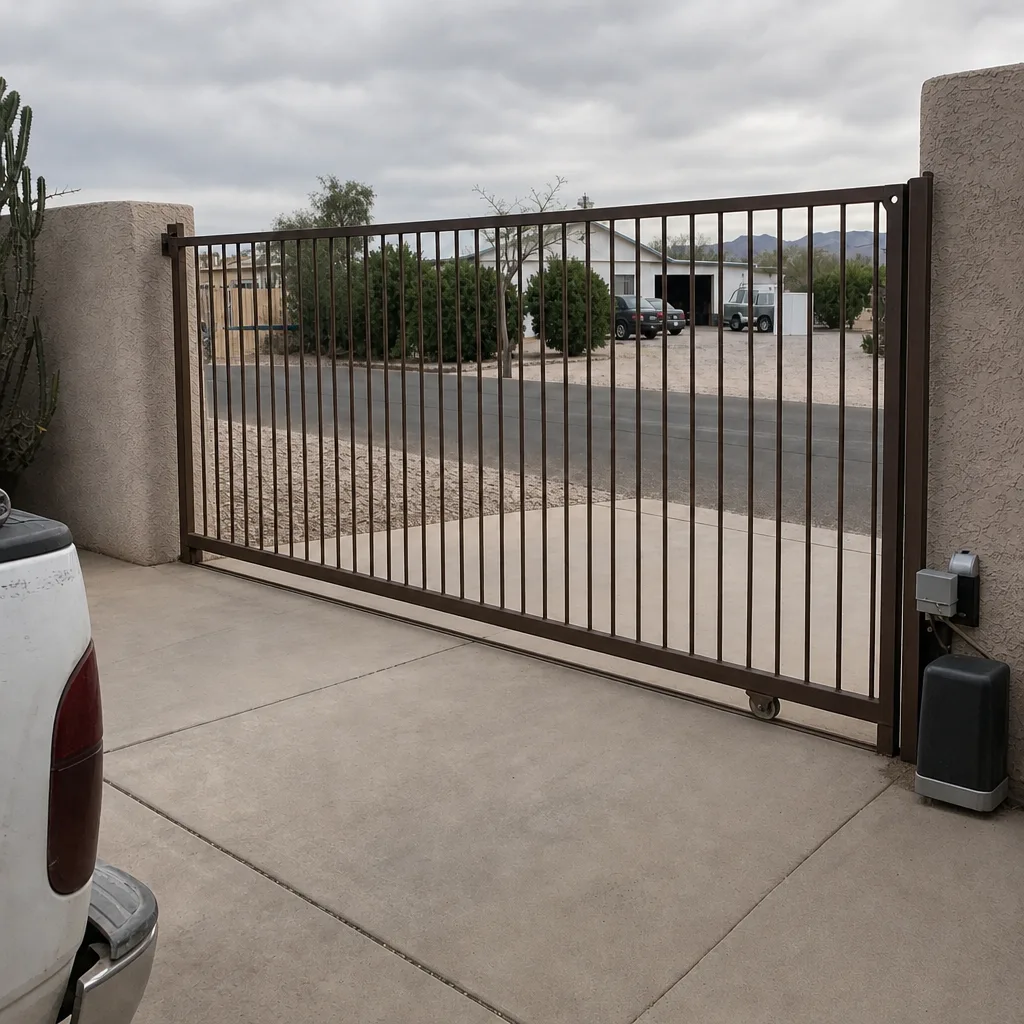 After
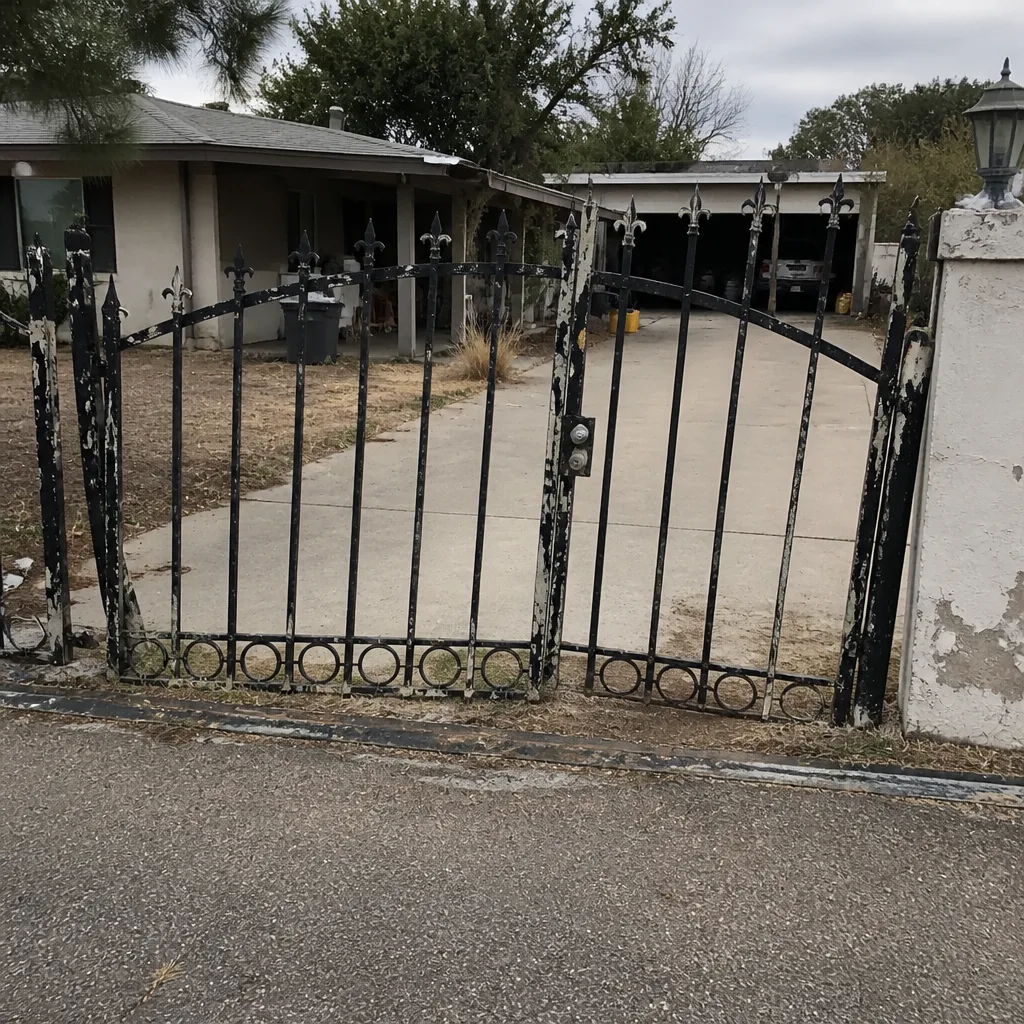 Before
 After
 Before
 After
When to Call a Professional
Call us when you notice any of these: grinding that doesn’t go away, humming with no movement, a gate that reverses on its own, a gate that overshoots its stop, a safety edge that doesn’t reverse the gate on contact, a keypad or intercom that only sometimes works, visible cracks running up from a footing, or a gate that’s dropped on one side. Those are signs that a small repair is heading toward a larger one, and they’re also signs a technician should look at the system rather than have you open it. Gate Repair Peoria offers free estimates in Peoria. Call (855) 574-0402. We answer 24/7. Fast dispatch from 7am to 7pm, Sunday through Friday.
Frequently Asked Questions
Grinding or humming during operation is usually the first sign, because it means mechanical wear is already underway. A gate that reverses intermittently or misses its stop point is the second most common warning. Both are worth a call before the gate fails completely.
Most likely, yes. A gate that reverses without an obstruction in the way usually has a dirty, misaligned, or failing obstruction sensor, or a safety edge that’s been triggered. It’s the system doing what it was programmed to do. Don’t bypass the sensor; have it checked. Call (855) 574-0402 for an exact diagnosis.
How much does gate repair cost in Peoria?
Gate repair is priced per job by a written estimate after we inspect the gate, so there’s no single price that fits every case. A simple adjustment costs less than replacing a motor or control board, and we quote the price and agree it with you before any work starts. Estimates are free. Call (855) 574-0402.
Do Peoria’s heat and dust really make gates fail faster?
Yes. Heat stresses motors and control boards, and dust turns slide-gate tracks and roller bearings into grinding surfaces. That’s why checking your gate after a hot season or a monsoon is a good habit, and why cleaning the track and sensors helps more than greasing them.
You can safely observe and clean the outside of the system, but not work on the operator or wiring. Gate operators carry line voltage and capacitors can hold a charge, and a gate that moves unexpectedly is a crushing hazard. Have a trained technician handle anything inside the control housing or on the gate itself.
Yes, and we work on the ones installed most often around Peoria, including LiftMaster, FAAC, Mighty Mule, Elite, and the other brands in our portfolio. We repair the gate that’s already there rather than pushing a replacement. Call (855) 574-0402 for an appointment.
Keep people and vehicles clear of the gate and don’t try to lift or move a heavy panel by hand. Call (855) 574-0402. We answer 24/7. A call outside dispatch hours is booked into the next opening, Sunday through Friday, 7am to 7pm.
No. The price is set per job by the written estimate, and we agree that price with you before any work begins. Same-day service just means we can often get to the gate faster, not that the repair costs more. Estimates are free. Call (855) 574-0402.
The Bottom Line
Gate failures usually give warning signs before they stop your entry completely. Grinding and humming point to mechanical wear, clicking points to limit switches, and random reversing points to sensor or electrical faults. Learn to tell intermittent problems from consistent ones, and to tell slide-gate behavior from swing-gate behavior, because the same symptom can mean different things on each. Check post bases and stucco columns for growing cracks, and read the diagnostic indicator on your operator when a fault occurs. If any of the warning signs in this guide show up on your gate, our Peoria team is ready to look at it. Call (855) 574-0402 for a free estimate. We answer 24/7. Fast dispatch from 7am to 7pm, Sunday through Friday.
Written by the team at Gate Repair Peoria.