
Last updated November 15, 2026
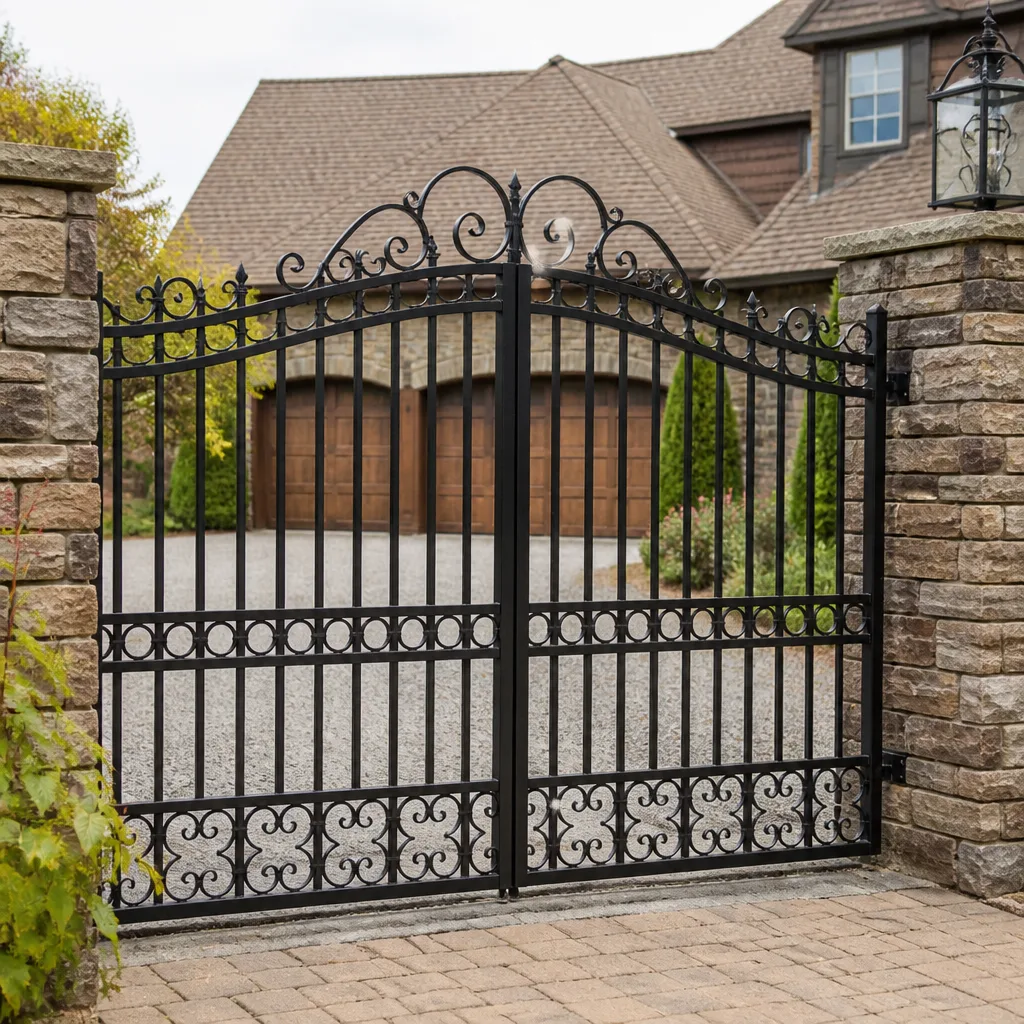 Wrought iron
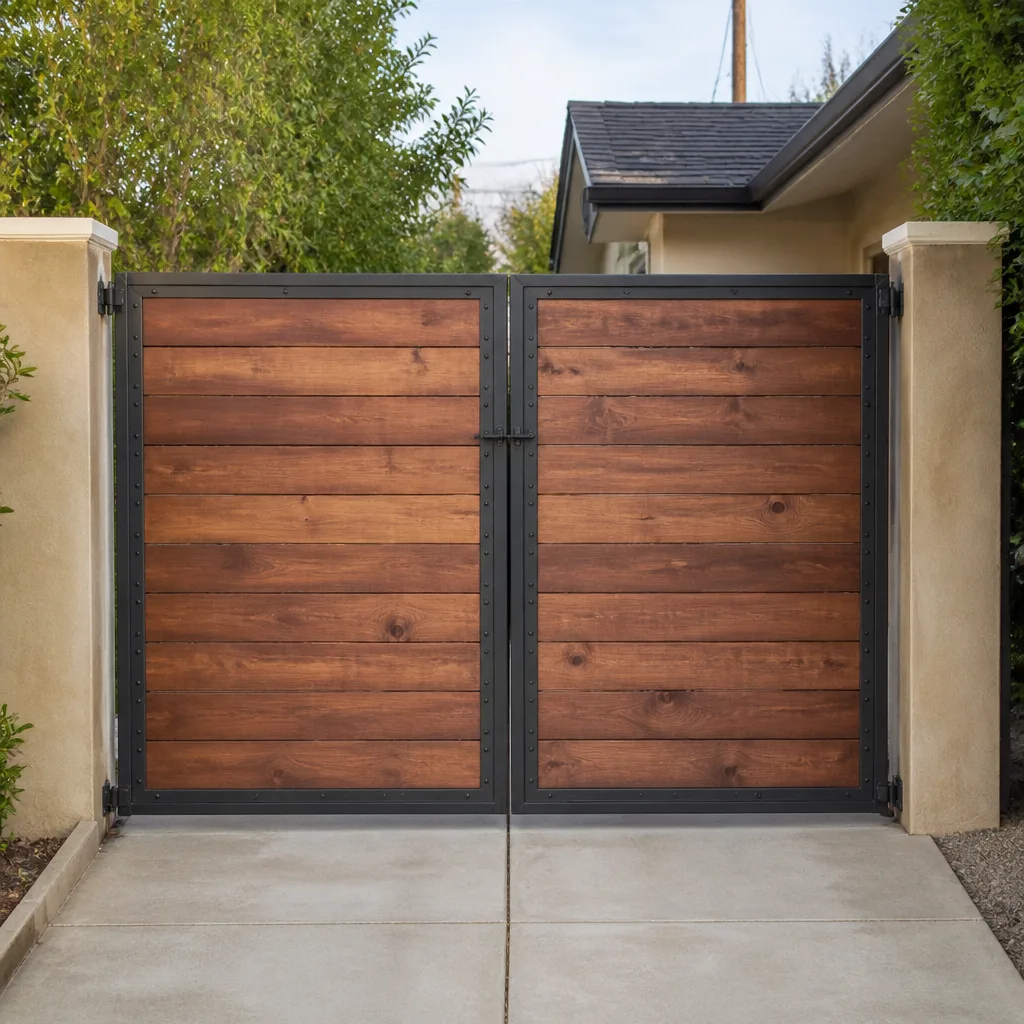 Wood & steel frame
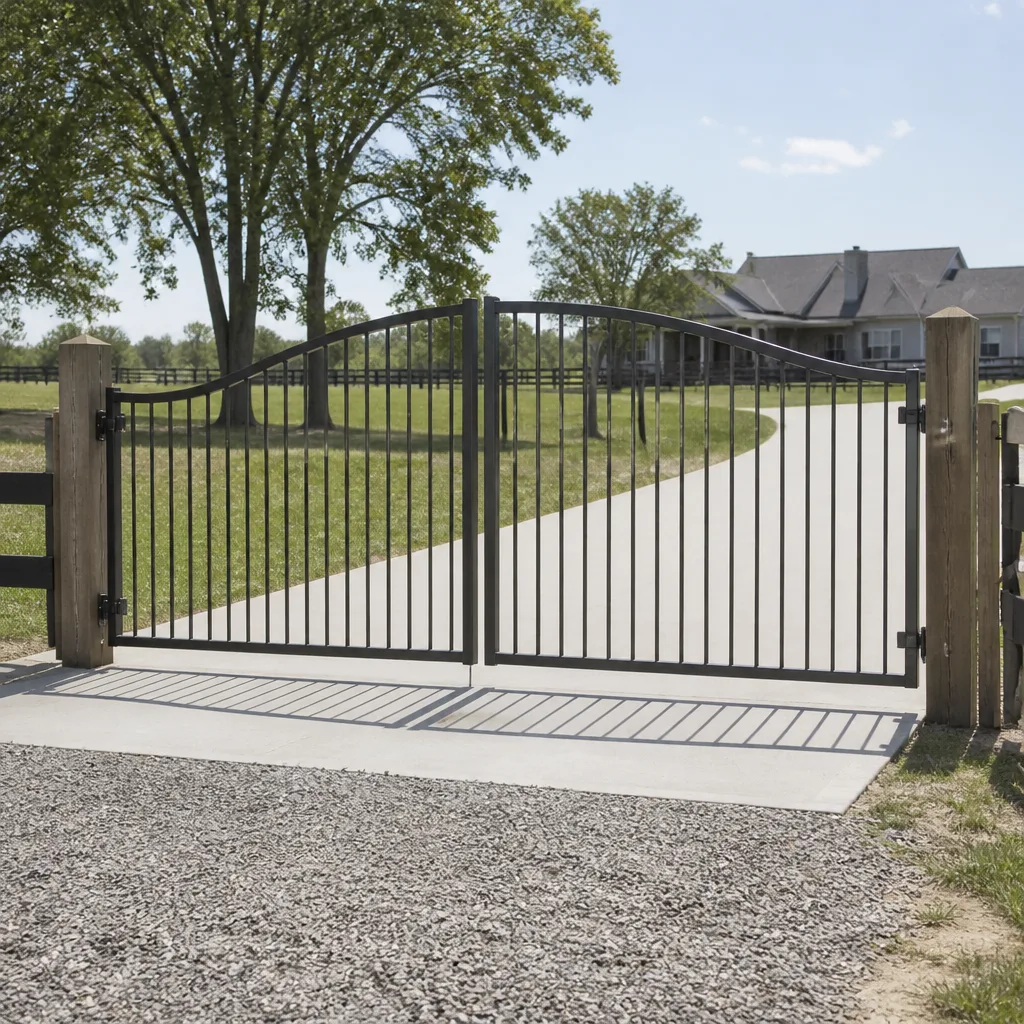 Farm & ranch
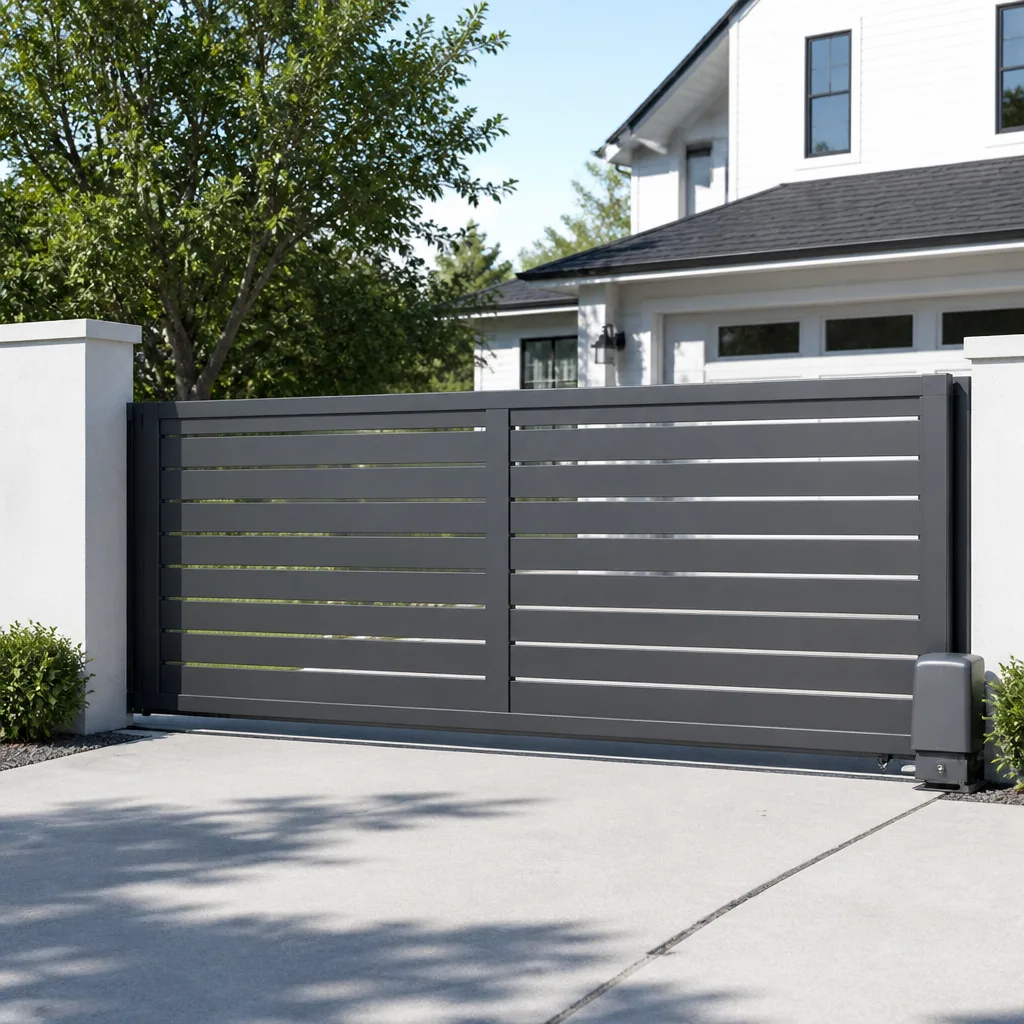 Sliding driveway gates
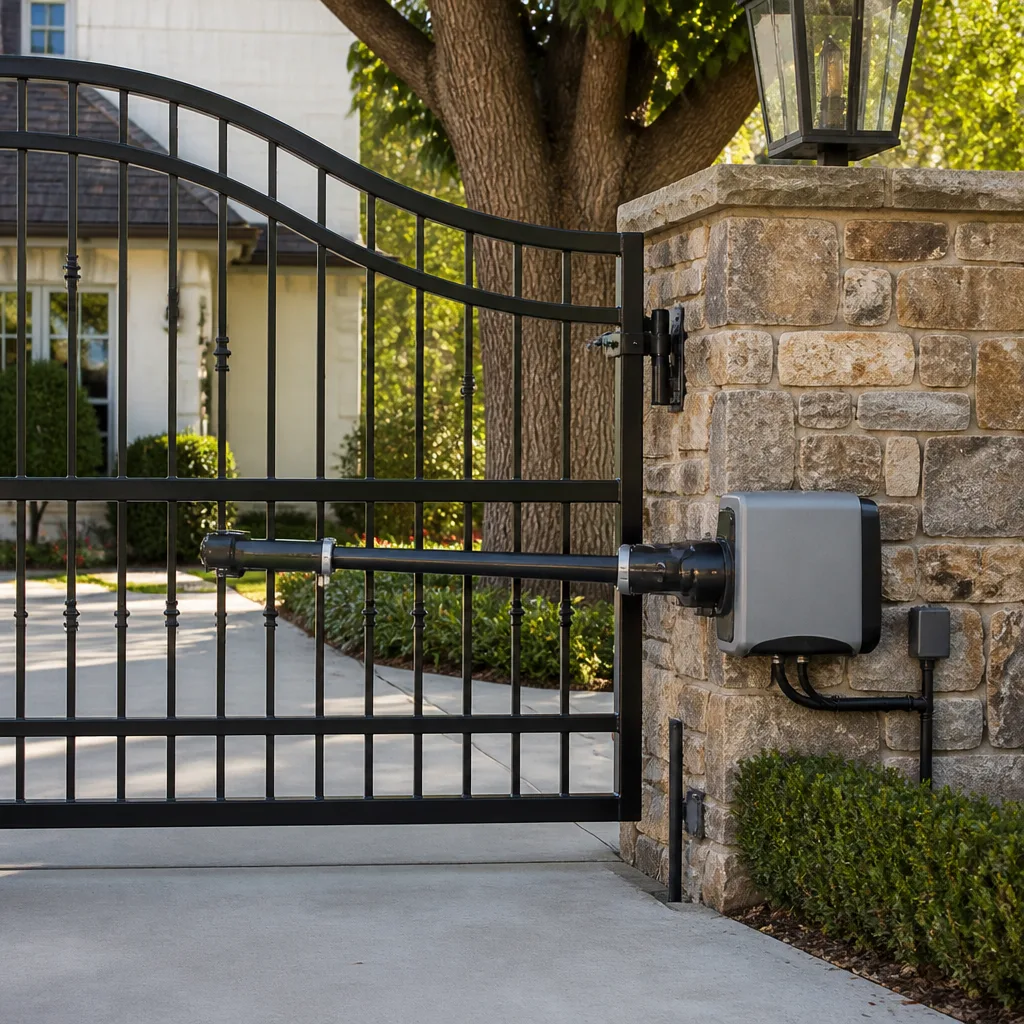 LiftMaster operators
Free on-site gate assessment - hinges, posts, and your LiftMaster or Nice gate operator checked before anything is quoted
The assessment is free and the quote is the invoice.
Get your free estimateSeasonal Gate Repair Care for Peoria: Year-Round Homeowner’s Guide
Most gate failures in Peoria don’t happen because of the storm. They happen because of the six weeks before it. When a haboob rolls through in August and a driveway gate stops opening, the wind gets the blame, but the damage usually started back in May: a battery that was already weak, a limit switch that had drifted, a control board enclosure packed with fine dust that the first rain turned into paste. Peoria’s climate doesn’t give gate systems four equal seasons to deal with. It gives three real stress periods and one stable window, and the homeowners who understand that difference spend far less on repairs. This guide walks through the whole calendar year, month by month, so you can front-load the work instead of reacting to it.
Quick Answer
Seasonal gate maintenance in Peoria should follow the local climate, not a national template: test operator components in May and June before sustained heat, do a 48-hour post-storm inspection after any major monsoon event, assess dust and moisture damage in September and October, and check fluid and lubrication before winter cold snaps. The stable window for clean-up and adjustments is roughly November through early December.
Styles & brands we work with
- Wrought iron
- Wood & steel frame
- Farm & ranch
- Sliding driveway gates
- LiftMaster operators
Table of Contents
- Why Peoria’s Gate Calendar Doesn’t Look Like the Rest of the Country
- The May-June Pre-Heat Protocol
- Monsoon Season: The First 48 Hours After a Storm
- September-October: The Post-Monsoon Reset
- December-February Cold Snaps and Commercial Swing Gate Operators
- The Stable Window: What to Do in Late Fall
- Building Your 12-Month Gate Maintenance Calendar
- Warning Signs That Skip the Calendar and Need a Technician Now
Why Peoria’s Gate Calendar Doesn’t Look Like the Rest of the Country
Most seasonal maintenance guides are written for a place with four roughly equal seasons. Peoria doesn’t work that way. What we actually get is a long heat ramp that peaks in June and July, a monsoon pattern that runs through the summer, a short but real cold window in December and January, and a calm stretch in late fall. Each of those periods hits a gate system differently.
Heat affects operators, batteries, and lubricants. Monsoon storms affect dust infiltration, sensor alignment, and electrical enclosures. Cold snaps affect fluid viscosity in hydraulic operators and can stiffen seals. The stable window is when you clean, adjust, and reset everything so the next stress period starts from a known-good baseline.
Peoria’s housing mix matters too. Gated communities in the north and west parts of the city tend to have shared commercial-grade swing and slide operators, while older single-family neighborhoods often have residential driveway gates running LiftMaster or Mighty Mule openers. The seasonal pattern is the same for both, but the components you focus on shift. A Doppler radar sensor or loop detector on a community gate gets tested differently than a residential photo eye.
If you treat a gate in Peoria like a gate in Ohio or Oregon, you’ll do the wrong work at the wrong time. The calendar below fixes that.
The May-June Pre-Heat Protocol
By June, sustained temperatures over 100°F are routine in Peoria, and that’s when operators that were marginal in April start failing outright. The goal of the pre-heat check is to find and fix anything on the edge before the heat does it for you, at the worst possible time.
Here’s the specific sequence we run through, starting in May:
- Test the battery backup under load. Disconnect AC to the operator and cycle the gate once. If the gate moves slowly, stalls, or the operator beeps, the battery is on its way out. Heat kills lead-acid batteries faster than cold does, and a dead backup means the gate is stuck open after the first summer outage.
- Confirm the thermal overload cutout behavior. Most residential operators have a thermal protection that shuts the motor down when it runs too hot. That’s normal, but it should only trigger after sustained cycling, not on a single open. If the gate stops after one or two cycles in warm weather, the cutout is doing its job but the motor is drawing too much current. That points to a bind in the track, a worn roller, or a failing capacitor.
- Check grease type and age. Gearbox grease rated for high ambient temperatures holds up through a Peoria summer. Standard household grease thins, migrates, and leaves the gears dry by August. We swap to a heat-rated grease during the pre-heat visit rather than waiting for a failure.
- Inspect photo eyes and safety edges for dust buildup. Fine desert dust coats the lenses and can cause intermittent reversal. Clean them and test the reversal function.
- Look at the control board enclosure. Make sure the door seal is intact and no insects have built nests inside. A wasp nest on a control board is a real thing in Peoria, and it causes shorts that look like board failures.
- Test manual release. If the power goes out during a storm, you need the manual release to work. If the key is seized or the lever won’t move, that’s a pre-heat fix.
Two hours of work in May prevents a mid-July emergency. That’s the whole logic of the pre-heat protocol.
Monsoon Season: The First 48 Hours After a Storm
Monsoon storms in Peoria arrive with dust first and water second. A haboob can drive fine grit into every gap on the gate, and the rain that follows turns that grit into a grinding paste inside the operator housing and on the track. What you do in the 48 hours after a major event determines whether the next storm finishes the job.
This is the checklist we recommend for the first two days after any significant dust storm or heavy rainfall:
- Cycle the gate manually first. Before you touch the remote, walk the gate through its full travel by hand (with the operator disengaged). If it binds, grinds, or scrapes, stop and call for gate repair before running the motor.
- Test all safety devices. Wave a hand in front of each photo eye and confirm the gate reverses. Press the safety edge. If either fails, do not run the gate automatically until it’s fixed.
- Look at the track and rollers. Wipe the track clean and inspect rollers for grit scoring. Sand embedded in a roller bearing will chew through the race in a few weeks.
- Open the operator housing and check for moisture. If you see standing water or heavy condensation on the control board, disconnect power at the breaker and call a technician. Water plus electricity is a hard stop.
- Test the manual release again. Storm debris can jam the release mechanism.
- Check the gate frame for shifting. Large swing gates on posts can shift after saturated soil, and a gate that no longer latches cleanly is telling you the hinge or post has moved.
If the gate is an automatic system with a LiftMaster or DoorKing operator and the control board shows any sign of moisture intrusion, don’t wait for the next storm. Electrical failures in access control systems compound. One shorted board can take out a loop detector, a keypad, and the intercom on the same circuit.
September-October: The Post-Monsoon Reset
By late September the storms have usually passed, but the damage is still working its way through the system. Dust that blew in during July is now packed into every crevice. Moisture from August rain has had weeks to corrode connections. The post-monsoon reset is when you find and clear all of it before winter.
Three areas get the most attention in this phase:
Photo eye lenses and sensor wiring
Photo eyes are the most common failure point after monsoon season because dust coats the lens and moisture gets into the wire nuts behind the housing. Clean both lenses with a soft cloth and test alignment. Then trace the wiring from the eye back to the operator and look for corrosion at every connection. A photo eye that tests fine in dry weather but reverses intermittently when the morning dew is heavy has a moisture problem in the wiring, not the lens.
Control board enclosures
Open the enclosure, use compressed air to blow out accumulated dust, and inspect the board for any sign of moisture tracking or corrosion on the terminal screws. DoorKing and Elite control boards are built to tolerate heat, but dust combined with humidity is what kills them. If you see white crust on the terminals, that’s corrosion and the connection needs to be cleaned or replaced.
Track, hinges, and moving parts
Post-monsoon is when you re-grease the track, oil the hinges, and check the gate sag. Summer heat expands metal and storm winds stress hinged joints. By October those stresses show up as a gate that drags at the latch side or a hinge pin that has worked loose. Correcting it now costs less than correcting it after the first cold snap when metal contracts and every loose part tightens into a binding position.
This reset is also the right time to book a full service visit. If you want a technician to walk through the whole checklist with you, electric gate repair covers everything from motor testing to control board diagnostics.
December-February Cold Snaps and Commercial Swing Gate Operators
Peoria winters are mild by any standard, but they do bring nights in the high 20s. That’s cold enough to matter for hydraulic swing gate operators, which are common on commercial and HOA-controlled gates in the area. Hydraulic fluid thickens as temperature drops, and a fluid that flows easily at 70°F can become noticeably sluggish at 28°F.
What that looks like in practice: the gate opens fine in the afternoon but moves slowly or stalls on the first cycle of a cold morning. The operator isn’t broken. The fluid is just thick, and the pump is working harder against it.
For hydraulic operators specifically, the cold-snap checklist is:
- Check fluid viscosity. If the fluid was last changed years ago or was filled with a fluid rated for warm climates, cold mornings will expose it. A fluid change to a viscosity appropriate for the local winter range solves most cold-start sluggishness.
- Inspect seals for hardening. Cold causes rubber seals to stiffen. Look for small hydraulic leaks at the cylinder ends and around fittings.
- Test the operator at the coldest part of the morning. Not in the afternoon when the fluid has warmed up.
- Check the battery backup on any electric operator. Cold reduces battery capacity, so a battery that tested fine in September may not have enough left in January.
Electromechanical operators (most residential driveway gates using LiftMaster or Mighty Mule openers) don’t have hydraulic fluid to worry about, but cold does stiffen the grease in gearboxes and affects limit switch behavior. A gate that short-cycles or over-travels in winter is usually telling you that a limit switch has drifted and cold contraction has pushed it out of tolerance.
If your gate moves slowly or stalls on cold mornings, don’t assume it will improve on its own. We can diagnose the operator before it fails completely. Call (855) 574-0402.
The Stable Window: What to Do in Late Fall
November and early December are the calmest stretch of the gate year in Peoria. Temperatures are moderate, storms are rare, and the next stress period (the pre-heat ramp) is months away. That’s the window for the work that’s hard to do mid-summer: thorough cleaning, adjustments, and any hardware replacements that need to be ordered.
Here’s what we recommend during the stable window:
- Full deep-clean of the gate and operator. Wash the gate frame, clean the track, blow out the control board enclosure, and inspect every fastener.
- Adjust gate height and swing. If the gate has sagged over the summer, this is when to correct the hinge or post before winter.
- Replace worn rollers, guides, and hinge pins. Parts last longer when installed in mild weather than when they’re crammed into a broken gate during a heat wave.
- Test all safety and access devices. Keypads, intercom, loop detectors, exit wands, and remote range. This is the time to catch issues before the pre-heat rush.
- Order any replacement parts you need. If you know a specific brand component is on its way out, order it in November so it’s on-site before the May pre-heat check.
For homeowners planning a full gate replacement, late fall is also the best time to schedule a new installation, since the work doesn’t compete with summer repair volume. Full new gate installation is a scheduled project, not a same-day call, and the measure and written estimate are free.
Building Your 12-Month Gate Maintenance Calendar
A gate maintenance calendar that actually works in Peoria has to be built around the real local climate anchors, not an annual checklist copied from a national magazine. Here are the anchors that matter:
- Pre-heat ramp (May-June). The six weeks before sustained 100°F days. This is the most important maintenance window of the year.
- Monsoon onset (typically early July). The haboob season starts. You can’t predict the first storm, but you can be ready for it.
- Peak UV months (June-August). Plastic components, photo eye lenses, and remote housings degrade fastest during these months. Plan to inspect and replace UV-damaged parts after this window, not before.
- Post-monsoon reset (September-October). The cleanup and assessment phase.
- Stable window (November-early December). The deep-clean and adjustment phase.
- Cold snaps (December-February). The period where you test hydraulic fluid viscosity and battery backup under cold conditions.
- Late winter (February-March). The transition phase. Check everything you fixed in fall and confirm nothing drifted over winter.
Next to each anchor, put two things: the specific components you’ll test, and the actual date in your calendar when the test happens. The May pre-heat check should be booked by April 15. The 48-hour post-storm inspection should be automatic (you don’t schedule it, you just do it). The post-monsoon reset should be booked for the third week of September. The stable-window service should be booked for early November.
We can help you build this calendar for your specific gate. Our technicians have up to 11 years of experience with the range of operators you’ll find on Peoria properties, from a residential Elite or Mighty Mule swing gate to a commercial DoorKing slide gate.
Warning Signs That Skip the Calendar and Need a Technician Now
Seasonal maintenance handles the predictable stuff. Some issues need attention regardless of what month it is. If you notice any of these, don’t wait for the next scheduled window.
- The gate reverses without anything in the way. A photo eye or safety edge that triggers on its own is failing, and a gate that reverses unpredictably can crush a vehicle or a person.
- The operator runs but the gate doesn’t move. That’s usually a broken drive chain, a stripped gear, or a disengaged manual release.
- The gate moves but won’t fully close or open. A limit switch or a travel adjustment has drifted. Left alone, the operator will keep running against the stop and burn out the motor.
- Visible moisture inside the control box. Disconnect power and call for diagnostics. Never leave a wet control board powered.
- Grinding, squealing, or scraping from the track or hinges. A worn roller or a bent track. Both get worse fast.
- Remote or keypad works intermittently. That could be a failing receiver, a low battery in the remote, or interference from a new device on the property. Diagnosis matters here because replacing the wrong part wastes money.
If any of these are happening, call for a diagnostic. Gate systems are heavy and the forces at work are substantial, especially on an automatic gate. A 300-pound swing gate panel under motor drive can cause serious injury, which is exactly why we recommend a trained technician for anything that involves the operator, control board, or safety edges rather than homeowner troubleshooting.
Common Mistakes to Avoid
- Treating summer as a repair season instead of a maintenance season. If you’re only calling when the gate fails in July, you’ve already lost the pre-heat window. Front-load the work in May and you’ll spend less and stress less.
- Skipping the 48-hour post-storm check because the gate “seems fine.” Dust infiltration doesn’t fail a gate immediately. It grinds slowly. The 48-hour check catches it before the next storm buries it deeper.
- Using the wrong grease. Standard household grease thins in a Peoria summer and leaves gears dry. Heat-rated gearbox grease is the correct spec for the local ambient range.
- Ignoring photo eye dust until the gate reverses. Cleaning the lenses twice a year, especially post-monsoon, keeps the safety system working and prevents false reversing events.
- Assuming cold weather problems will fix themselves when it warms up. If the gate is sluggish at 28°F, the fluid or the battery or the operator is telling you something. Warm afternoons just hide the symptom until the next cold snap.
- Running a manual gate through a track that’s packed with grit. That’s how you strip a hinge or bend a guide roller. Clean the track first, then cycle the gate.
- Calling a general handyman for a control board or intercom issue. Access control systems need brand-specific diagnostics. Nine brands, one specialist is the right end of the phone to be on for a DoorKing intercom or a LiftMaster control board, not a generalist who mostly does fence work.
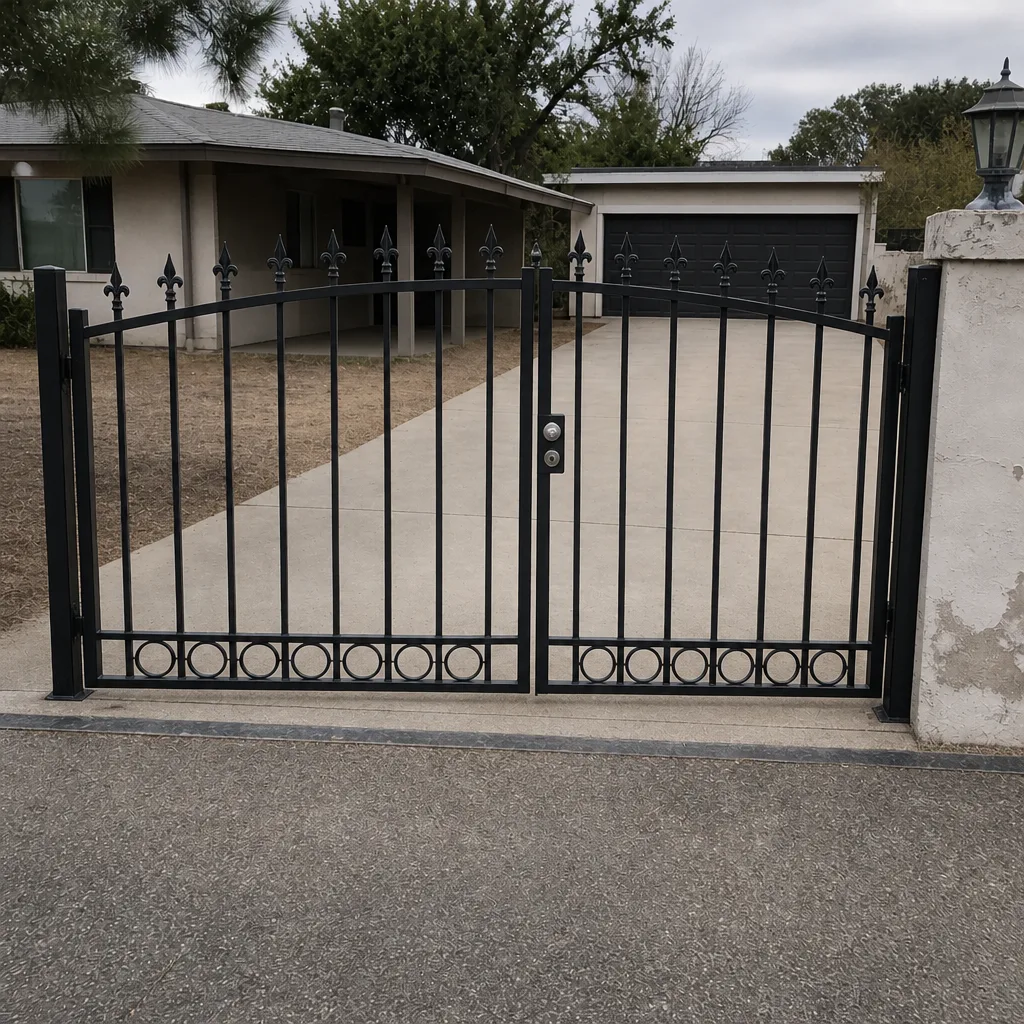
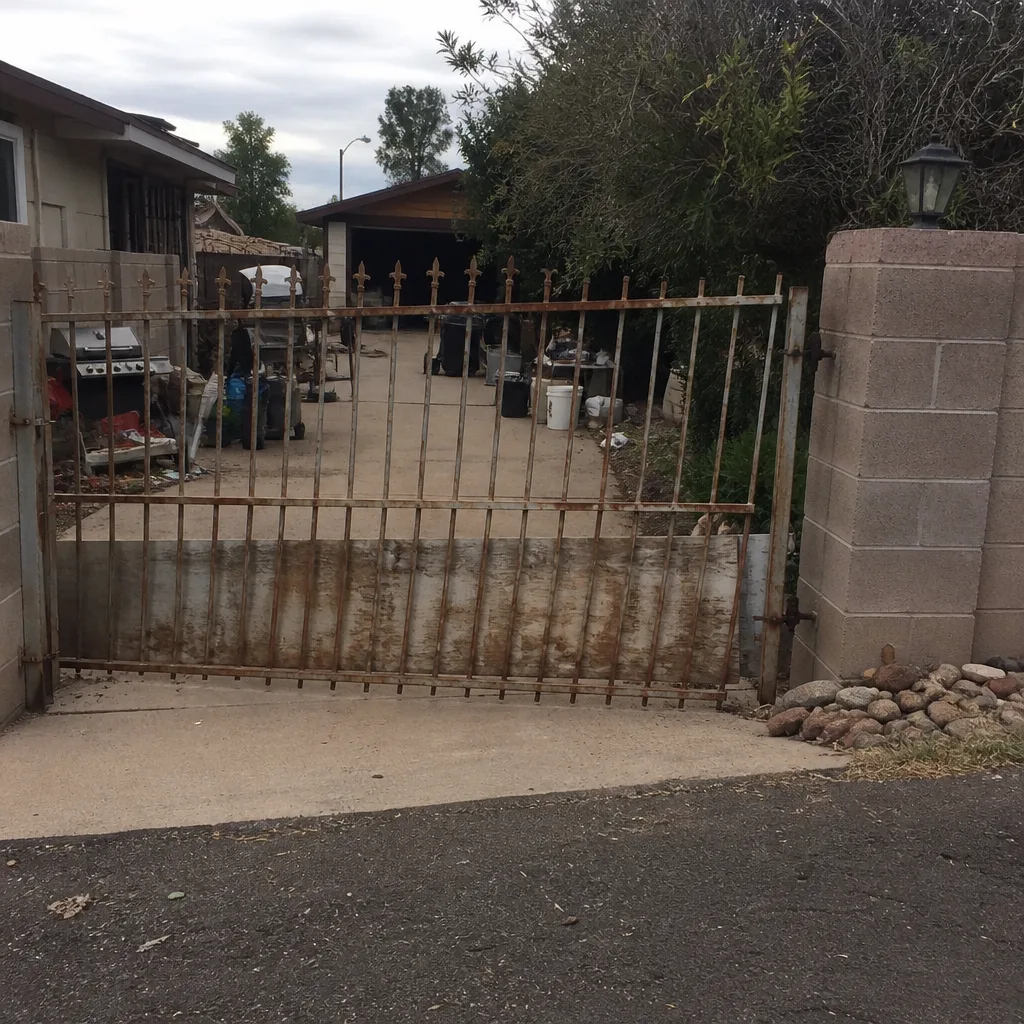
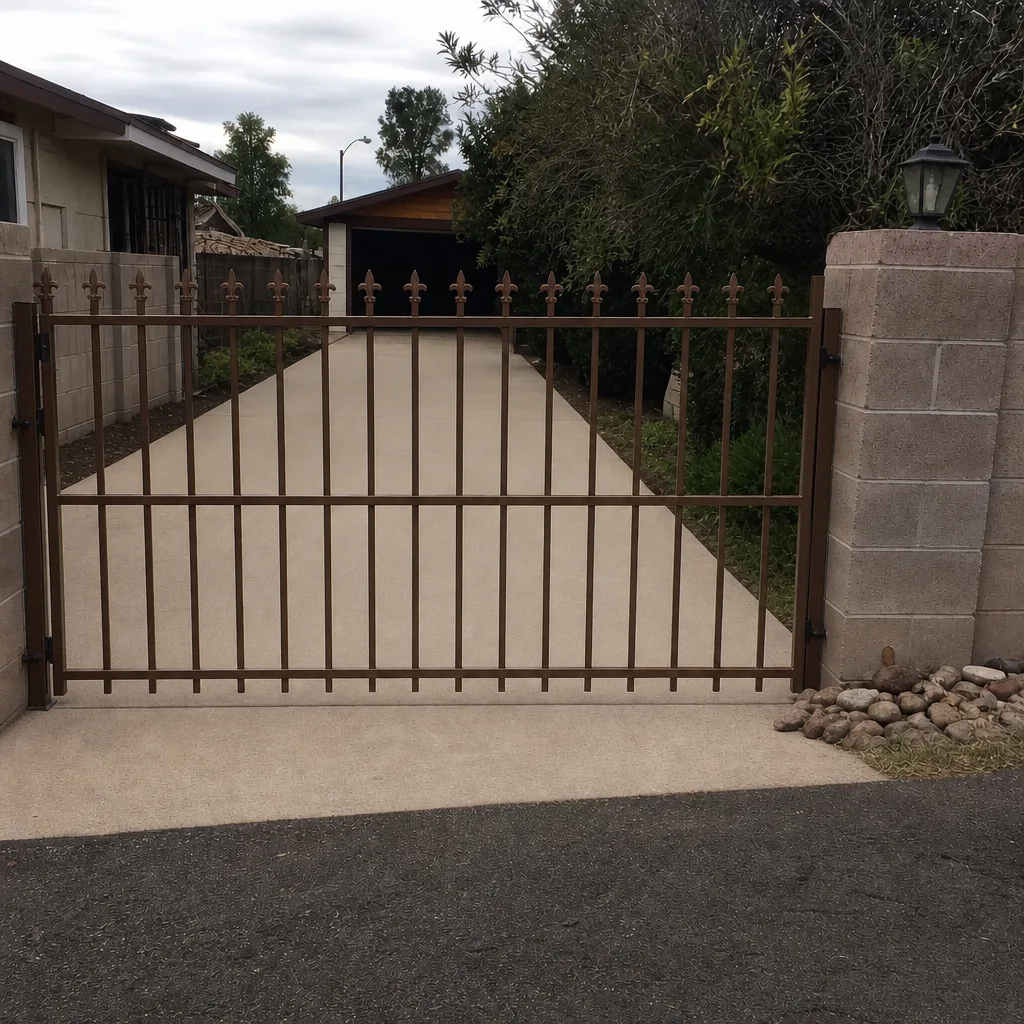
See the difference
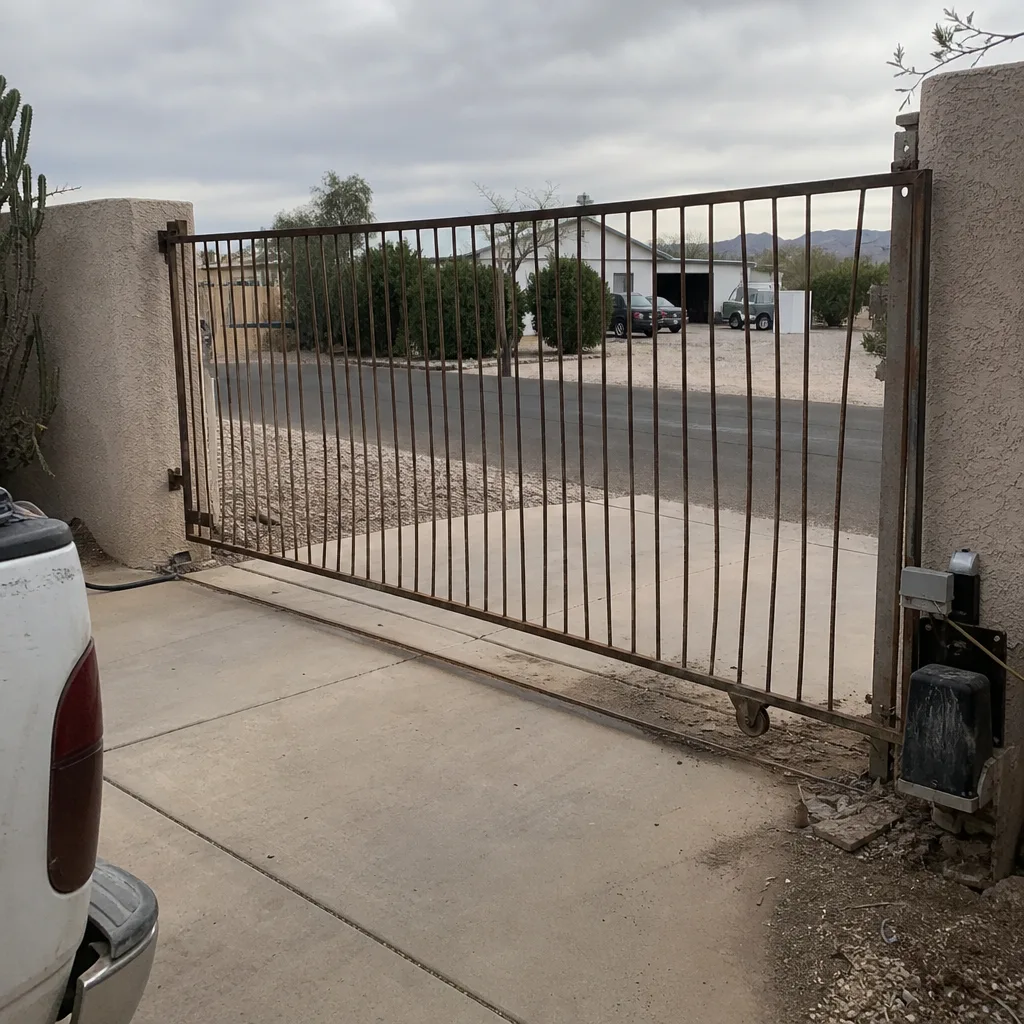 Before
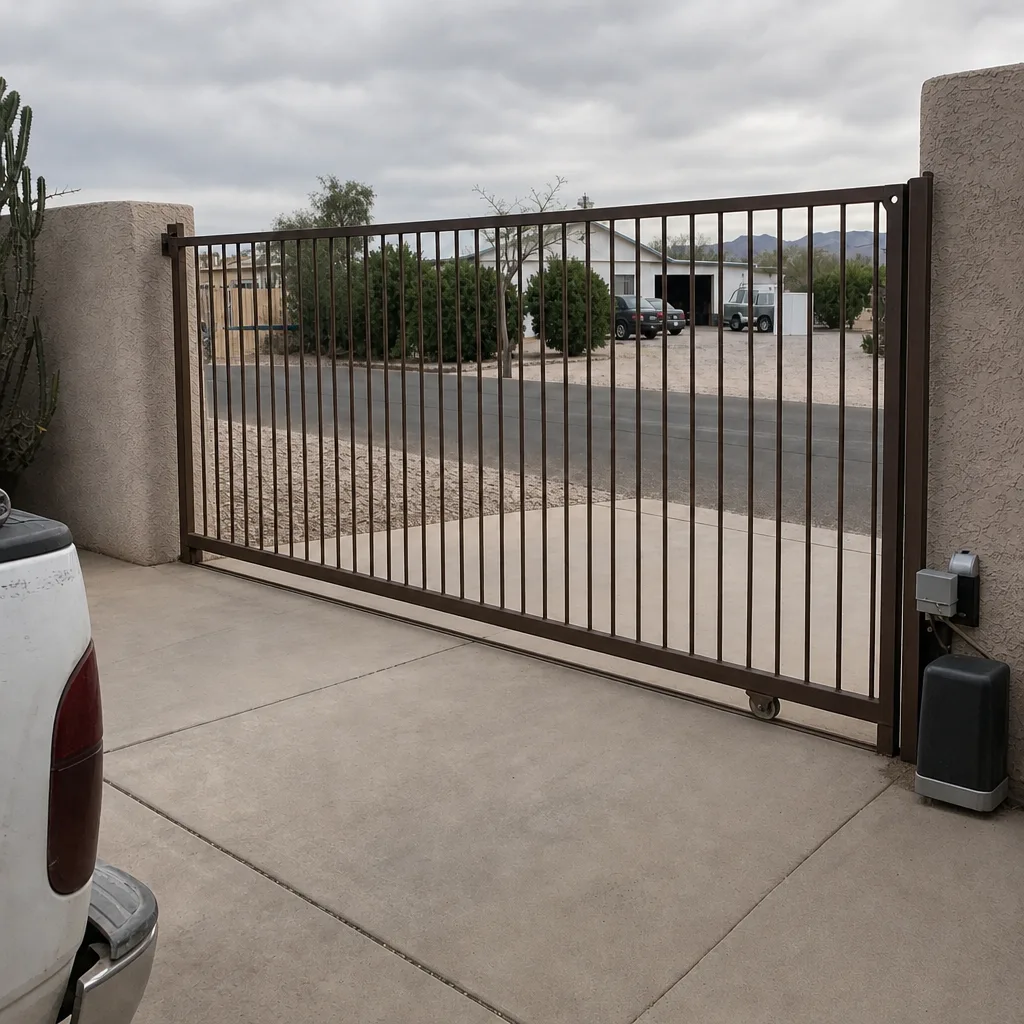 After
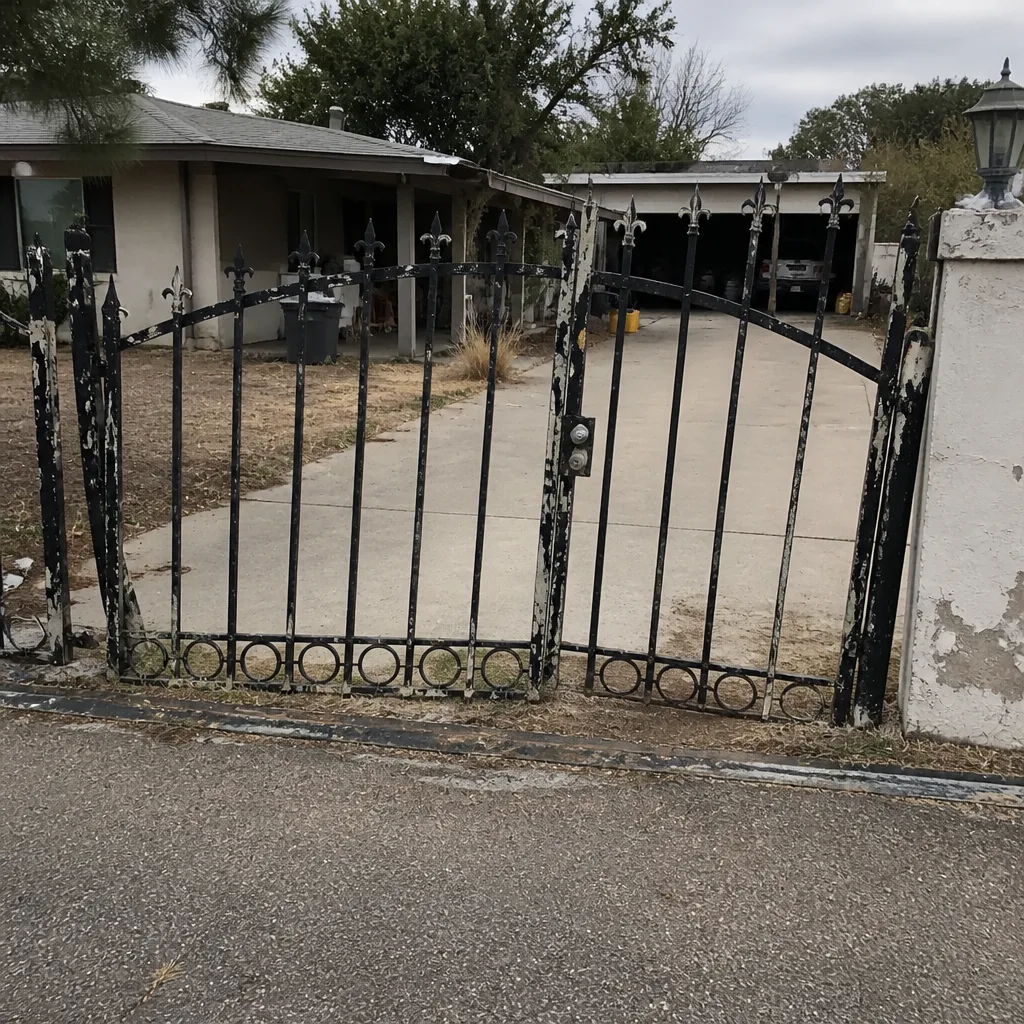 Before
 After
 Before
 After
When to Call a Professional
Some seasonal maintenance can be done by a careful homeowner: cleaning photo eye lenses, wiping the track, and doing a visual inspection. But anything that involves opening the operator housing, testing electrical components under power, adjusting limit switches, or working with hydraulic fluid should go to a technician. That’s not just because of the tools involved. It’s because the components are heavy, the forces are significant, and a mistake on a safety edge can mean an automatic gate that doesn’t reverse when it should.
Call for a professional when the gate doesn’t reverse on command, the operator stalls or short-cycles, the manual release is seized, any safety device is behaving intermittently, or you see moisture or corrosion inside the control enclosure. We specialize exclusively in gates, and we work with the systems Peoria homes and HOAs actually have. Gate Repair Peoria offers free estimates in Peoria, and the price is set per job by the written estimate before any work starts. Call (855) 574-0402. We answer 24/7. Fast dispatch from 7am to 7pm, Sunday through Friday.
Frequently Asked Questions
A residential driveway gate in Peoria should get a full service at least twice a year: once in May before summer heat and once in October after monsoon season. That’s the minimum. Gates in gated communities with commercial-grade operators often need quarterly checks because they cycle far more frequently than a residential driveway. If you want the best protection, add the 48-hour post-storm inspection as a third touchpoint. Call (855) 574-0402 for a schedule and a free estimate.
Cold mornings cause slow gate movement for two main reasons: hydraulic fluid thickens (common on commercial swing gate operators), and battery backup capacity drops (on battery-backed electric operators). A gate that stalls at 28°F but runs fine at 70°F is telling you the fluid needs a cold-rated viscosity or the backup battery is near the end of its life. Don’t wait for it to fail completely. Call (855) 574-0402 and we’ll diagnose the operator.
After a Peoria monsoon storm, check four things within 48 hours: cycle the gate manually to feel for binds, test both photo eyes and the safety edge for reversal, inspect the track and rollers for grit, and open the control board enclosure to look for moisture. If the gate reverses on its own or the control board is wet, disconnect power and call a technician. Don’t run the motor on a gate that’s binding or reversing without cause. Call (855) 574-0402 if anything looks wrong.
Yes, dust is the most underrated problem for gate operators in Peoria. Fine desert dust gets into the operator housing, coats the photo eye lenses, and settles on control boards. Once moisture from rain or even heavy morning dew mixes with that dust, it turns into a conductive paste that causes intermittent short circuits, false reversal, and eventually control board failure. Cleaning is the cheapest repair there is. Seasonal cleaning in May and October prevents a whole category of gate failures.
You can safely do the visual and cleaning parts: wiping photo eye lenses, cleaning the track, clearing debris from around the gate, and testing the manual release. You should not open the operator housing, test electrical components under power, adjust limit switches, or work with hydraulic fluid. Those require a trained technician, both because of the safety risk and because a small error in the adjustment can damage the operator. For anything electrical or mechanical, call (855) 574-0402 and we’ll take care of it.
Probably not. In our experience, most gates that fail after a Peoria summer have a specific component problem, not a whole-operator failure. A LiftMaster operator that short-cycles is more likely to have a limit switch issue than a dead motor. A gate that reverses in the morning probably has moisture in the photo eye wiring. We’re authorized to service nine major gate and access-control brands, including LiftMaster, FAAC, BFT, Linear, Viking, Ghost Controls, DoorKing, Elite, and Mighty Mule, and we diagnose before we recommend replacement. Call (855) 574-0402 for a free estimate on the repair.
The Bottom Line
Peoria gate maintenance works best when it’s front-loaded. The work you do in May saves you the work you’d otherwise do in July. The 48-hour post-storm check saves you the bigger repair the next storm would have caused. The post-monsoon reset and the fall deep-clean set your gate up to handle winter without surprise failures. Build the calendar around the anchors this guide describes, keep a full-cycle service on the books with the Gate Repair Peoria team, and know the warning signs that override the calendar entirely. If you’re not sure where to start, call (855) 574-0402 for a free estimate. We answer 24/7. Fast dispatch from 7am to 7pm, Sunday through Friday. We’re closed Saturday, and a call outside dispatch hours is booked into the next opening, Sunday through Friday, 7am to 7pm.
Homeowners and HOA managers across Peoria call us because we understand the local climate pressure and the brand-specific equipment. Whether your operator is a Mighty Mule on a residential driveway or a DoorKing on a community entry, we diagnose the motor, the board, and the sensors before we recommend anything. Free estimates and written pricing before any work starts.
Written by the team at Gate Repair Peoria.