
Last updated November 15, 2026
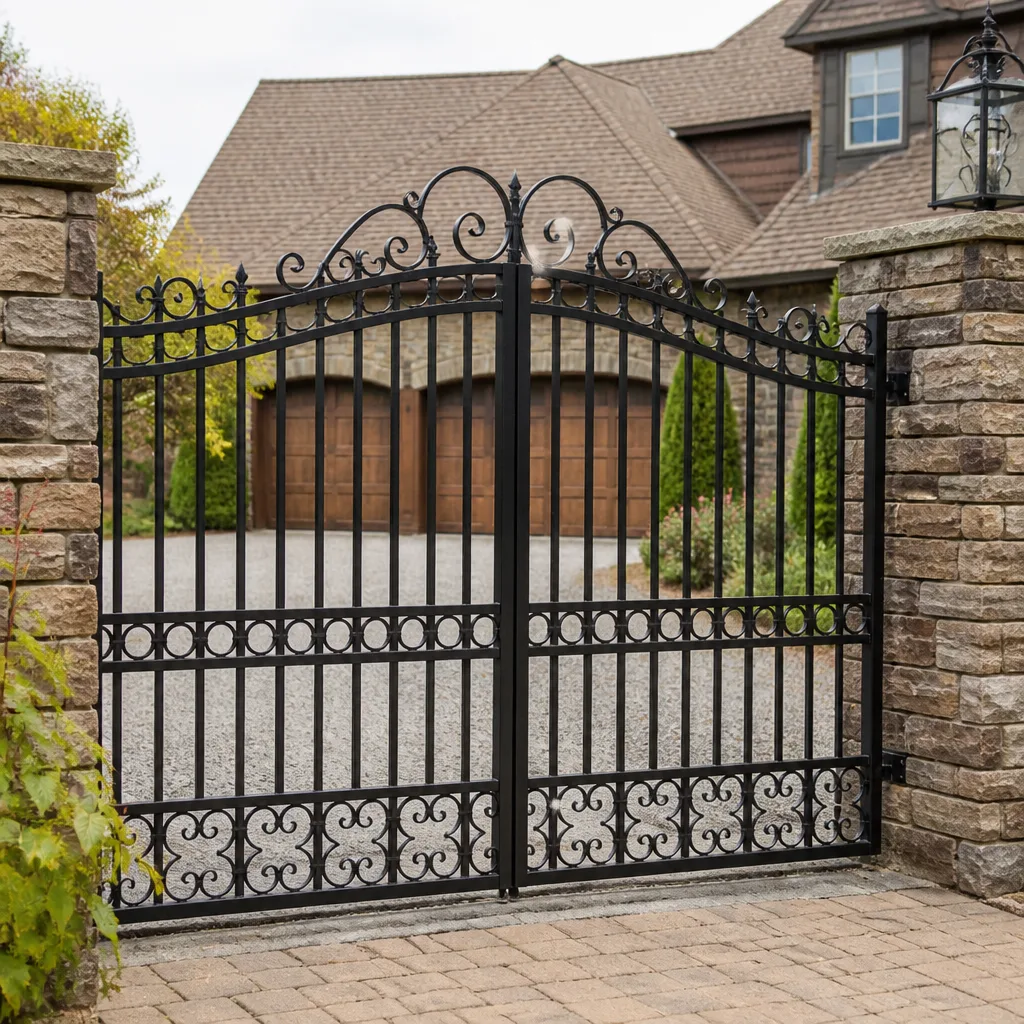 Wrought iron
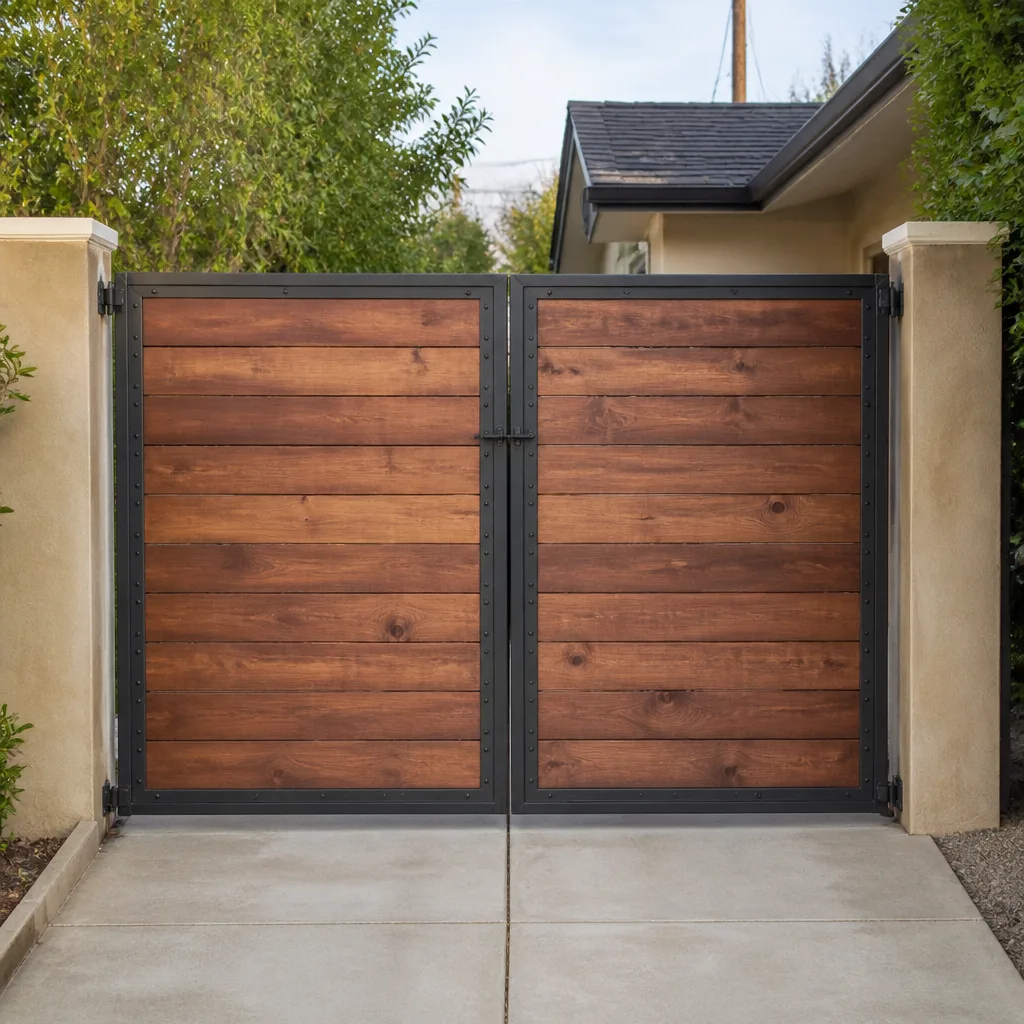 Wood & steel frame
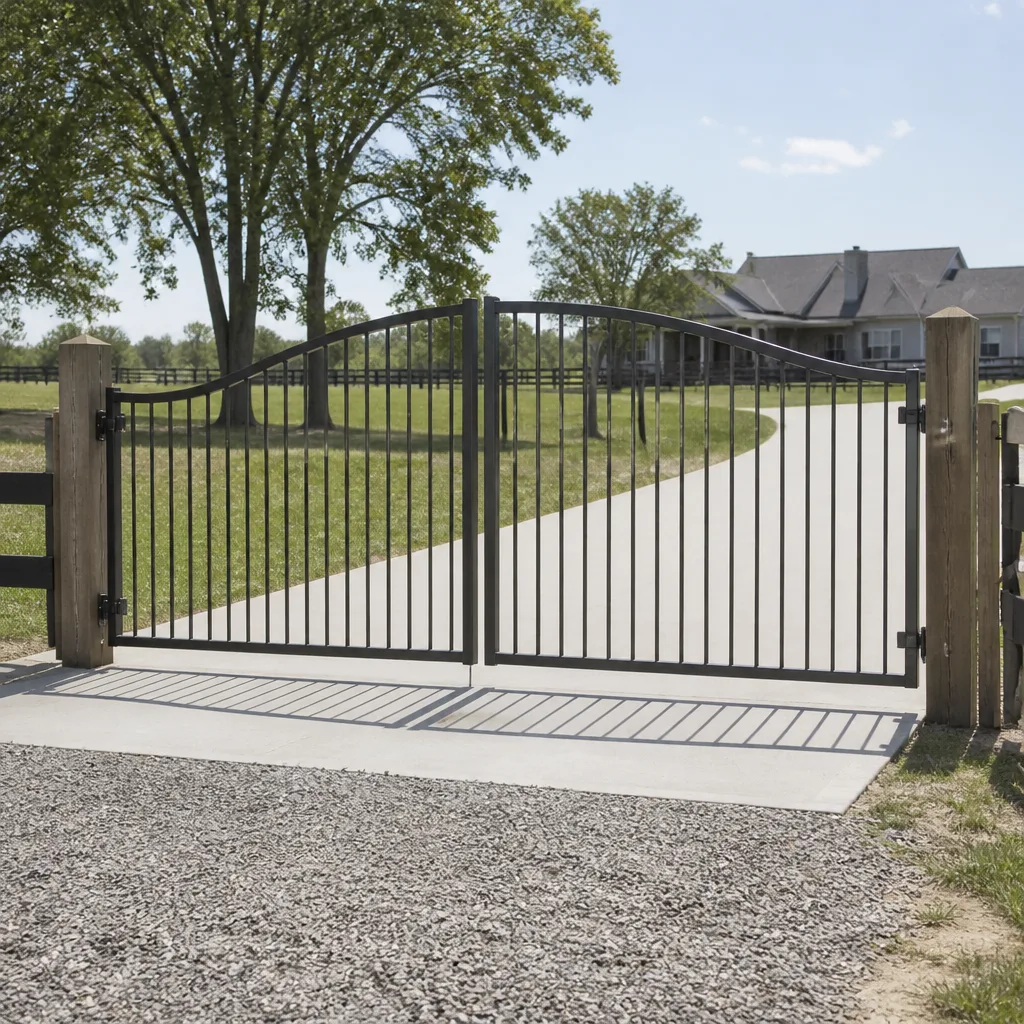 Farm & ranch
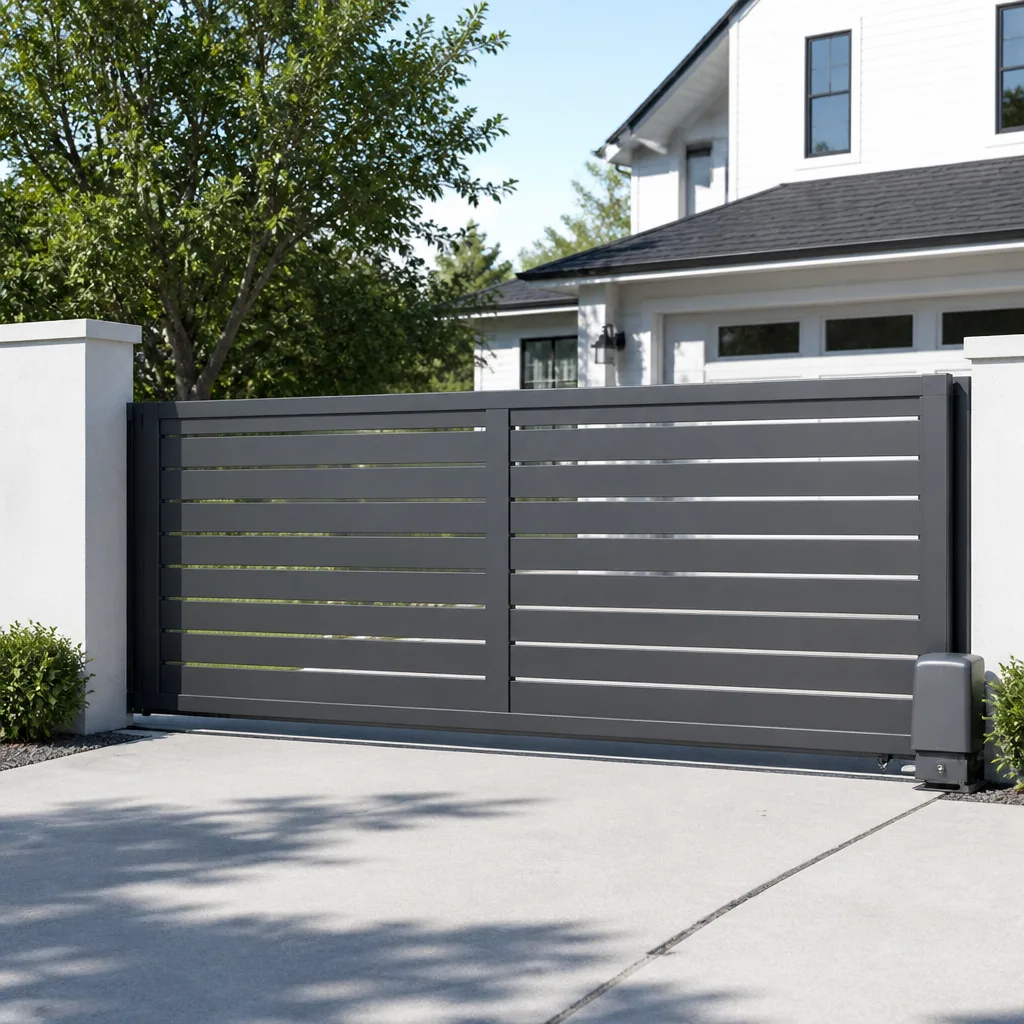 Sliding driveway gates
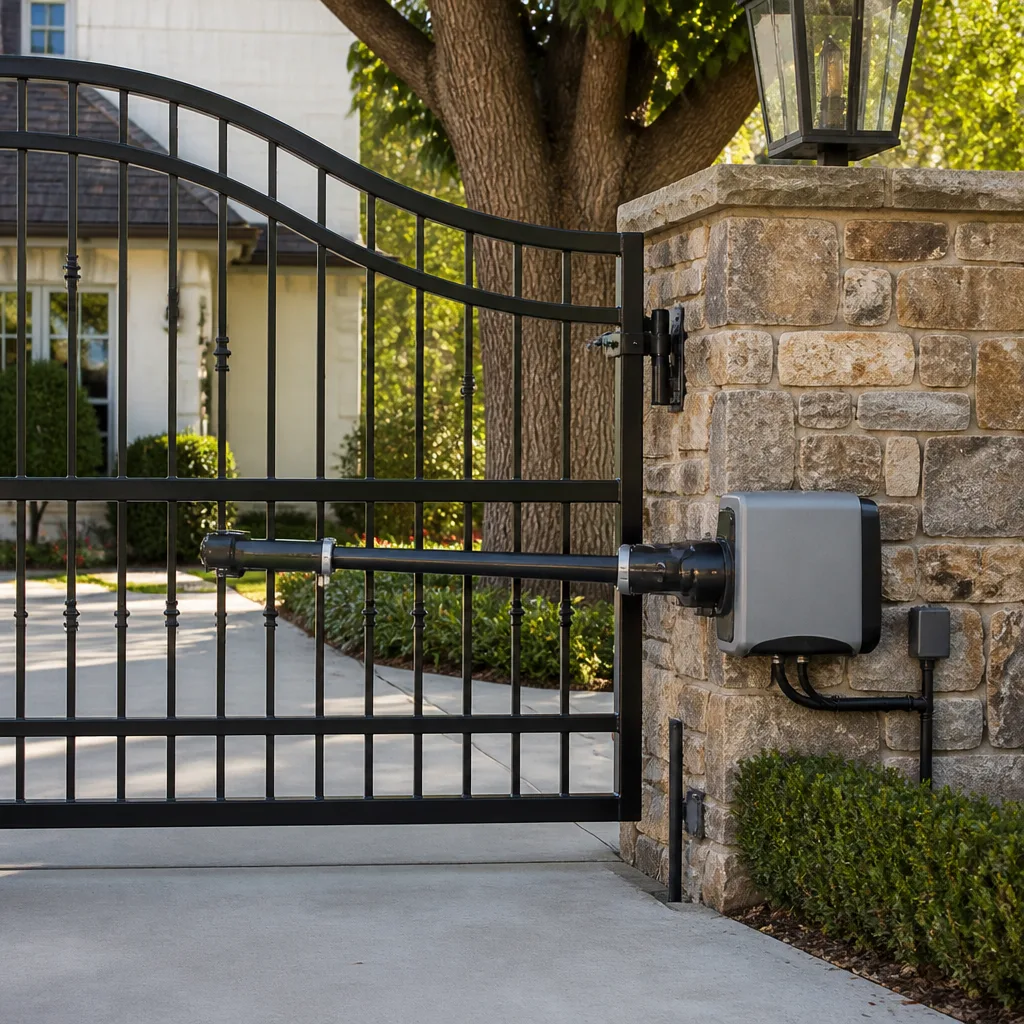 LiftMaster operators
Free on-site gate assessment - hinges, posts, and your LiftMaster or Nice gate operator checked before anything is quoted
The assessment is free and the quote is the invoice.
Get your free estimateChoosing the Right Gate Repair Brand: A Buyer’s Guide for Peoria
A gate operator that earns top marks in a national review carries no weight if the nearest authorized parts distributor is in Tucson. A failed control board on a Friday afternoon means your gate is down until Tuesday, minimum. That’s the gap most gate brand guides skip over. They rank motors on torque and price and leave out the two things that actually decide ownership: how the operator handles a Peoria summer, and whether the part that failed can be found in the Phoenix metro this week. In this guide we walk through what to score a brand on when you live in Peoria, how duty cycle, gate weight, and parts supply interact, and why the answer is different for a 400 lb. swing gate in a residential driveway than an 800 lb. slide gate at an HOA entrance.
Quick Answer
There is no single best gate operator brand for Peoria. The right pick comes down to gate weight, daily cycle count, heat tolerance, and whether local parts are stocked in the Phoenix metro. For most residential driveway gates under 600 lbs. cycling under 20 times a day, a mid-tier brand like Viking or Linear with good local parts support is a better ownership experience than a premium brand whose boards ship from out of state. For HOA and commercial gates running 80 or more cycles a day in direct sun, a heavier-duty brand such as FAAC or BFT built for sustained heat is worth the higher cost.
Styles & brands we work with
- Wrought iron
- Wood & steel frame
- Farm & ranch
- Sliding driveway gates
- LiftMaster operators
Table of Contents
- Why the Brand on the Operator Matters More Than the Sales Pitch
- Matching Operator Duty Cycle to Real Usage in Peoria
- Heat Tolerance: Which Brands Are Built for 110°F+ Summers
- Local Parts Availability as a Brand Selection Criterion
- The Control Board Ecosystem Question
- Brand Selection by Gate Type and Weight Class
- Scoring the Major Brands Against Peoria Criteria
- What “Serviceable” Really Means in Peoria
Why the Brand on the Operator Matters More Than the Sales Pitch
Most homeowners choose a gate operator the way they choose a water heater: whoever the installer recommends gets the sale. That works when the product is a commodity. Gate operators aren’t. The brand on the housing determines what parts exist, who stocks them, whether the board can be field-programmed, and how likely the whole unit is to fail at 118°F in August when the gate has cycled 40 times before noon.
We specialize exclusively in gates, and the single biggest surprise we see is how often a gate system gets replaced when a $60 sensor or a generic control board would have fixed it. That gap between “serviceable” and “replaceable” lives at the brand level. Nine brands dominate the market we work in: LiftMaster, FAAC, BFT, Linear, Viking, Ghost Controls, DoorKing, Elite, and Mighty Mule. Each one lands differently on the three Peoria-specific tests: heat, cycles, and parts on the shelf. A brand that’s fine in coastal California or the Pacific Northwest can be a bad call for a Peoria driveway, and the reverse is true too.
Here’s what a brand-aware buyer should walk into the conversation knowing:
- Who makes the operator isn’t the same as who makes the gate. Gates are fabricated steel, aluminum, or wood. Operators are mechanical and electronic systems bolted to them. You can keep the gate and change the operator, or keep the operator and repair the gate. Pick the brand based on the operator.
- Operator brand drives the parts supply chain. A proprietary board from a brand with a single regional distributor behaves very differently from a board that’s stocked by several distributors in the Phoenix metro.
- Duty cycle rating is brand-level, not installer-level. Every operator has a manufacturer-published cycle rating. Sizing below it is the top cause of premature failure in Peoria.
- Residential vs. commercial is a brand segment, not a size. The right residential brand is often the wrong commercial brand, even within the same company.
For a deeper breakdown of what gets repaired and how, see our gate repair guide, which walks through the mechanical side of gate failures.
Matching Operator Duty Cycle to Real Usage in Peoria
Duty cycle is the number of open-close cycles an operator is engineered to handle per day. Get this wrong and the operator fails prematurely – not because the brand is bad, but because the operator was sized for a different job. We’ve seen this play out repeatedly in Peoria: a residential operator on an HOA entrance, or a light-duty swing arm on a rental property with 80 cycles a day of tenant traffic.
Here’s how to translate a gate’s real-world traffic into the cycle count that actually matters:
- Count the comings and goings on a normal day. Each car in or out is one cycle. A single-family home with two cars and Amazon drops is usually 8-15 cycles a day.
- Add a margin for weekends and events. A residential driveway in Peoria peaks on pool-party weekends. Multiply the normal day by 1.5 to get a realistic peak.
- Factor gate weight into the rating. A 400 lb. gate cycling 20 times a day loads the operator less than an 800 lb. gate cycling 20 times. The same brand and model rating may be adequate at one weight and under-spec at the other.
- For rental properties and HOA gates, count moves, deliveries, and shared access. An HOA entrance with 120 homes and a shared drive is not 10 cycles a day, it’s 80 or more.
- Add 20% headroom above the estimate. The manufacturer’s rating is a ceiling, not a comfortable operating point. Heat in Peoria reduces that ceiling further (see the next section).
Approximate duty cycle bands by usage class:
- Residential light: 10-20 cycles/day – most single-family driveways in Peoria. A Viking or Linear residential operator fits here comfortably.
- Residential heavy: 20-40 cycles/day – multi-driver homes, home businesses, busy short-term rentals. LiftMaster or a heavier Viking model is the fit.
- Commercial / HOA: 40-100+ cycles/day – shared entrances, apartment communities. FAAC or BFT commercial-rated operators are the right class.
- Continuous high-traffic: 100+ cycles/day – gates that cycle constantly, such as active commercial properties. Rated only for commercial sliding operators and not for residential swing arms, regardless of brand.
The mistake isn’t picking a bad brand. It’s picking a good brand at the wrong tier for the gate’s actual load. Matching duty cycle to load is job one. When sizing gets undercut to save a few hundred dollars, the failure shows up 18 months later on a Peoria driveway with a burnt motor and a tenant complaining. Call us at (855) 574-0402 if you want a second opinion on a sizing decision before a new operator goes in.
Heat Tolerance: Which Brands Are Built for 110°F+ Summers
Ambient July heat in Peoria pushes past 110°F, and an operator in direct sun on a west-facing gate housing can soak in well over 130°F at the board. Not every brand is engineered for that. This is where a lot of national brand rankings fall apart for Peoria buyers – the operator that wins on torque curves in a lab is not necessarily the one with a heat-rated board and enclosure, and both matter here.
What to look for on the spec sheet:
- Ambient temperature rating. A residential operator rated to 140°F ambient is a different animal from one rated to 104°F. Brands engineered for sustained heat publish a working range. Brands that don’t often fail early in Peoria summer.
- Duty cycle derating at high ambient. Operators that are advertised at, say, 30 cycles/day are usually derated in hot climates. A serious brand publishes the derating curve.
- Board placement inside the housing. Boards mounted high in the enclosure and shaded from direct sun last longer than boards at the bottom of a metal box that radiates heat. LiftMaster and FAAC systems are generally well laid out for this. Some budget brands aren’t.
- Motor winding class. Continuous-duty motors in commercial operators handle heat differently from intermittent-duty residential motors. BFT’s commercial-rated slide operators are a good example of a brand engineered for high-ambient commercial work.
- Enclosure color and venting. Dark enclosures in full sun run hotter. Brands that offer ventilated or lighter-colored enclosures are worth prioritizing where the gate faces west or southwest.
Which brands we see holding up best under a Peoria summer, in rough tier order:
- FAAC and BFT – engineered for European and Middle East temperatures. Their commercial and high-end residential operators are the strongest fit for a west-facing Peoria gate in full afternoon sun.
- LiftMaster – strong residential heat ratings on their heavier models, and widely serviced, so heat-related board failures are cheaper to fix.
- Viking and Linear – adequate for a shaded residential gate. Push them too hard in full sun and the failure rate climbs.
- Ghost Controls and Mighty Mule – consumer-tier residential operators. Fine for light traffic and mild climates. Peoria summer on a heavy gate is outside their comfort zone.
- DoorKing and Elite – access-control-focused brands. Heat tolerance varies by model, and the right answer is model-by-model, not brand-wide.
Heat isn’t a reason to avoid a brand outright. It’s a reason to read the ambient rating on the operator you’re considering, and to shade or ventilate the housing where possible on a west-facing gate in Peoria.
Local Parts Availability as a Brand Selection Criterion
This is the section that doesn’t exist in a typical brand guide, and it’s the one that changes ownership experience the most. A failed control board on a Friday afternoon is two entirely different events depending on brand. With a well-stocked brand, a local distributor has the board on the shelf and the gate is back up the same afternoon. With a poorly-stocked brand, the board ships from a factory or a regional warehouse out of state, and the gate is down until Tuesday.
Local parts availability in the Phoenix metro varies sharply by brand:
- Widely stocked locally: LiftMaster, Linear, Viking. Boards, receivers, and common sensors are usually available from more than one distributor in the metro, which shortens repair lead times dramatically.
- Stocked but narrower: FAAC, BFT. Common parts are generally available, but proprietary boards and openers may ship from regional warehouses. Betting on same-day parts for one of these is optimistic unless you’ve checked the specific part first.
- Access-control brands (DoorKing, Elite): Often stocked via access-control distributors. Availability depends heavily on the specific board or loop detector, and can go either way.
- Consumer-tier (Ghost Controls, Mighty Mule): Parts are often available through big-box and online retail channels rather than distribution, so the repair decision is shaped by warranty and unit replacement economics rather than component sourcing.
How to test local parts supply before you buy:
- Ask the installer where they’d get a control board for the operator, locally, today. A vague answer is a signal.
- Ask how long a factory order would take. If the answer isn’t specific, the operator is a risk.
- Ask which parts are common failure points on that model. A good answer names two or three, and says whether they’re locally stocked.
- Ask if the installer has a universal board option for that brand. See the next section for why.
A premium brand without local parts support can produce a worse ownership experience than a mid-tier brand with a stocked distributor down the road. Nine brands, one specialist, no runaround – that’s why we work across the full roster rather than pushing whatever brand we happen to have in the van.
The Control Board Ecosystem Question
Control boards are the single most common electronic failure on gate operators, and brands split into two camps: proprietary boards that require factory programming, and boards with field-programmable or universal alternatives. This matters when your gate fails on a Sunday and you need it working before the tenants wake up.
How the two ecosystems behave in practice:
- Proprietary boards are often married to the brand. When one fails, you need the exact board, which can mean a factory order, a lead time, and a programming step that requires specific equipment. The repair isn’t harder, but the waiting is.
- Field-programmable boards let a trained technician update cycle timing, limits, and safety inputs on-site with standard tools. This usually turns a multi-day repair into a same-visit repair.
- Universal retrofit boards (made by a few third parties) can replace a failed proprietary board in some operators. They’re a good option on older systems, but should be matched carefully to the operator’s inputs and safety edges, not swapped in blind.
Where brands land:
- Viking and Linear are generally field-programmable-friendly. Board swaps are quick and turnaround on a scheduling day is realistic.
- LiftMaster has proprietary boards on high-end models but a broad service network. Same-day board availability in the Phoenix metro is common, which offsets the proprietary issue.
- FAAC and BFT use proprietary electronics on many operators but with strong on-site programmability once the part is in hand. Availability is the gating factor, not the swap itself.
- DoorKing and Elite often pair a board with access-control firmware. Board replacement and programming should be handled by a specialist who knows the whole system, not a generalist.
- Ghost Controls and Mighty Mule use consumer-electronics approach. Boards are available online, but swapping them is usually a DIY decision or a replace-the-unit scenario rather than a field repair.
Ask about the board ecosystem before the operator goes in. It’s cheap to ask and expensive to skip. Our electric gate repair page covers board, motor, and sensor diagnostics in more detail.
Brand Selection by Gate Type and Weight Class
Weight class changes the brand answer. A 400 lb. swing gate and an 800 lb. slide gate are different engineering problems, even on the same property, and the operator that works well on one is often the wrong operator on the other.
How the weight classes map to Peoria gates:
- Light residential (under 400 lbs.): Common on decorative metal driveway gates and side-yard gates. Viking and Linear swing operators handle this class well when cycles stay under 20/day. LiftMaster residential operators also fit here and win on parts availability.
- Medium residential (400-600 lbs.): A typical Peoria driveway gate built from steel tubing. LiftMaster is a good default. FAAC enters the picture if the gate faces west and the summer duty is high.
- Heavy residential (600-800 lbs.): Larger custom gates, decorative iron with substantial frame. FAAC, BFT, and heavier LiftMaster models are the right class. Viking and Linear are typically under-spec here regardless of their model tier.
- HOA and commercial (800 lbs. and up, or 40+ cycles/day): Sliding gates and heavy swing gates at shared entrances. FAAC, BFT, DoorKing, and LiftMaster commercial-rated operators fit here. Residential brands should not be used in this class regardless of cheap pricing.
Swing vs. slide is a separate axis:
- Swing gates use arm operators or underground operators. Underground units tolerate heat differently and are harder to service, so brand parts availability matters more. Arm operators are easier to work on and more forgiving.
- Slide gates use rack-and-pinion or cantilever operators. Sliding operators are usually rated for higher cycle counts, which is why HOA entrances commonly run slide. FAAC and BFT dominate this class in Peoria.
The “best brand” question only makes sense once the gate type and weight class are fixed. Then brand is a scoring exercise – and the winner on a 400 lb. swing gate often isn’t the winner on an 800 lb. slide gate at an HOA entrance.
Scoring the Major Brands Against Peoria Criteria
Here’s how we think about the brand scoring across the four criteria Peoria cares about: heat tolerance, duty cycle ceiling, local parts availability, and control-board flexibility. These are directional scores based on our service experience with each brand in the Phoenix metro, not factory specification tables.
- LiftMaster. Strong residential heat rating, excellent local parts availability, proprietary boards offset by a wide service network. Best all-round pick for a Peoria residential driveway up to heavy-residential weight.
- FAAC. Engineered for sustained heat, excellent duty cycle ceiling, good board programmability, moderate local parts availability. Best fit for west-facing heavy gates and commercial swing operators.
- BFT. Similar to FAAC on heat and duty cycle. Strong commercial slide operators. Local parts availability is the deciding factor for some models.
- Linear. Reliable residential workhorse, field-programmable boards, good parts availability. Best at lighter weights and moderate cycle counts.
- Viking. Similar to Linear. Good residential parts supply and board programmability. Not the right choice above roughly 500 lbs. or 40 cycles/day.
- DoorKing and Elite. Access-control strength. When the gate also has loops, intercom, and phone integration, these are the brands to consider, provided board availability is checked.
- Ghost Controls and Mighty Mule. Consumer-tier residential. Fine for light-traffic gates under ~400 lbs. and under 15 cycles/day, and the right pattern is more often replacement than repair once they fail.
None of these scores are universal. The LiftMaster that wins on a shaded residential gate may not be the right brand for an HOA entrance running 80 cycles a day. The FAAC that wins a heavy west-facing gate may be overkill for a lighter side-yard gate. Match the scores to the gate, not the other way around.
What “Serviceable” Really Means in Peoria
A gate system is serviceable in Peoria when three things are true at once: a technician can identify the failed part on the first visit, the part can be sourced locally, and the repair can be completed without pulling the gate out of service for a week. Brand is the biggest lever on all three. We’ve seen a mid-tier operator run reliably for years on a residential Peoria driveway because its parts were on the shelf. We’ve also seen a premium operator sit out of service for four days waiting on a factory board.
Here’s what a serviceable gate system looks like in practice:
- Board, receiver, sensor, and limit switch are all locally available from at least one Phoenix metro distributor.
- The system has a documented duty cycle at Peoria’s summer temperatures.
- The enclosure is shaded, ventilated, or on the side of the gate that isn’t in full afternoon sun.
- Safety edges, loop detectors, and any intercom or access hardware are all compatible with the operator without a proprietary adapter.
- Mechanical components – hinges, rollers, tracks, chains – are standard enough that replacement isn’t a custom fabrication job.
Whether your opener is a LiftMaster or a Mighty Mule, we know it, because our Gate Repair Peoria team works the full nine-brand roster daily. We service equipment in Peoria and across the surrounding metro, and we’re glad to look at a system before it fails, not only after.
Common Mistakes to Avoid
- Buying on torque alone. A high torque number on a 400 lb. gate is wasted if the operator can’t hold its cycle rating at 115°F in a Peoria summer.
- Ignoring local parts supply. A brand that ships boards from out of state on a Friday can leave a Peoria driveway gate down until Tuesday. Ask where the board would come from before you commit.
- Sizing a residential operator for HOA traffic. A gate that opens from 120 homes isn’t a residential gate, even if the housing looks residential. Match the operator class to the cycles, not the address.
- Pushing a brand switch instead of a repair. We’ve seen gates replaced when a locally available sensor would have done the job. A brand-agnostic technician fixes what’s there rather than selling a brand.
- Ignoring control board programmability. A proprietary board with no field programming option is fine if it’s locally stocked. If it isn’t, it’s a three-day outage waiting to happen.
- Skipping the enclosure. A heavy-duty operator in a hot, unventilated metal box outdoors in Peoria will run hotter than its rated class. Enclosure placement matters as much as the operator tier.
- Assuming the brand with the biggest name is the best fit. The biggest-name brand on the wrong gate for the wrong duty cycle is still the wrong operator, and it costs more along the way.
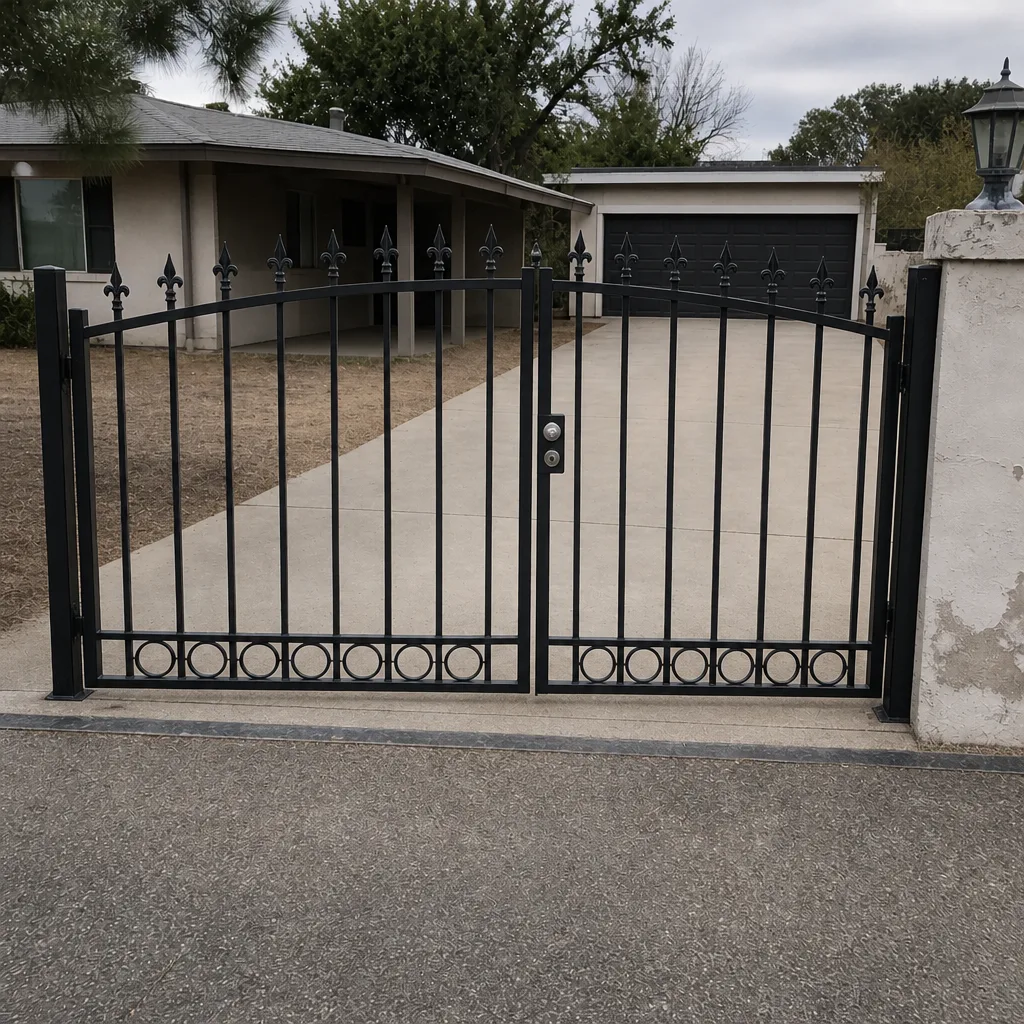
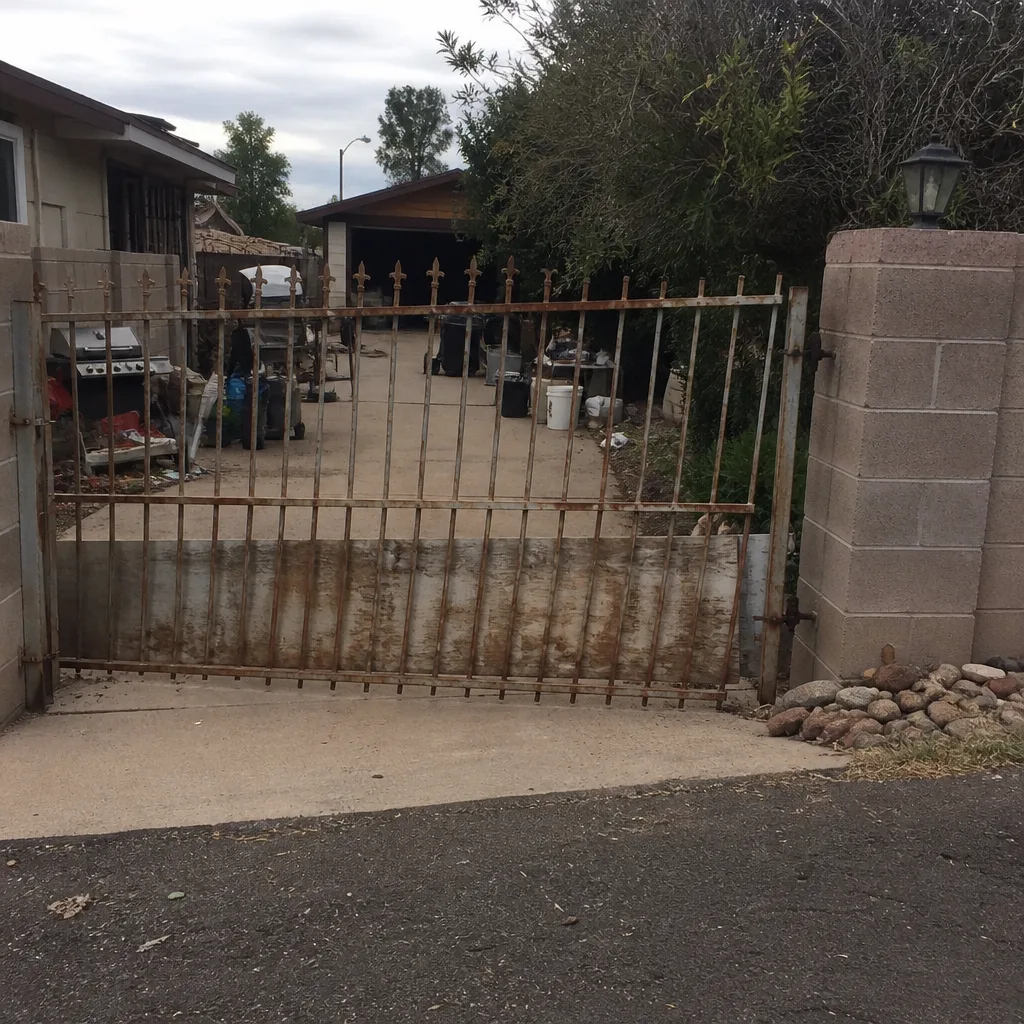
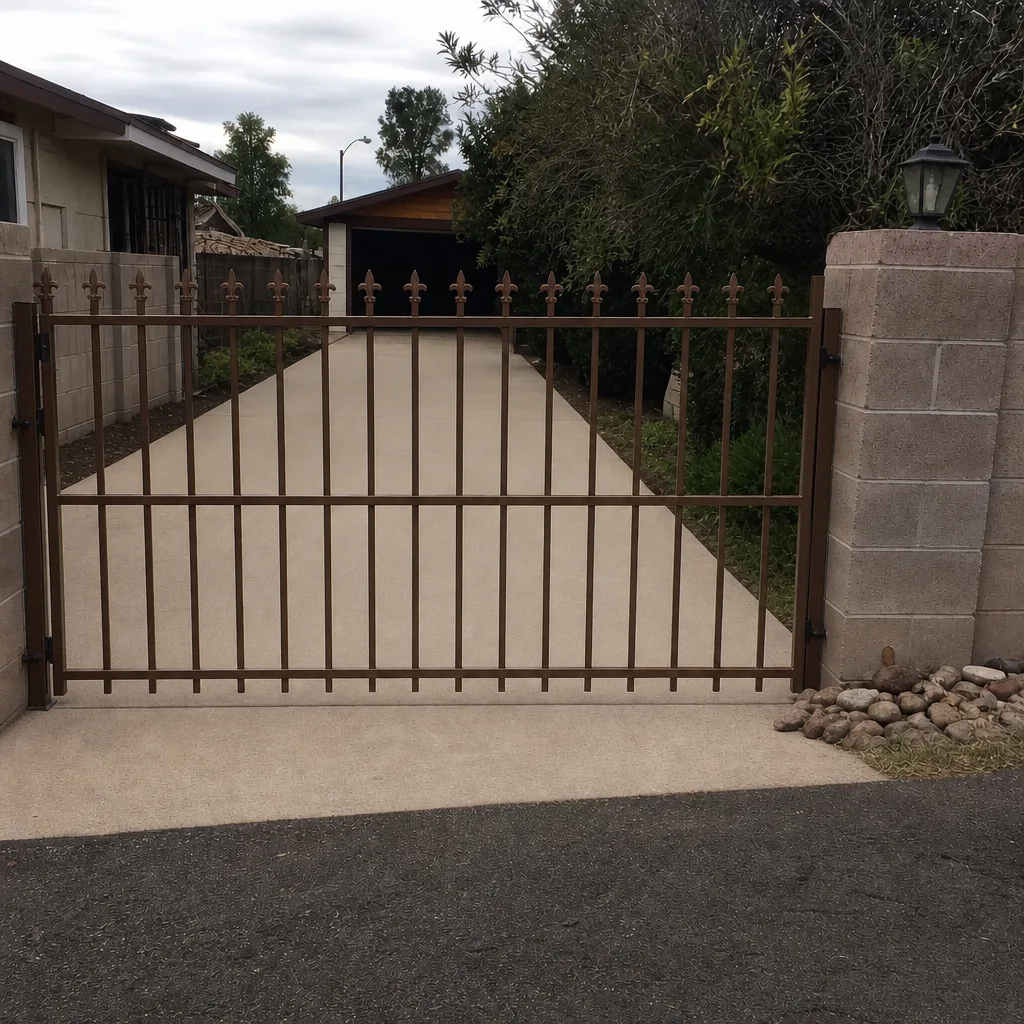
See the difference
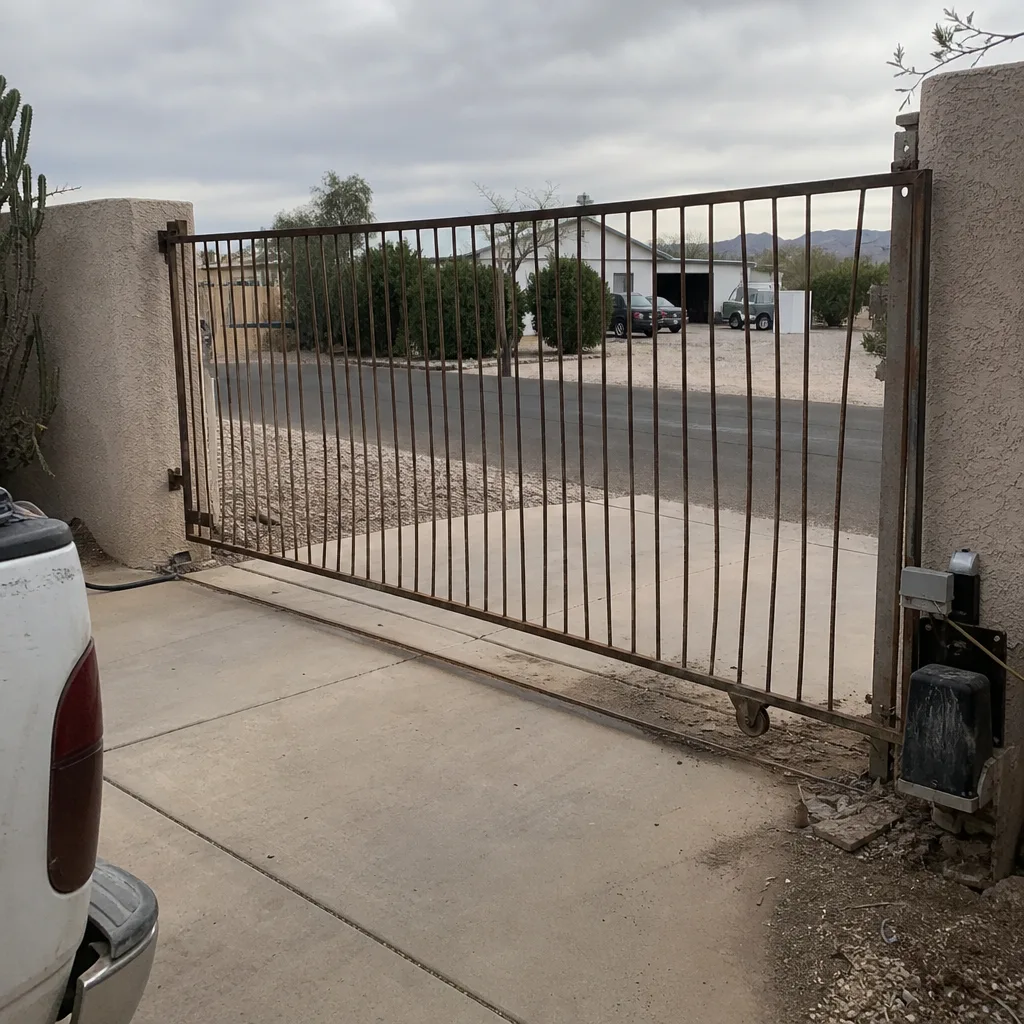 Before
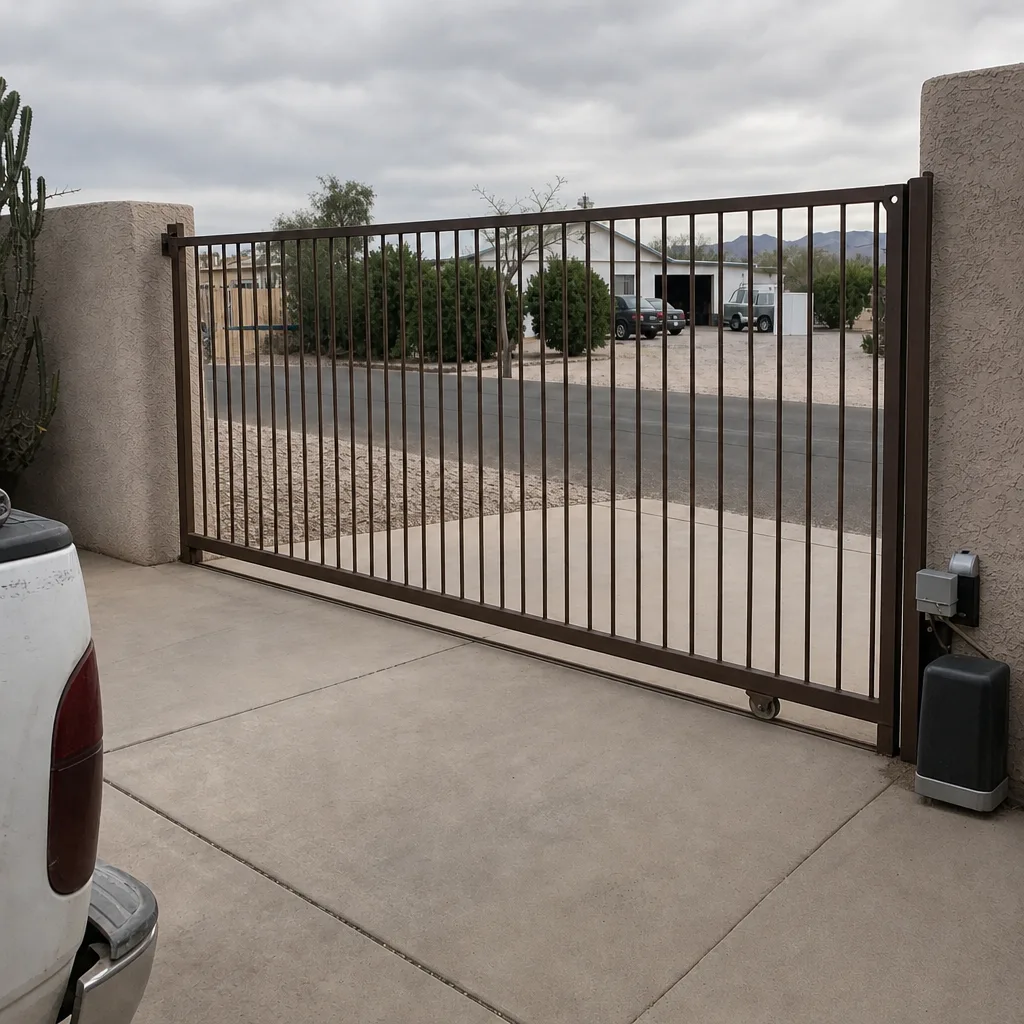 After
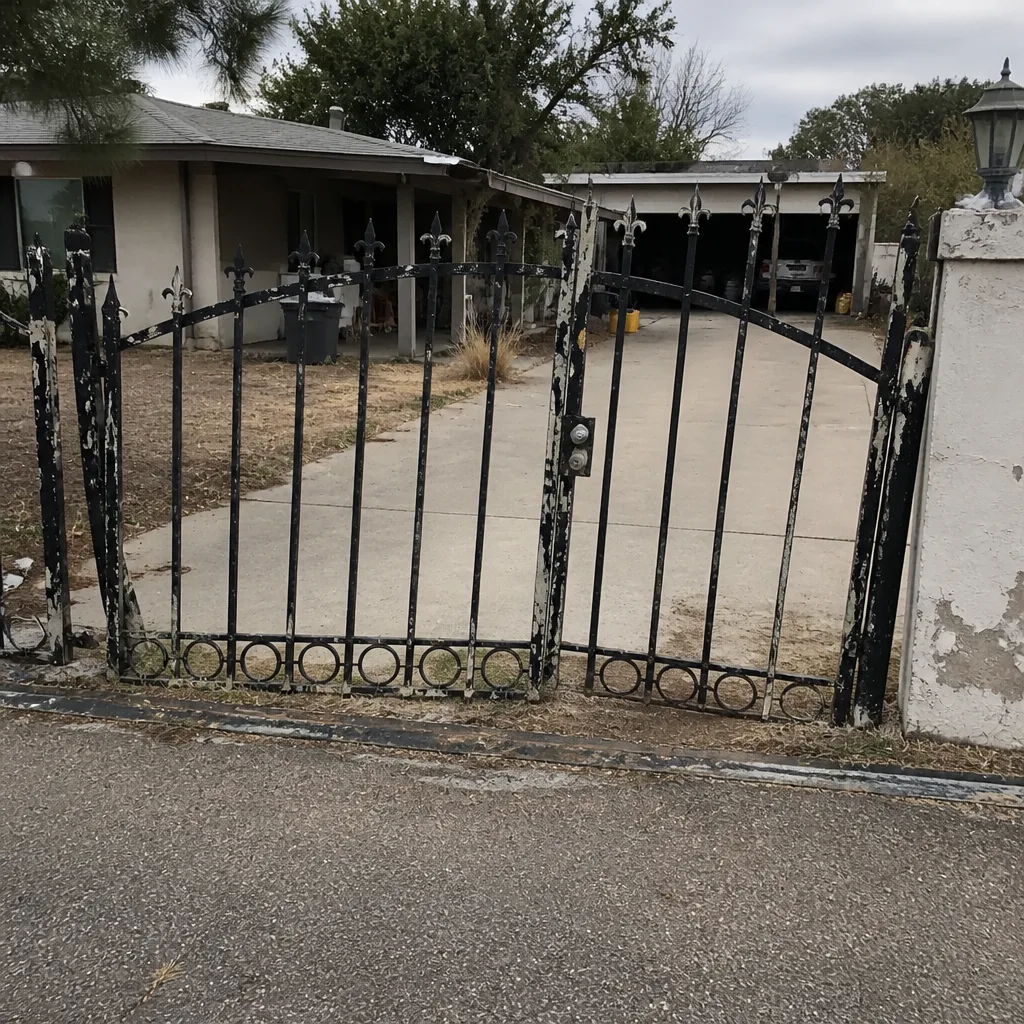 Before
 After
 Before
 After
When to Call a Professional
Call a professional before you replace an operator you haven’t diagnosed, before you upsize a residential unit to solve a duty cycle problem, or before you accept a brand switch just because a technician doesn’t stock the current one. Electric gate work involves power at the operator and heavy panels that can crush fingers, hands, and worse if they move without warning. Motor, control board, and safety edge diagnostics belong with a trained technician who knows the brand. If your gate won’t close, the opener runs but the gate stays put, or an HOA entrance is cycling more than the operator can handle, that’s a diagnostic job, not a parts-swap job. Gate Repair Peoria offers free estimates in Peoria – call (855) 574-0402 to schedule.
Frequently Asked Questions
There isn’t one best brand for Peoria. LiftMaster is the best all-round pick for most residential driveways under 600 lbs. because of local parts availability and heat ratings. FAAC and BFT are stronger for heavy gates and HOA entrances running high daily cycles. Viking and Linear work well on lighter residential gates. The right answer depends on gate weight, cycle count, and whether the operator faces full summer sun.
LiftMaster, Linear, and Viking are the easiest. Their boards, receivers, sensors, and common hardware are usually stocked at one or more Phoenix metro distributors, which shortens same-day repair turnaround. FAAC and BFT parts are generally available but often ship from regional warehouses. DoorKing and Elite availability depends on the specific part and access-control distributor. Call (855) 574-0402 for an exact quote on a parts-specific repair.
Duty cycle is the number of open-close cycles per day an operator is engineered to handle. It matters in Peoria because summer heat derates every operator. A residential operator rated for 20 cycles/day is closer to 15 on a 115°F afternoon in full sun. Sizing below the gate’s actual daily cycle count is the top cause of premature operator failure we see. If your Peoria gate cycles more than 40 times a day, the operator should be commercial-rated, not residential.
The manufacturer publishes an ambient temperature rating for every operator. A rating around 140°F is engineered for a Peoria summer. A rating under 110°F is marginal in a west-facing enclosure. Also check the duty cycle derating at high ambient, if the brand publishes one, and put a west-facing operator in a ventilated or lighter-colored enclosure if the gate faces full afternoon sun.
Usually, yes. Motor and board failures on the nine major brands we service are commonly repairable. A brand-agnostic technician diagnoses the failed part first, then decides between local-parts repair and factory-parts repair based on availability. The gate itself is rarely the reason to replace the system. Replacement becomes the right call when the operator’s duty class is genuinely wrong for the gate’s cycles or weight, not simply because a single part failed.
Yes. We service residential, HOA, and commercial gate systems across LiftMaster, FAAC, BFT, Linear, Viking, Ghost Controls, DoorKing, Elite, and Mighty Mule. Our technicians have up to 11 years of experience with motorized openers, control boards, loop detectors, intercom integrations, and the access hardware that ties those systems together. Call (855) 574-0402 for a free estimate on any of the nine brands.
The Bottom Line
The right gate operator brand for a Peoria property is the one that survives an August afternoon, is rated for the gate’s real cycle count, and can be repaired with parts on a Phoenix metro shelf. LiftMaster is the safest all-round residential pick. FAAC and BFT are the right call when weight and cycles climb. Linear and Viking do their best work at the lighter end. Skip the brands whose boards have to fly in from out of state for your Friday afternoon failure. Call (855) 574-0402 for a free estimate. We answer 24/7. Fast dispatch from 7am to 7pm, Sunday through Friday.
If you’re sorting out an existing system before deciding whether to repair, replace, or switch brands, our Peoria page covers our service area, and our gate repair and electric gate repair guides walk through the diagnostic side.
Written by the team at Gate Repair Peoria.